Black Widows Webseries Actress And Actor Black Widows is an Indian web series from Zee5.…
23 TVF’s Aspirants Dialogues That You Will Relate With Your Life
Below are some of the best dialogues and lines from TVF’s Aspirants that you should not miss:
1.
2.
3.
4.
5.
6.
7.
8.
9.
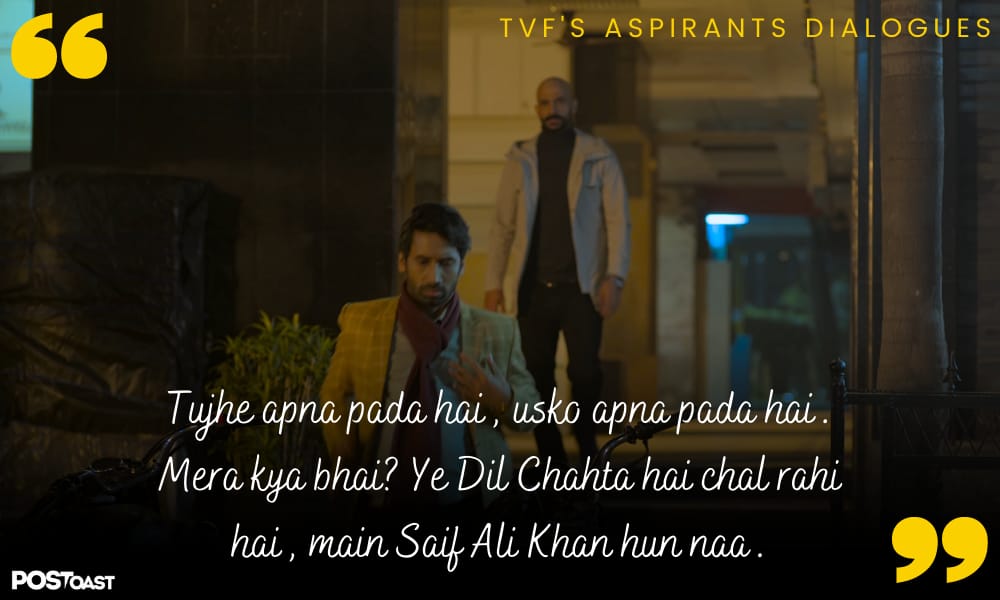
10.
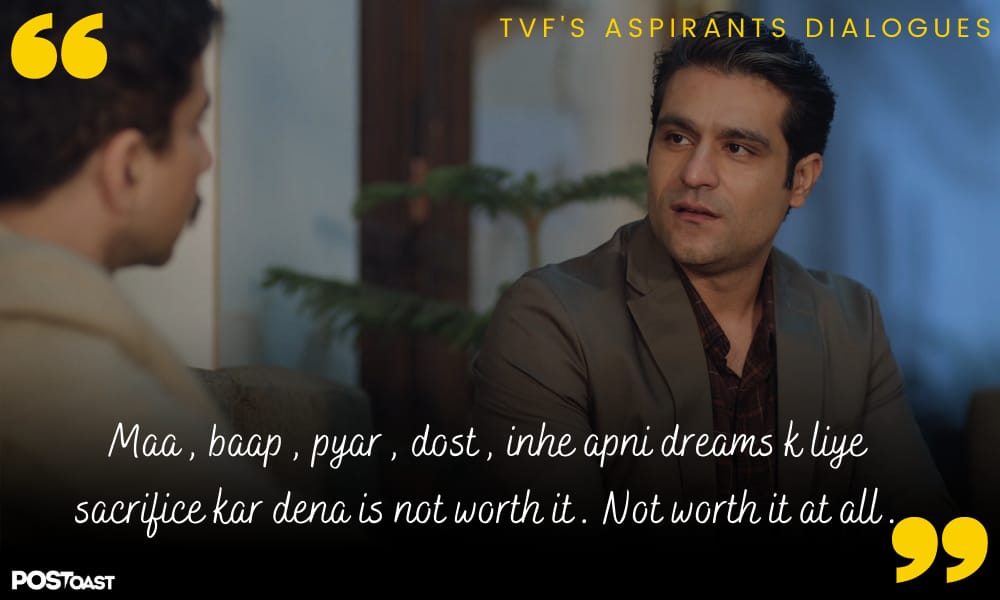
11.
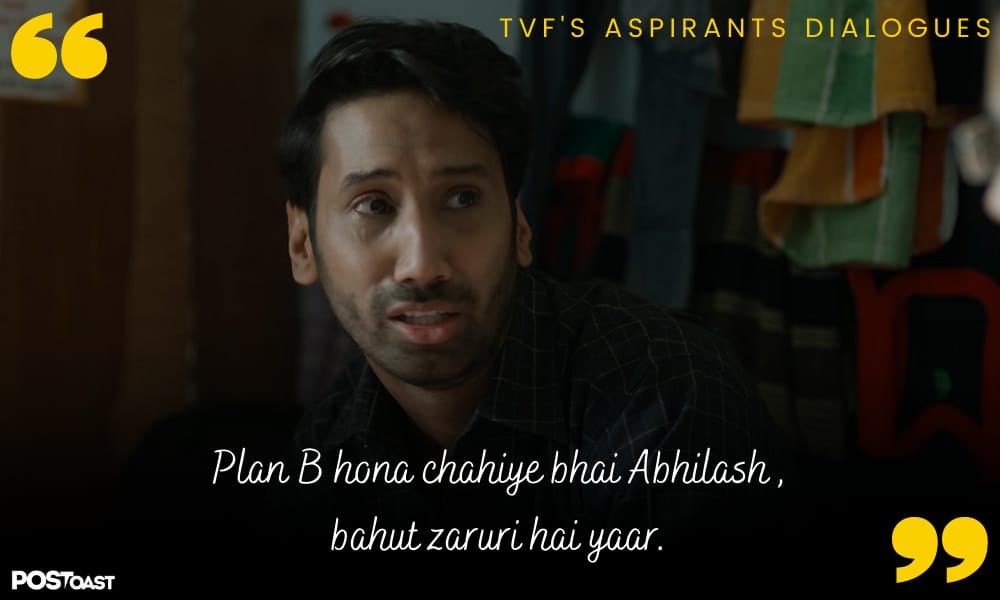
12.

13.
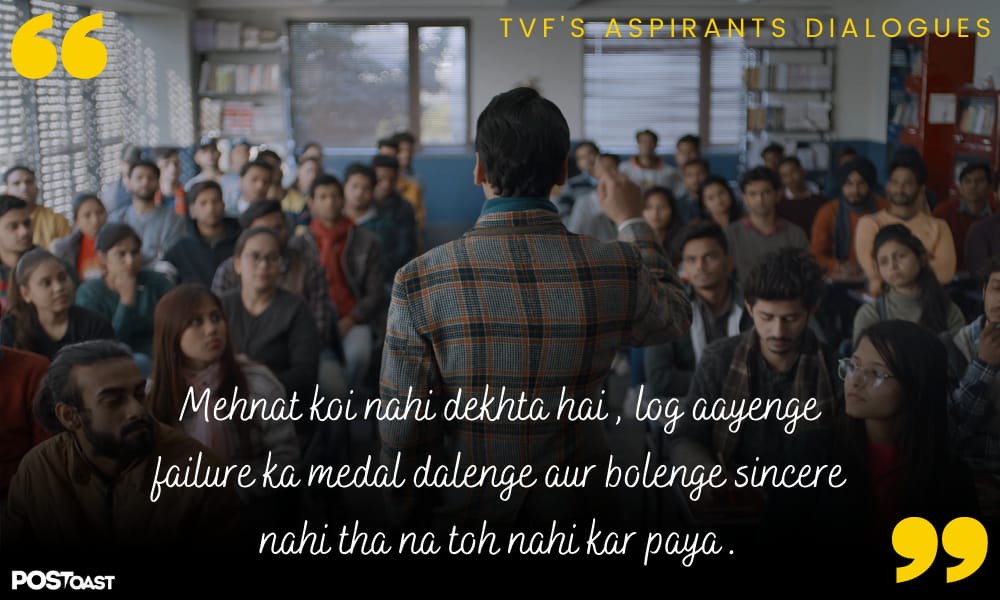
14.
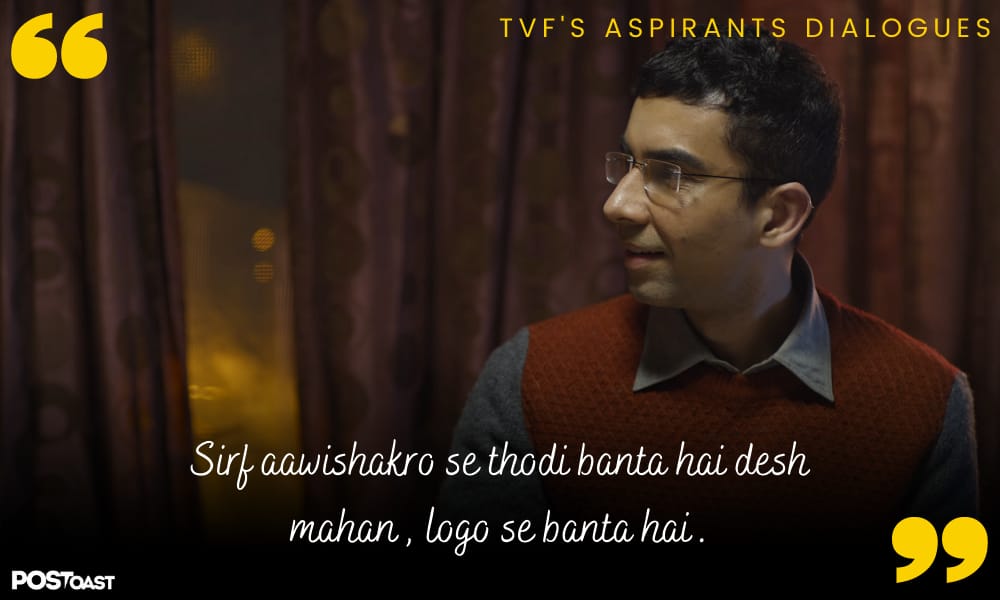
15.
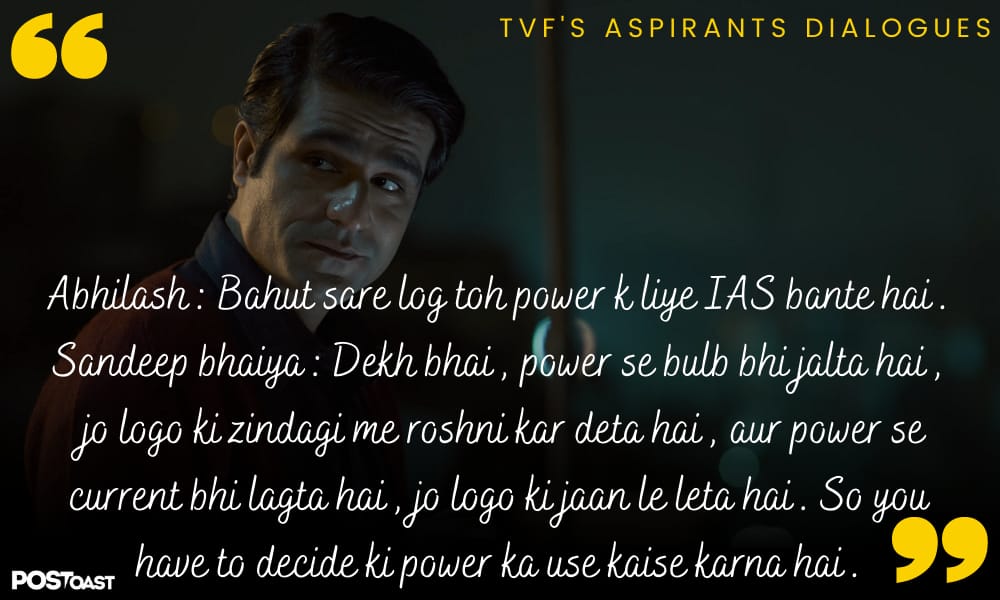
16.
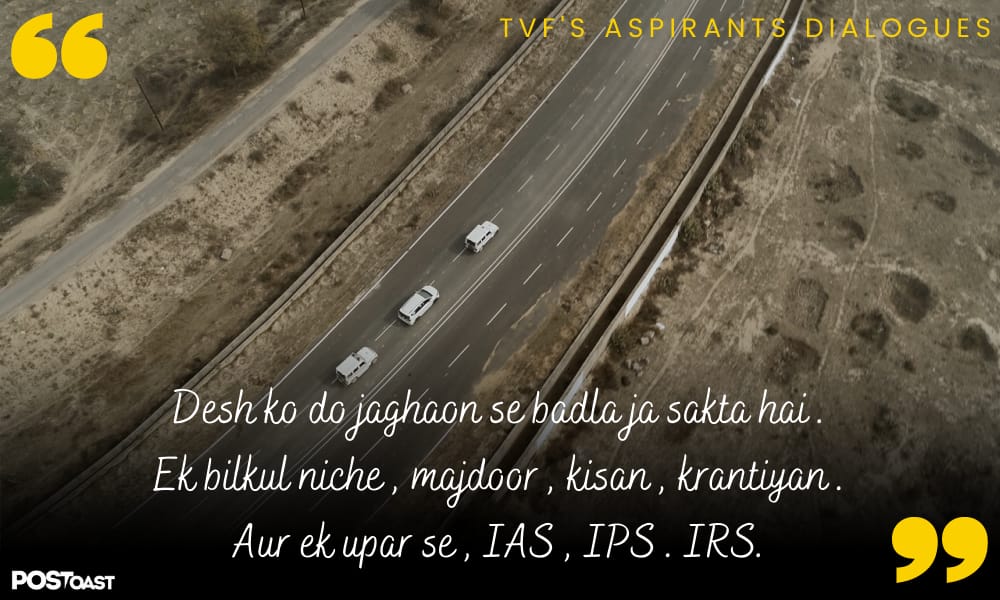
17.
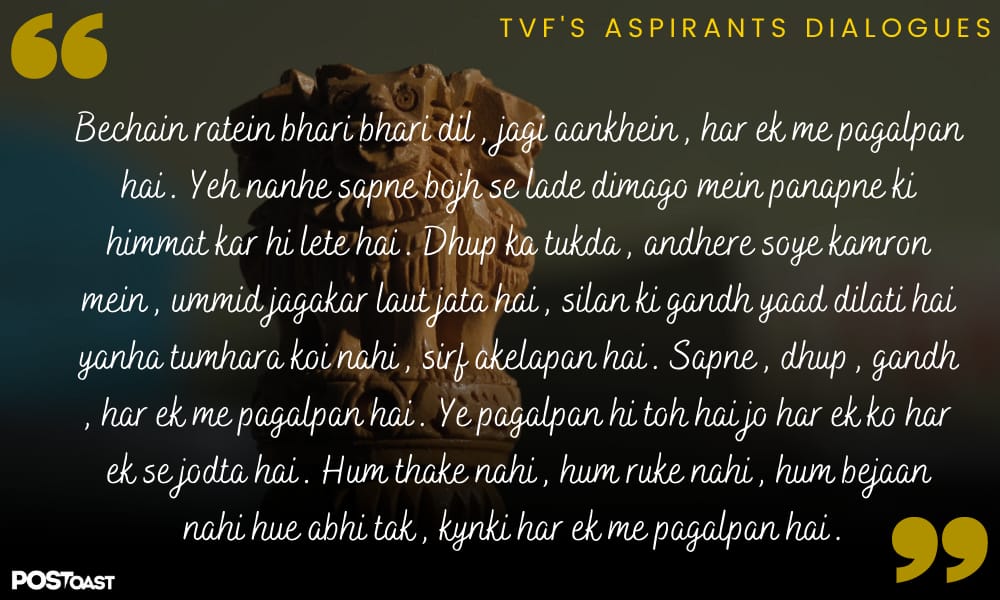
18.
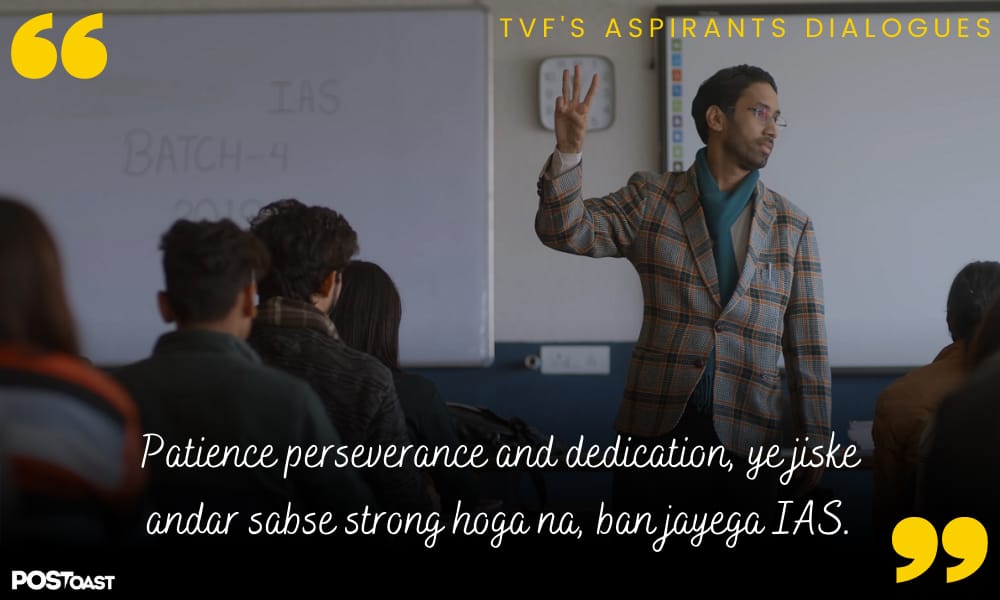
19.
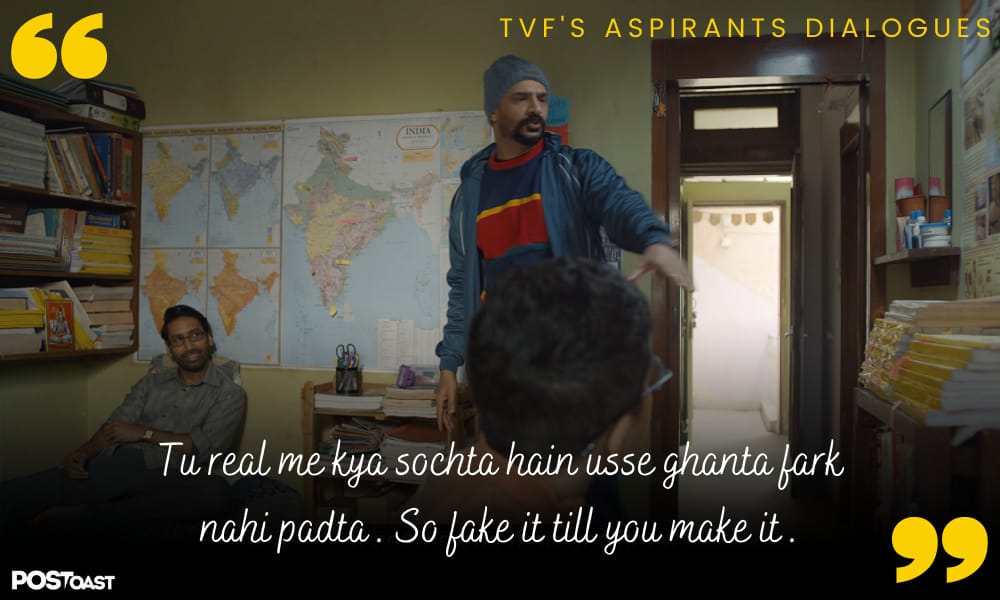
20.
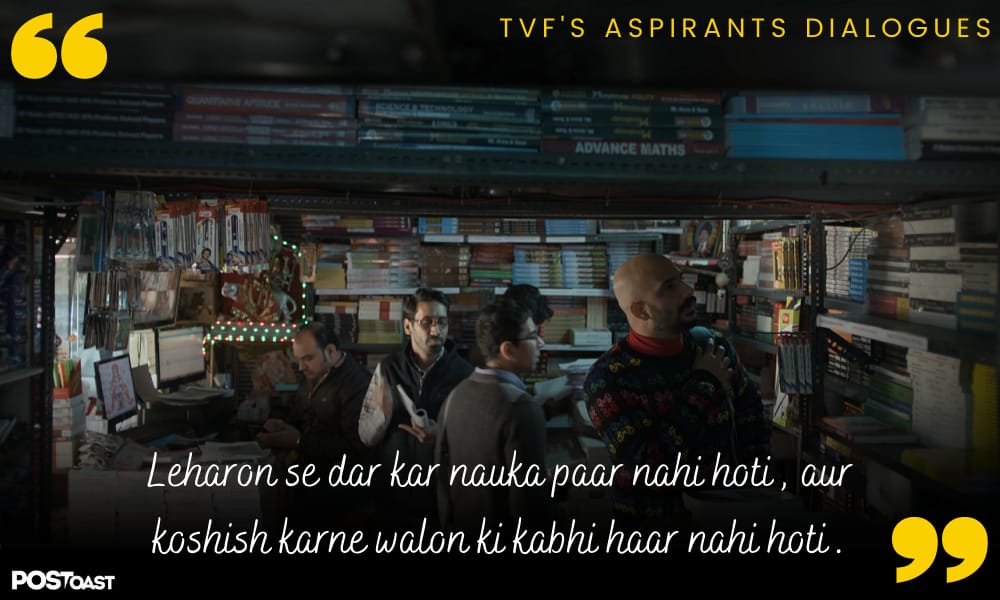
21.
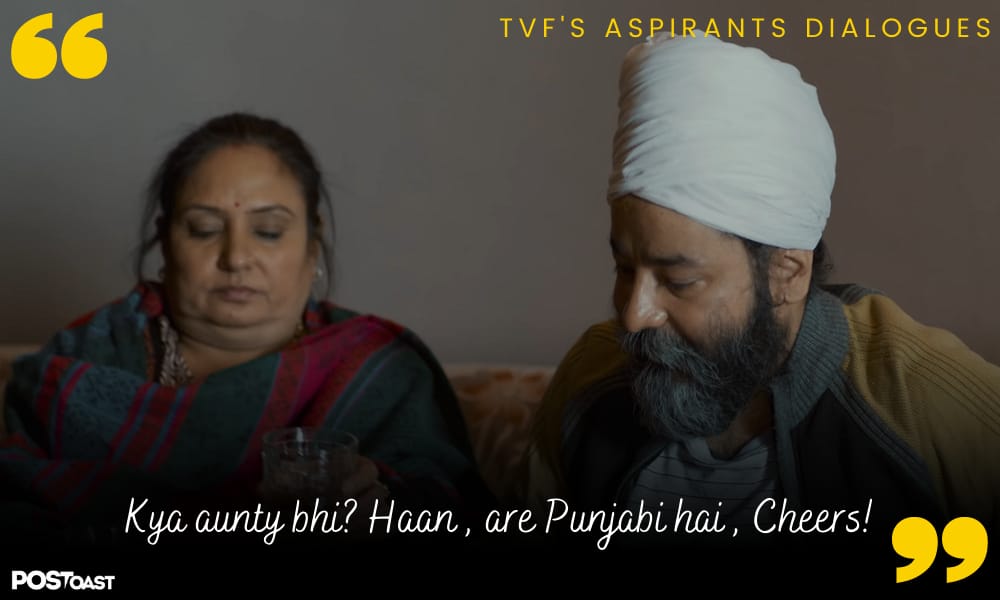
22.
23.
All image sourced from The Viral Fever YouTube channel.
23 TVF’s Aspirants Dialogues That You Will Relate With Your Life
The Viral Fever’s (TVF) web series, ‘Aspirants,’ struck a powerful chord with audiences across India and beyond, quickly becoming a cultural phenomenon upon its release. While the series is explicitly centered on the grueling and all-consuming journey of cracking the UPSC Civil Services Examination (CSE) in Delhi’s infamous hub, Old Rajinder Nagar, its true genius lies in its universal themes. It is a story not just about cracking an exam, but about the fragile yet enduring nature of friendship, the bitter sting of failure, and the hard-won wisdom of perseverance.
The core characters—Abhilash, Guri, SK, and the universally loved ‘Sandeep Bhaiya’—each represent a different facet of the struggle, and their words have transcended the specific context of UPSC preparation to become life mantras for millions of people navigating career transitions, difficult choices, and the general uncertainty of adult life.
Here are 23 of the most memorable and hard-hitting dialogues from TVF’s ‘Aspirants’ that perfectly capture the essence of the Indian youth’s struggle, ambition, and deep emotional bonds.
Part I: The Philosophy of Preparation and Success
The path to success is rarely straight. These dialogues focus on the mindset, the hard work, and the tough, often overlooked, truths of competition and ambition.
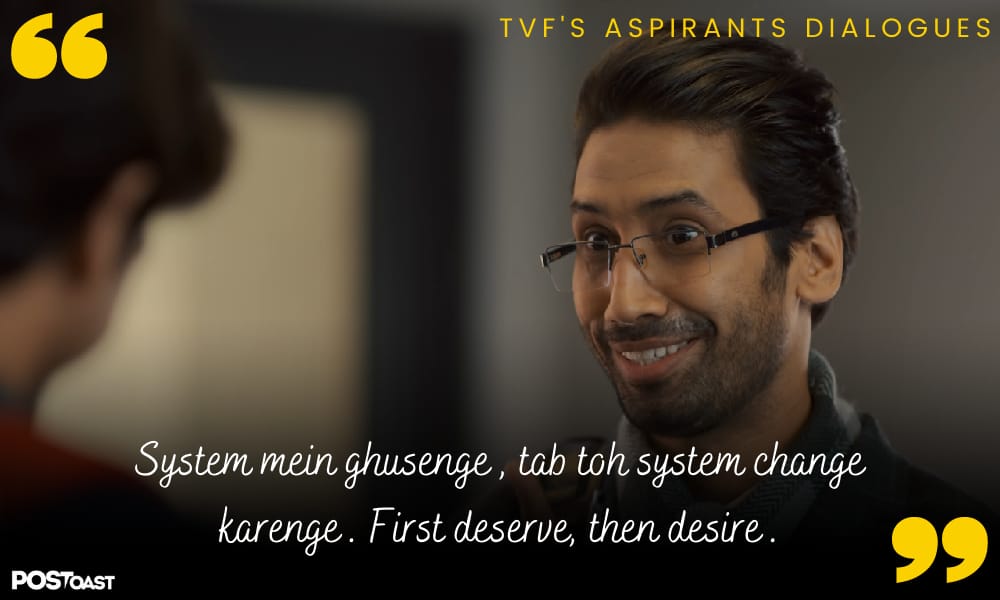
1. “First Deserve, then Desire.”
This is arguably the most famous quote from Sandeep Bhaiya, the show’s resident mentor. It’s a complete life philosophy packaged in four simple words.
The Life Connection: We all desire a comfortable life, a big promotion, or a loving relationship. But before we demand it, the dialogue reminds us to focus on the work required to earn it. The universe doesn’t grant wishes; it grants results to those who have put in the effort to be worthy of them.
2. “Patience, Perseverance and Dedication. Ye jiske andar sabse strong hoga na, ban jayega IAS.”
In a conversation about the ‘three-formula’ for success, this line sums up the marathon nature of any major life goal.
The Life Connection: Whether you’re building a startup, mastering a skill, or working towards a marathon, this trinity is essential. Patience to wait for the result, Perseverance to keep going after setbacks, and Dedication to show up every single day. The race of life, like the UPSC exam, is won by the tortoise, not the hare.
3. “Mehnat koi nahi dekhta hai. Log aayenge, failure ka medal daalenge, aur bolenge, ‘Sincere nahi tha na, toh nahi kar paaya.’”
This raw, painful truth is delivered by SK Sir in his opening monologue, setting the cynical yet realistic tone of the struggle.
The Life Connection: The world is outcome-oriented. People don’t see the 16-hour study days, the sacrifices, or the mental toll. They only see the result. This dialogue perfectly encapsulates the judgment faced by anyone who tries for a big goal and falls short, often being branded as “not sincere enough.” It’s a stark reminder that your self-worth should not be dictated by external validation.
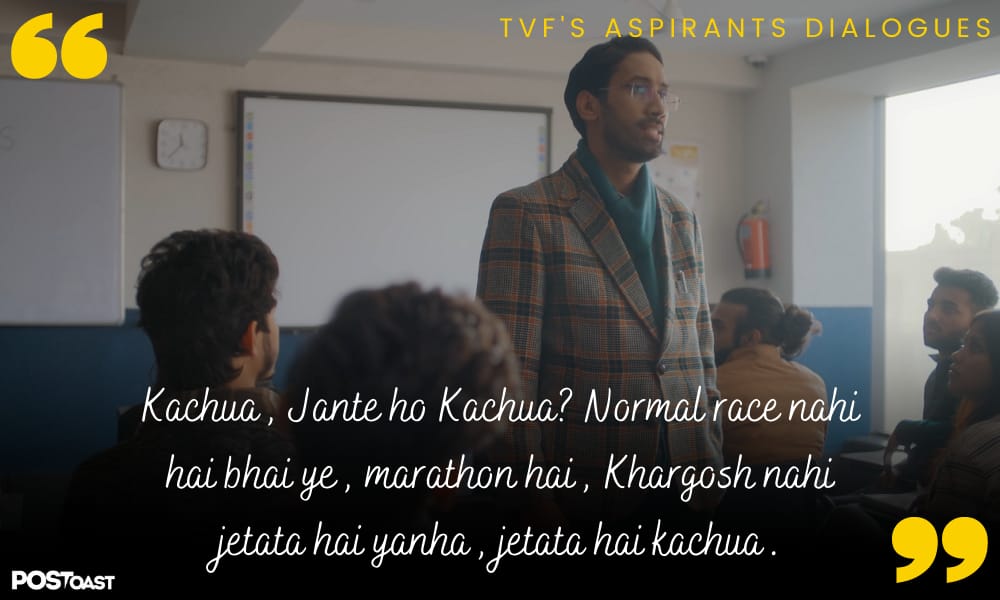
4. “Yahaan, jeet ta hai kachua.” (Here, the tortoise wins.)
A direct reference to the classic tale, this dialogue highlights the importance of consistency over sporadic brilliance.
The Life Connection: The ‘Aspirants’ life, and any competitive field, is a marathon, not a sprint. The steady, consistent effort of the tortoise (the average, dedicated student) always triumphs over the lazy, inconsistent brilliance of the hare (the naturally smart but undisciplined aspirant).
5. “Risk lena zaroori hai, taaki aap mehnat kar pao.”
Sandeep Bhaiya delivers this gem, emphasizing the role of high stakes in driving genuine effort.
The Life Connection: We tend to get comfortable in our safety nets. Taking a calculated risk—quitting a job, moving to a new city, or committing to a major change—forces us out of our comfort zone and compels us to work harder because there is no easy path back. Risk is a catalyst for commitment.
Part II: The Importance of a ‘Plan B’
The most debated theme of the series, the ‘Plan B’ conversation forces aspirants and viewers alike to confront the terrifying possibility of failure.
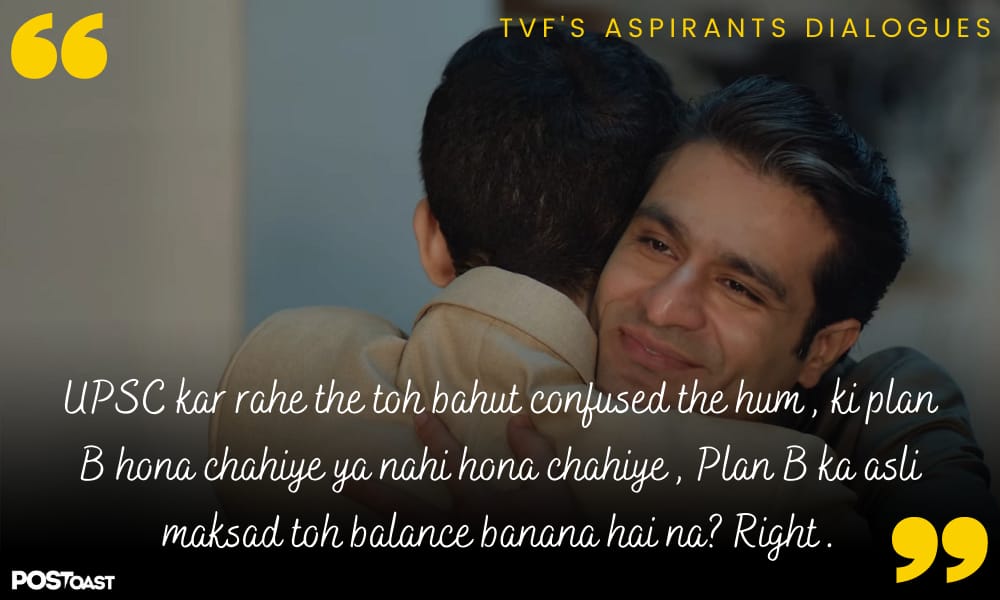
6. “Plan B hona chahiye bhai Abhilash. Bahut zaruri hai yaar.”
Sandeep Bhaiya, who has experienced failure, passionately pushes Abhilash to have a backup plan.
The Life Connection: This is the universal dilemma of every aspirant: Is a backup plan a distraction, or is it a necessary safety net? The show and the dialogue lean towards the latter, stressing that a ‘Plan B’ is not a sign of weakness, but a sign of maturity and resilience against life’s uncertainties.
7. “Zindagi mein sabse bada risk kya hai? Koi risk na lena.”
The series challenges the notion that true safety lies in not attempting anything ambitious.
The Life Connection: In the long run, the biggest risk to a fulfilling life is often the fear of failure, which leads to inaction. By avoiding risk, you prevent failure, but you also completely eliminate the possibility of a breakthrough success.
8. “Jab ‘Why’ apna clear ho jaata hai na ki kyun karna hai mujhe, toh phir main ‘How’ pe focus kar paata hoon.”
This profound insight shifts the focus from the method of study to the motivation behind it.
The Life Connection: In any career, the ‘how-to’ can be learned, but the ‘why’—your core motivation, your inner drive—is what keeps you going during the difficult times. If the ‘why’ is superficial (like impressing others), the ‘how’ will feel impossible. If the ‘why’ is profound (like genuine passion), the ‘how’ becomes just a technical challenge.
9. “System mein ghusenge, tabhi toh system change karenge.”
This line is the idealistic motivation for many who choose public service.
The Life Connection: It speaks to the desire for internal change rather than external criticism. It’s a powerful call to action for anyone who wants to bring about a positive change in their field, be it technology, education, or governance: The only way to fix a broken process is to become a part of the process itself.
Part III: The Anchor of Friendship and Sacrifice
The tripod of Abhilash, Guri, and SK is the emotional core of the series. Their fluctuating relationship is a mirror to every adult friendship put to the test by career goals.
10. “Maa, Baap, Pyaar, Dost… Inhe apne dreams ke liye sacrifice kar dena is not worth it. Not worth it at all.”
This line delivers one of the most important life lessons: the value of human connection over professional ambition.
The Life Connection: The relentless pursuit of a career can often cost us our closest relationships. The show argues that no job or designation, however prestigious, is worth sacrificing the people who form the backbone of your life. Success is hollow without loved ones to share it with.
11. “Abhilash ne kaha tha, ‘Main to ek hi taraf hoon. Mere liye UPSC mera Plan A bhi hai aur Plan B bhi.’”
This quote reflects the stubborn, all-or-nothing mentality of the protagonist.
The Life Connection: While inspirational for some, it’s a terrifyingly relatable quote for anyone who has poured all their energy into a single, high-stakes goal. It captures the singular focus that often defines the initial years of a difficult journey, and the immense pressure that comes with having no fallback.
12. “Bina Dronacharya koi Arjun nahi ban sakta.”
SK uses this analogy to highlight the importance of a teacher or mentor.
The Life Connection: This is a tribute to the power of mentorship. Whether it’s a teacher, a senior colleague, or a personal coach, having an experienced guide (Dronacharya) is crucial for a committed student (Arjun) to reach their full potential, especially when the path is as complex as the UPSC or any challenging career.
13. “Sacrifice doesn’t mean Success, Success doesn’t mean happiness.”
Dhairya, a more balanced character, offers this critical perspective.
The Life Connection: This dialogue breaks down the great myth that an enormous sacrifice guarantees success, or that success guarantees contentment. It’s a mature and nuanced view that acknowledges the possibility of hard work yielding no results, and the reality that a celebrated achievement might still leave you searching for happiness.
14. “Garv karne wala koi nahi hai toh… woh success ka kya matlab hai?”
Guri, the emotional friend, challenges Abhilash on the meaning of lonely success.
The Life Connection: It cuts deep into the heart of adult isolation. Success celebrated alone feels incomplete. The true reward of achievement is the pride and joy it brings to the people who supported you—your family and friends. If there’s no one left to share the triumph with, the victory is diminished.
Part IV: Daily Struggles and Moments of Clarity
These are the smaller, punchier dialogues that capture the day-to-day grind and the occasional moments of philosophical pause.
15. “Chalte rehna hi solution hai, Abhilash.”
Sandeep Bhaiya emphasizes the necessity of continuity.
The Life Connection: In any long journey, the primary task is simply to keep moving. When the goal seems too far or the obstacles too big, the solution is not a grand, dramatic change, but the stubborn act of putting one foot in front of the other, every single day.
16. “Interview se zyada tumhe clear hona chahiye, IAS kyun banna hai.”
Another crucial piece of advice from Sandeep Bhaiya.
The Life Connection: The ‘Aspirants’ journey is an internal one. Before you can convince an interview board of your worthiness, you must first be absolutely clear and honest with yourself about your core motivation. If your ‘why’ is weak, your execution (the ‘how’) will falter.
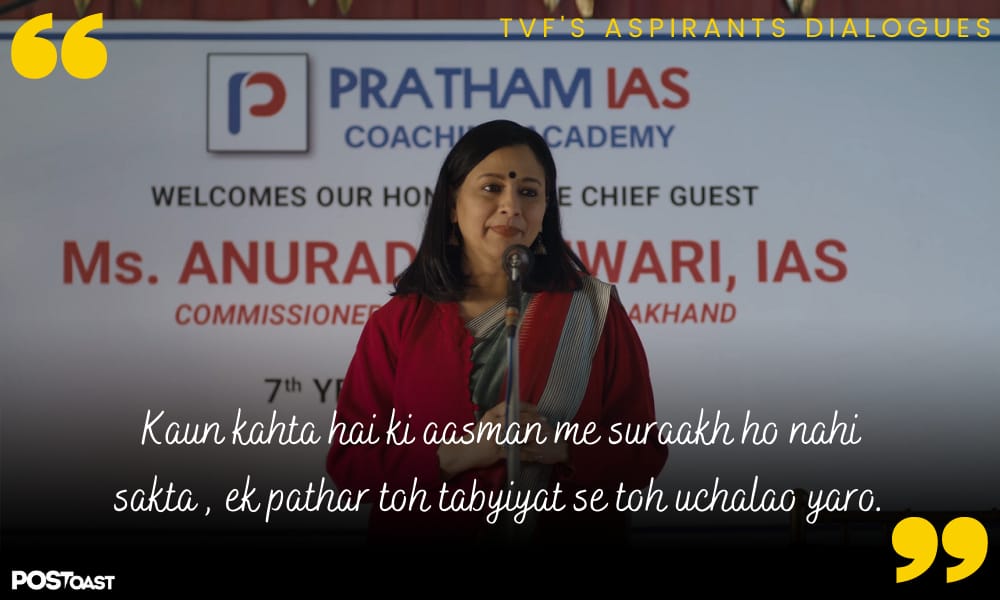
17. “Kaun kehta hai aasmaan mein surakh nahi ho sakta? Ek patthar toh tabiyat se uchhaalo yaaron.”
The classic Urdu couplet (by Dushyant Kumar) is beautifully woven into the narrative.
The Life Connection: This poetic line is pure, unadulterated motivation. It literally means, “Who says you can’t bore a hole in the sky? Just throw a stone with conviction, my friends.” It’s an inspiring call to action, demanding maximum, heartfelt effort to overcome seemingly impossible odds.
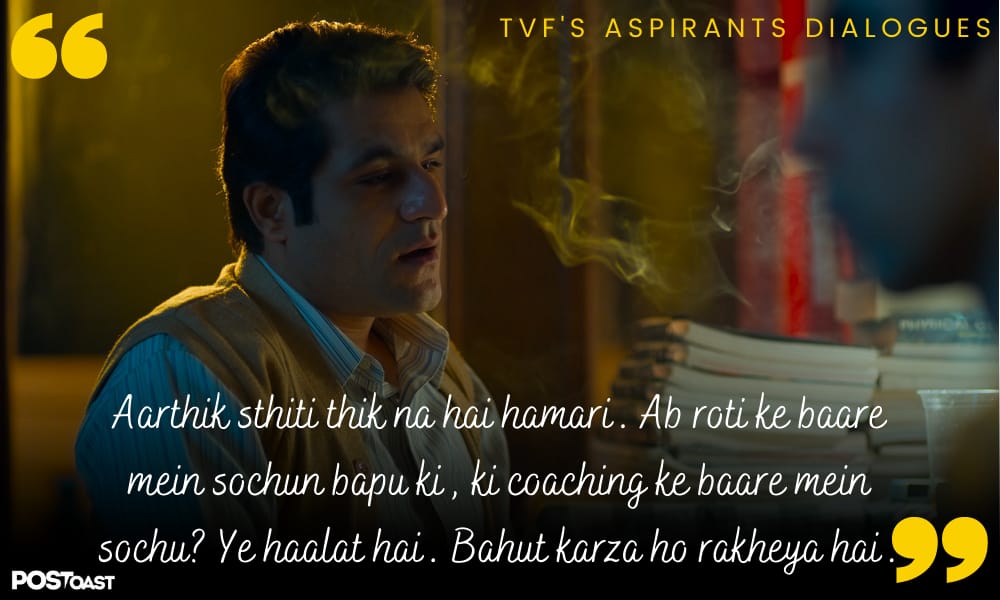
18. “Aarthik sthiti theek na hai humari. Ab roti ke baare mein sochu baapu ki, ki coaching ke baare mein sochu?”
This line from SK’s father hits the reality of financial pressure on a middle-class aspirant.
The Life Connection: It brutally highlights the dual pressures faced by millions of young Indians: the pressure to succeed for oneself, and the crushing pressure to provide for one’s family. For many, the competitive exam is not just a career choice, but a desperate, time-bound attempt to escape poverty or economic insecurity.
19. “Ye jo do-char marks ka game hota hai na, ye 25 square feet ke kamre se na, tere ko 2500 square feet ka bangla mein leke jayega.”
SK, as a teacher, knows the disproportionate value of small gains.
The Life Connection: This is the gambler’s truth in a highly competitive environment. The difference between success and failure is often marginal—just a few marks, one extra point on a presentation, or one critical decision. But those small differences have massive, life-altering consequences, leading from a cramped space to a life of luxury and power.
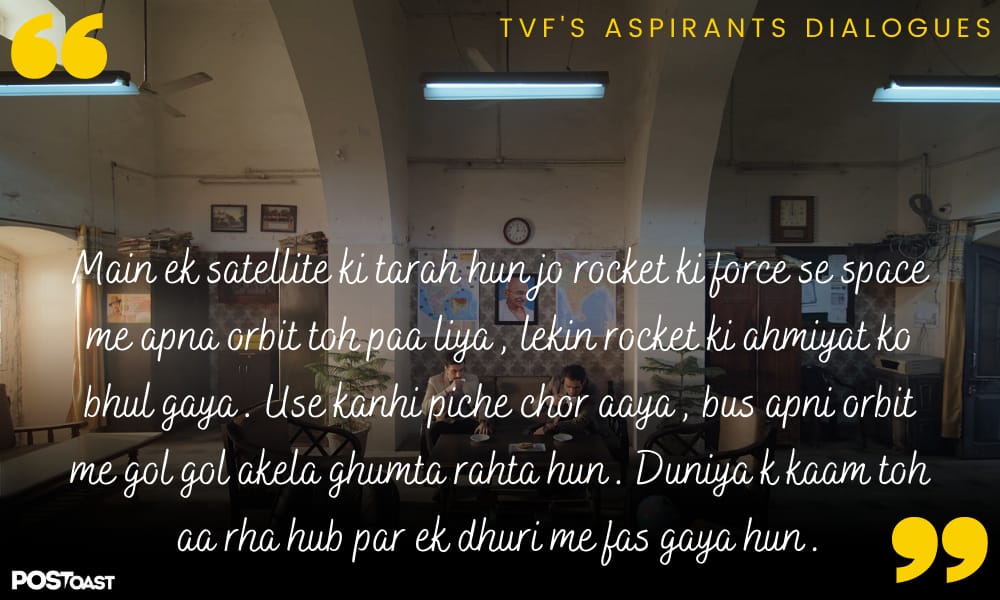
20. “Mein ek ti tarah hoon… Mujhe hamesha thoda zyada chahiye.”
Abhilash’s drive is defined by his restless ambition and comparison to his friends.
The Life Connection: This encapsulates the relative nature of ambition. In the modern world, it’s not enough to be good; one feels compelled to be better than their peers. This relentless need for ‘a little bit more’ is the driving force and also the source of deep insecurity for many young professionals.
21. “Agar woh IAS ban sakta hai toh tum bhi ban sakte ho.”
The encouraging line often used by teachers and mentors.
The Life Connection: Simple, powerful, and deeply motivational, this is the core principle behind mentorship and coaching. It inspires confidence by providing a tangible, human example of success. It turns an abstract, distant goal into an achievable reality.
22. “Tumko uss jagah pe jaana hai, jahaan tumhari aawaz mein dum ho.”
Sandeep Bhaiya advises on the need for true influence.
The Life Connection: This dialogue is a lesson in power and impact. It’s not enough to just be rich or have a title; true fulfillment comes from being in a position where your opinion matters, where you can effect real change, and where your voice carries authority and weight.
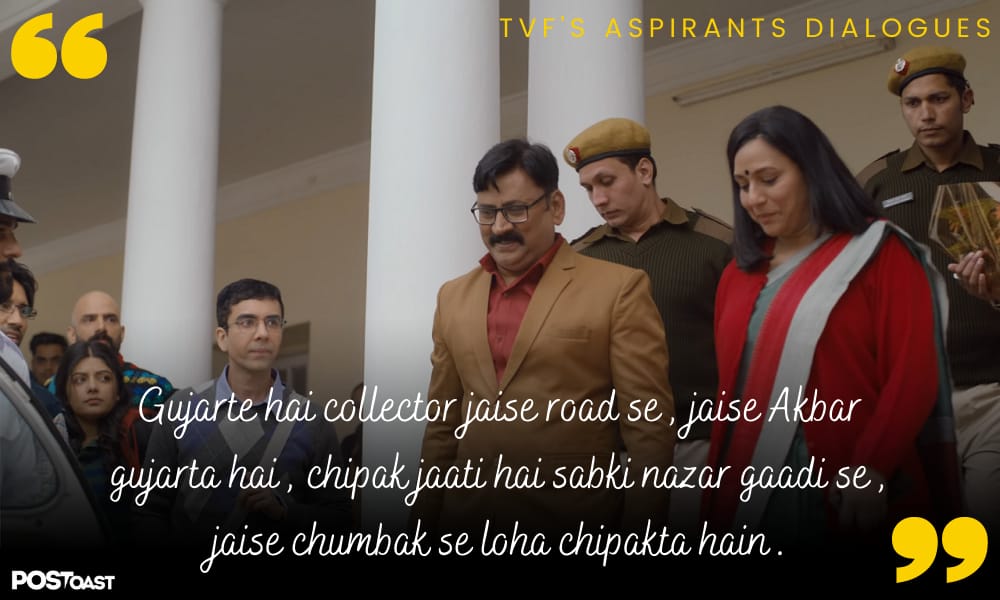
23. “Chipak jaati hai sabki nazar gaadi se, par koi nahi dekhta ki woh gaadi kitni mehnat se khadi ki gayi hai.”
The final word on external perception versus internal effort.
The Life Connection: It’s the perfect concluding thought for the entire series. Everyone sees the finished product—the big car, the luxurious house, the successful career—but very few ever see the blood, sweat, tears, and years of lonely struggle (the tapasya) that went into acquiring it.
AISEO Friendly FAQs
Q1: What is the main message of the TVF web series ‘Aspirants’?
A: The main message of ‘Aspirants’ is a blend of motivational and cautionary tales. It emphasizes perseverance, the importance of a clear ‘Why,’ and the idea that success is a marathon won by consistency (the ‘tortoise’ mentality). Most importantly, it teaches the value of friendship and relationships over lonely professional ambition and makes a strong case for having a sensible Plan B.
Q2: Why is Sandeep Bhaiya’s character so popular?
A: Sandeep Bhaiya (played by Sunny Hinduja) resonated with audiences because he is a personification of wise, experienced mentorship. He is the “Dronacharya” who provides practical, non-judgmental advice from the perspective of someone who has failed but refused to quit. His dialogues like “First Deserve, then Desire” and the emphasis on a ‘Plan B’ made him an iconic, relatable figure to anyone facing a competitive or difficult life challenge.
Q3: Which is the most quoted dialogue from TVF Aspirants?
A: The most quoted and famous dialogue from TVF Aspirants is generally considered to be “First Deserve, then Desire” (first said by Sandeep Bhaiya). Other extremely popular and highly motivational quotes include “Patience, Perseverance and Dedication” and “Plan B hona chahiye bhai Abhilash.”
Q4: Is TVF Aspirants only relatable to UPSC students?
A: No, while the show is set in the world of UPSC preparation, its themes are universally relatable. The core struggles it explores—pressure from family, balancing ambition with relationships, facing repeated failure, and dealing with a competitive environment—are applicable to students of any entrance exam, professionals building a career, entrepreneurs starting a business, and anyone navigating the demanding phases of young adulthood.

This Post Has 0 Comments