The girl-next-door, Amrita Rao, made her Bollywood debut in 2002 with the movie Ab ke…
18 Most Popular Adult Movies Ever Made In Bollywood
Once upon a time people love to watch movies like “Raja Harishcandra”, “The Burning Train”,”Nazrana Pyar Ka”, “Sholay”. Now, the taste of audience has changed a lot. Audience love to watch movies which have hot content. In which some of the movies has also won the National Awards too.
Aastha 
B.A. Pass 
Dev D 
Ek Choti Si… Love Story 
Ek Paheli Leela 
Girlfriend 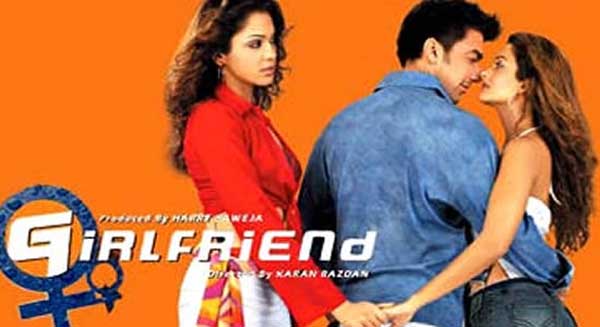
Grand Masti 2 
Hate Story 
Hunterr 
Jism 
Kamasutra 
Love, $ex Aur Dokha 
Maya Memsaab 
Murder 
Nasha 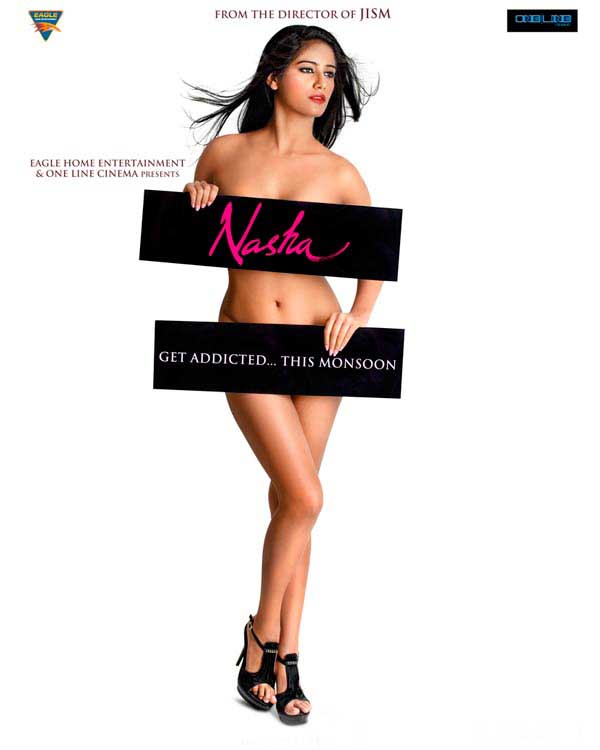
Tarzan 
The Dirty Picture 
Utsav 
Beyond the Censor Board: 18 Iconic Bollywood Films That Broke Conventional Norms and Sparked Discussion
For decades, the Hindi film industry—popularly known as Bollywood—has operated under the unsaid rules of traditional Indian social morality. While songs and dancing often celebrated romance, explicit discussions of desire, female sexuality, and social taboos were strictly reserved for the shadows or the art-house circuit. However, a select group of filmmakers dared to challenge the status quo, earning the dreaded ‘Adults Only’ (‘A’) certificate, not just for a kiss or a song, but for the depth and courage of their subject matter.
These films were often met with controversy, political outcry, and censorship battles, yet they became significant cultural milestones. They forced the conservative mainstream audience to confront uncomfortable truths about sex, hypocrisy, gender, and power in Indian society.
This article revisits 18 such iconic Bollywood films that defined the boundaries of adult storytelling, from the pioneering classics of the 1970s to the bold, critically-acclaimed dramas of the modern era.
I. The Pioneering Classics: Challenging Traditional Morality (1970s – 1990s)
The earliest films to receive widespread notoriety for their adult themes often did so while cloaked in art, politics, or philosophy, setting the stage for decades of debate.
1. Satyam Shivam Sundaram (1978)
Directed by the legendary Raj Kapoor, this film addressed the philosophical conflict between physical beauty (Satyam) and spiritual beauty (Shivam). Starring Zeenat Aman as a disfigured village singer, the film drew immediate controversy for its overtly sensual portrayal of the female protagonist, whose costumes and appearance were deemed “racy” for the time. A case was even filed against the director for “obscenity” and “eroding public decency,” though the Supreme Court eventually cleared the film. The film’s controversy highlighted the immense cultural discomfort surrounding the depiction of female sexuality, even within the context of art and spiritual themes.
2. Bandit Queen (1994)
One of the most powerful and brutal films in Indian cinematic history, Shekhar Kapur’s biographical drama, based on the life of Phoolan Devi, was highly controversial. It offered an unflinching, graphic portrayal of caste-based discrimination, child marriage, and sexual violence in rural India. The raw realism and explicit nature of the abuse and subsequent acts of revenge led to a massive censorship row and a temporary ban, but the film ultimately won the National Film Award for Best Feature Film. Bandit Queen is widely regarded as a watershed moment in parallel cinema for its bold and unapologetic exploration of systemic gender and caste oppression.
3. Fire (1996)
Deepa Mehta’s Fire is a landmark film that became a catalyst for India’s LGBTQ+ rights discussion. It was the first mainstream Indian film to explicitly feature a lesbian relationship, depicting two neglected Hindu wives who find solace and love in each other. Upon its release in 1998, the film triggered violent protests from conservative groups who attacked theaters, claiming the theme was an affront to Indian culture and Hinduism. Despite the attempts to ban it, the film’s success spurred an important counter-movement for lesbian rights and freedom of expression, cementing its place as an essential text in queer Indian cinema.
4. Aastha: In the Prison of Spring (1997)
This late-career masterpiece by Basu Bhattacharya explored the theme of female desire and the corrupting influence of materialism on a middle-class marriage. Starring Rekha, the film depicted a bored, married housewife who begins moonlighting as a high-class escort to afford a luxurious, consumerist lifestyle. It was controversial not just for the depiction of a married woman engaging in sex work but for suggesting that she found a sense of sexual awakening and pleasure outside her marriage, questioning the moral framework of conjugal relationships in an increasingly globalised Indian society.
5. Maya Memsaab (1993)
An adaptation of Gustave Flaubert’s classic French novel, Madame Bovary, Ketan Mehta’s film explored the disillusionment and pursuit of romantic fantasy by a bored homemaker. The film gained notoriety due to a controversial love-making scene featuring a young Shah Rukh Khan, which later became a point of contention and media scrutiny. The film’s boldness lay in its psychological portrayal of a woman who seeks to escape her mundane marital life through adulterous affairs, a theme considered radical for a commercial film in the early 90s.
II. The Neo-Noir & Commercial Thriller Boom (2000s – Early 2010s)
The new millennium saw a shift where ‘A’ certified content, particularly erotic thrillers, became commercially viable, creating entire sub-genres and star vehicles.
6. Ek Chhotisi Love Story (2002)
Adapted from Krzysztof Kieślowski’s A Short Film About Love, this film tells the dark story of voyeurism and a teenager’s obsession with his older female neighbor. Its controversy surpassed all others that year when lead actress Manisha Koirala took the director to court, claiming he used a body double for what she called “obscene” shots, a battle that drew immense media attention and fueled box-office success.
7. Jism (2003)
Considered a definitive neo-noir film that successfully brought the genre into the mainstream, Jism starred Bipasha Basu as a manipulative femme fatale. The film, a loose adaptation of Body Heat, was an enormous commercial success for its low budget, becoming a “super hit” and openly embracing a narrative where a woman orchestrates a murder for passion and money. Its unprecedented depiction of raw sensuality ushered in an era of commercially successful, bold thrillers.
8. Murder (2004)
A commercial ‘super hit’ that cemented the erotic thriller genre, Murder focused on adultery, betrayal, and crime in a marriage. It was a turning point for lead actor Emraan Hashmi, who earned the moniker “serial kisser” due to the film’s highly sensual promotional content. The film, an unofficial remake of the American film Unfaithful, proved that films with a heavy emphasis on adult themes and music could dominate the box office, leading to a successful franchise.
9. Sins (2005)
A true example of a film courting controversy on all fronts, Sins was an English-language Indian drama based on the true story of a Kerala priest. It detailed the forbidden, obsessive affair of a Catholic priest with a young woman, and the subsequent moral and criminal spiral. The film was immediately protested by Christian groups who objected to the negative portrayal of the clergy, and a public interest litigation was filed to stop its release, highlighting the challenges of tackling religious taboos in cinema.
10. Rang Rasiya (Colours of Passion) (2014)
Though produced in 2008, this film’s release was delayed until 2014 due to censorship issues. Based on the life of legendary 19th-century painter Raja Ravi Varma, the film focused on the debate over artistic freedom versus social morality. The controversy stemmed from scenes depicting the artist’s nude muses, mirroring the actual court case Varma faced in his lifetime for ‘obscenity’ through his depiction of mythological figures. The six-year delay in its release highlighted the continuing struggle against India’s stringent censorship laws regarding art and nudity.
11. Saheb Biwi Aur Gangster (2011)
A celebrated neo-noir that eschewed melodrama for gritty realism, Tigmanshu Dhulia’s directorial explored the toxic triangle of power, aristocratic decay, and illicit desire in a feudal setting. Mahie Gill’s portrayal of the ‘Biwi’ (wife) was lauded for her dark and complex exploration of a woman using sex and manipulation to gain her husband’s attention and political power. The film’s success ushered in a new wave of regional, raw, and politically charged adult thrillers.
12. The Dirty Picture (2011)
Inspired by the life of South Indian film star Silk Smitha, this film was a commercial and critical blockbuster that successfully tackled the sensitive subject of a female sex symbol’s rise and fall. Vidya Balan’s National Award-winning performance grounded the narrative in a powerful critique of sexism and exploitation in the film industry, illustrating how the industry profits from a woman’s sexuality while simultaneously condemning her for it. It was a rare ‘A’-certified film that became one of the highest-grossing films of the year, proving that a female-centric film with bold themes could achieve mass-market success.
13. Hunterrr (2015)
Hunterrr was a unique “adult comedy” centered on the theme of a male sex addict named Mandar Ponkshe, a highly unusual protagonist for Bollywood. The film took a largely non-judgmental approach to its protagonist’s constant pursuit of casual sexual encounters, portraying him as a flawed but ordinary man. Its treatment of a male character’s obsession with sex, alongside Radhika Apte’s nuanced portrayal of a woman accepting his past, was considered a significant push for realism in handling sexual topics.
III. The New Age of Female Agency and OTT Platforms (Mid-2010s – Present)
The latter half of the decade saw films focusing almost entirely on female desire, culminating in a movement towards digital streaming platforms to escape censorship.
14. B.A. Pass (2012)
Based on the short story “The Railway Aunty,” this neo-noir thriller explored the bleak reality of urban male sex work (gigolo culture) and exploitation. The film gained universal critical acclaim for its raw, unflinching, and non-glamorous portrayal of desperation and the transactional nature of sex, inverting the traditional gender roles associated with commercial sex. Its success proved that low-budget films with grim, honest narratives could find a dedicated niche audience.
15. LSD: Love, Sex Aur Dhokha (2010)
Dibakar Banerjee’s found-footage anthology was a stylistic and thematic revolution, capturing the dark side of Indian society through different forms of video technology. The film brutally critiqued issues like honour killings, voyeurism, and the rise of the MMS (Multimedia Messaging Service) scandal, showing how the digital camera became a weapon of exploitation. Its raw, documentary-style aesthetic and controversial subjects made it a critical darling and a cult film that redefined realism for a new generation.
16. Jism 2 (2012)
The sequel to Jism gained monumental publicity and box-office attention for marking the Bollywood acting debut of Sunny Leone, a former adult film star. While critics gave the film mixed reviews, its commercial performance was strong, particularly in the opening weekend. The film’s very existence—casting a star from the adult industry in a leading role—was a significant cultural moment, further testing the conservative boundaries of the mainstream Indian audience.
17. Lipstick Under My Burkha (2016)
Perhaps the most famous modern example of censorship sparking a conversation, this film chronicles the secret lives and sexual fantasies of four women in a small town. The Central Board of Film Certification (CBFC) initially refused to certify it, calling it “lady oriented” and filled with “continuous sexual scenes,” which led to an international public outcry. The filmmakers successfully appealed to the Film Certification Appellate Tribunal (FCAT), forcing a debate on the systematic suppression of women’s voices and ultimately paving the way for more female-driven narratives of desire.
18. Lust Stories (2018)
Released directly on Netflix, this anthology film, directed by four of Bollywood’s top directors (Karan Johar, Zoya Akhtar, Anurag Kashyap, and Dibakar Banerjee), symbolised the freedom of the OTT platform from traditional censorship. The four shorts tackled themes of female orgasm, infidelity, class power dynamics, and mid-life desire with unprecedented frankness and nuance. It not only sparked viral debate—particularly the short about a woman’s quest for sexual fulfillment in an arranged marriage—but also demonstrated how digital platforms became the new frontier for adult, non-censored storytelling in India.
AISEO Friendly FAQs
Q1: What defines an ‘Adult’ movie in the context of Bollywood?
A: In Bollywood, an ‘Adult’ (‘A’) movie is one that receives an ‘A’ certificate from the Central Board of Film Certification (CBFC). This certification restricts viewing to individuals who are 18 years of age and older. It is typically given to films dealing with mature themes such as explicit violence, strong language, intense psychological content, or, most commonly, honest and non-sanitised depictions of sexuality, adultery, and taboo social issues.
Q2: Did films like ‘Lipstick Under My Burkha’ and ‘Fire’ face outright bans?
A: Neither Lipstick Under My Burkha nor Fire were permanently banned nationwide, but both faced significant release obstacles. Fire saw violent protests and temporary theatre closures, with a key political party calling for its ban. Lipstick Under My Burkha was initially denied certification by the CBFC altogether (which amounts to a ban) because it was “lady oriented” and dealt with female desire, but the filmmakers successfully fought the decision in an appeals tribunal, securing a release.
Q3: Which Bollywood movie is considered the first to explore a lesbian relationship?
A: The 1996 film Fire, directed by Deepa Mehta and starring Shabana Azmi and Nandita Das, is widely recognized as the first mainstream Bollywood film to explicitly portray and address a lesbian relationship in a narrative focused on female companionship and desire.
Q4: How did the rise of OTT platforms affect adult-themed films in India?
A: The rise of over-the-top (OTT) streaming platforms like Netflix and Amazon Prime Video provided a crucial avenue for filmmakers to circumvent the often restrictive censorship of the CBFC. Films like Lust Stories (2018) were specifically produced for an OTT release, allowing directors to explore themes of sexuality, class, and desire—especially female desire—with a candour previously impossible in theatrical releases, sparking national conversations without censorship delays.
Q5: What were the key themes that defined the early ‘A’ certified films like ‘Bandit Queen’?
A: Early ‘A’ certified films often focused on serious, hard-hitting social and political realities. Bandit Queen (1994) primarily explored themes of systemic caste oppression, gender violence, and the psychology of a female rebel. Similarly, Aastha (1997) focused on the impact of consumerism and suppressed female sexuality on urban middle-class morality.
Bollywood cinema, often celebrated for its vibrant song-and-dance sequences and family-friendly melodramas, has a lesser-discussed, yet equally impactful, history of pushing cinematic boundaries. The term ‘Adult Movie’ in the context of mainstream Indian cinema (Bollywood) rarely implies the Western interpretation of pornography, which is strictly prohibited. Instead, it refers to films that receive an ‘A’ (Adult) certificate from the Central Board of Film Certification (CBFC) due to their mature subject matter, explicit violence, strong language, or frank depiction of sexuality and complex relationships.
These ‘Adult-rated’ films have consistently sparked national debates, challenged social taboos, and signaled a quiet but powerful evolution in Indian storytelling. From unflinching social dramas to high-stakes erotic thrillers, these are the films that broke barriers, often at the cost of massive controversy, and cemented their place as some of the most popular and bold cinematic ventures ever made in Bollywood.
Here is a look at 18 of the most popular and culturally significant Bollywood films that earned their ‘Adult’ rating and redefined mature storytelling in Hindi cinema.
The Pioneers and Boundary Breakers: Social Commentary and Sexuality
Before the wave of explicit erotic thrillers in the 2000s, certain directors used the ‘Adult’ certificate to tell raw, necessary, and controversial stories that challenged the very fabric of Indian society. These films often focused on themes of gender inequality, sexual identity, and systemic violence.
1. Bandit Queen (1994)
- Director: Shekhar Kapur
- Theme: A gritty, biographical drama based on the life of Phoolan Devi, an Indian dacoit who became a politician.
- Controversy: The film was initially banned in India due to its explicit sexual content, nudity, and raw depiction of abuse and caste violence, which included a notorious scene where the protagonist is paraded without clothes. It won the National Film Award for Best Feature Film in Hindi.
2. Fire (1996)
- Director: Deepa Mehta
- Theme: It is a romantic drama that is considered one of the first mainstream Bollywood films to explicitly feature a lesbian relationship. It explores the emotional and sexual repression faced by two sisters-in-law in a traditional joint family.
- Controversy: Upon its 1998 release in India, the film triggered massive protests by conservative activists, leading to public dialogue around issues of homosexuality and freedom of speech.
3. Aastha: In the Prison of Spring (1997)
- Director: Basu Bhattacharya
- Theme: The film centers on a middle-class married woman (played by Rekha) who, to seek pleasure and address financial needs, becomes a high-class prostitute, exploring the double standards of marriage and desire.
- Controversy: For its time, the narrative was groundbreaking for frankly addressing a woman’s desire and seeking of pleasure outside of marriage, a subject often considered taboo.
4. Kama Sutra: A Tale of Love (1996)
- Director: Mira Nair
- Theme: An English-language film produced by Indian, British, German, and Japanese studios, the film is a period drama set in 16th-century India, focusing on a princess and her maid who become rivals in the art of seduction and love.
- Controversy: Despite being based on Vatsyayana’s internationally popular text, the film was initially banned in India due to its intense and erotic content, though it later received a censored release and critical praise internationally.
5. Satyam Shivam Sundaram (1978)
- Director: Raj Kapoor
- Theme: A romantic drama that explores the tension between physical beauty (Satyam Shivam) and inner goodness (Sundaram). The story focuses on a man who falls in love with a woman (played by Zeenat Aman) with a beautiful voice, but whose face is scarred.
- Controversy: The film was controversial during its release, particularly due to the revealing costume and striking scenes featuring Zeenat Aman’s character, which was considered highly erotic for the conservative audiences of the late 1970s.
The New Millennium Erotic Thrillers: Redefining Mainstream Boldness
With the turn of the century, Bollywood saw a commercialization of the ‘Adult’ theme, primarily through the emergence of the erotic thriller and films that capitalised on on-screen sensuality, often featuring established or new stars.
6. Jism (2003)
- Director: Amit Saxena
- Theme: An erotic thriller widely credited with redefining the genre in mainstream Bollywood, it features a woman seducing a man into committing murder for her.
- Impact: The film was a massive hit, known for the sizzling on-screen chemistry between Bipasha Basu and debutant John Abraham, and is considered one of the biggest initial “adult films”.
7. Murder (2004)
- Director: Anurag Basu
- Theme: An erotic thriller loosely based on the 2002 American film Unfaithful, it centers on an extramarital affair.
- Popularity: The movie was one of the biggest box office successes in the ‘adult films’ category, largely due to the bold scenes between lead actors Emraan Hashmi and Mallika Sherawat. It was the first film in a successful franchise.
8. Khwahish (2003)
- Director: Govind Menon
- Theme: A romantic drama exploring the relationship between a young couple.
- Controversy: The film became synonymous with actress Mallika Sherawat’s 17 on-screen kisses, a number that was highly sensationalized by the media and created massive pre-release hype.
9. Julie (2004)
- Director: Deepak Shivdasani
- Theme: The story of a simple girl who is forced into becoming a high-class prostitute after her boyfriend betrays her.
- Controversy: The film garnered attention for its explicit scenes and Neha Dhupia’s bold portrayal, including a famous backless poster pose.
10. Hate Story (Series) (2012 onwards)
- Director: Vivek Agnihotri (Part 1)
- Theme: An erotic revenge thriller franchise that follows a woman’s transformation from a simple journalist to a sex worker to seek revenge on the man who wronged her.
- Popularity: The franchise, starting with the first installment featuring Paoli Dam, became a commercial success, renowned for its abundance of sensual and erotic sequences.
Narratives of Taboo and Realism: Darker and Critically Acclaimed
Beyond the commercial thrillers, a parallel trend of ‘Adult’ films focused on realistic, often dark, narratives that brought difficult social issues to the forefront, pushing the boundaries of what was considered acceptable cinema.
11. The Dirty Picture (2011)
- Director: Milan Luthria
- Theme: A biographical musical drama, loosely based on the life of Silk Smitha, a popular 1980s South Indian actress known for her bold persona and sex appeal.
- Acclaim: Vidya Balan’s portrayal earned her a National Award. The film was commercially successful and critically acclaimed for its bold and unapologetic look at the darker side of fame, exploitation, and female sexuality in the film industry.
12. LSD: Love, Sex Aur Dhokha (2010)
- Director: Dibakar Banerjee
- Theme: A pioneering “found-footage” style film that interweaves three interconnected, gritty stories about sex, betrayal, and voyeurism in urban India, including an MMS scandal and a sting operation.
- Innovation: The film was a critical success, noted for its raw, no-holds-barred depiction of urban life’s dark aspects and its unique filmmaking style.
13. B.A. Pass (2012)
- Director: Ajay Bahl
- Theme: A neo-noir film that tells the story of an orphaned young boy who is seduced by an older married woman, eventually leading him into the world of male prostitution and moral decay.
- Acclaim: This film received significant critical acclaim for its adaptation of the French ‘noir’ genre to a Bollywood setting and its bold, realistic portrayal of a difficult subject.
14. Ek Chhotisi Love Story (2002)
- Director: Shashilal Nair
- Theme: Based on a Polish short film, it is the controversial story of a 14-year-old boy’s voyeuristic infatuation and love for his older, 26-year-old female neighbour.
- Controversy: The movie’s strong themes of voyeurism and erotic scenes, particularly those involving Manisha Koirala, caused a national uproar and met with significant resistance from ethical groups.
15. Sins (2005)
- Director: Vinod Pande
- Theme: Based on the true story of a Kerala priest, the film revolves around a passionate and forbidden sexual affair between a young woman and a Catholic priest, exploring themes of infidelity and religious hypocrisy.
- Controversy: The highly explicit erotic scenes and the subject matter drew fire from Christian groups in India, further cementing its status as a notorious ‘adult’ film.
Modern Voices and Contemporary Themes: Breaking New Ground
The last decade has seen a new wave of ‘Adult’ films, often released on streaming platforms, that use the A-rating to delve into more contemporary and nuanced discussions around female desire, sexual autonomy, and the complexities of modern relationships.
16. Lipstick Under My Burkha (2016)
- Director: Alankrita Shrivastava
- Theme: A black comedy that follows the secret lives and sexual fantasies of four women from different backgrounds in a small Indian town, exploring female desire and repression.
- Controversy & Acclaim: The CBFC initially refused to certify the film, calling it “lady-oriented” and saying it contained “sexual scenes” and “abusive words.” It became a flashpoint for freedom of expression before eventually being cleared for release with an ‘A’ certificate, winning critical praise internationally.
17. Hunterrr (2015)
- Director: Harshvardhan Kulkarni
- Theme: A coming-of-age comedy-drama that tells the story of a sex addict, Mandar, in his mid-30s, and his journey through casual sex to a meaningful relationship.
- Style: The film stood out for its non-judgmental and comedic treatment of a sex addict’s life, a subject rarely explored with such frankness in mainstream Bollywood.
18. Lust Stories (2018)
- Directors: Zoya Akhtar, Anurag Kashyap, Dibakar Banerjee, Karan Johar
- Theme: An anthology film comprising four short segments that explore modern relationships, female sexuality, and desire, particularly within the confines of marriage and conservative society.
- Impact: Released directly on a major streaming platform, the film became an international sensation and was widely discussed for its uninhibited and nuanced portrayal of female pleasure and fantasy.
Conclusion
The journey of ‘Adult-rated’ films in Bollywood is a testament to the industry’s evolving relationship with its audience and the nation’s changing social landscape. From the shocking realism of Bandit Queen and the taboo-breaking themes of Fire to the commercial success of the Murder franchise and the intellectual modern narratives of Lust Stories, these movies have consistently provoked conversation. They are not merely films with bold content, but vital cultural artifacts that reflect, question, and sometimes even determine the boundaries of acceptable expression in Indian society. The “A” certificate, in this context, has often been a badge of honour, signifying a film’s courage to delve into stories that matter, however difficult or controversial they may be.
AISEO Friendly FAQs
Q1: What does ‘Adult Movie’ mean in the context of Bollywood?
A: In Bollywood and the Indian film industry, an ‘Adult Movie’ primarily refers to a film that has been granted an ‘A’ (Adult) certificate by the Central Board of Film Certification (CBFC). This certification means the film is legally restricted to viewers aged 18 and above, typically due to mature themes, graphic violence, strong language, or the depiction of explicit sexual content, rather than outright pornography.
Q2: Why are these ‘Adult-rated’ films considered culturally significant?
A: These films are significant because they often act as cultural flashpoints, challenging deep-seated societal taboos that are rarely discussed openly in India. Movies like Fire (homosexuality), Bandit Queen (caste and sexual violence), and The Dirty Picture (female sexual autonomy) forced public dialogue, pushed the boundaries of freedom of expression, and influenced social narratives.
Q3: Which Bollywood movie is considered the first to break significant sexual taboos?
A: Two films are often cited as early and major boundary-breakers:
- Bandit Queen (1994): Controversial for its raw, uncensored depiction of sexual abuse and frontal nudity in the context of a social drama.
- Fire (1996): The first mainstream Bollywood film to explicitly feature a lesbian relationship and challenge norms of sexual identity.
Q4: Are ‘Adult’ Bollywood films commercially successful?
A: Yes, many ‘Adult’ Bollywood films have been highly successful commercially. Erotic thrillers like Murder (2004) and the Hate Story franchise were significant box-office hits, demonstrating a strong audience appetite for bold, mature content. Critically acclaimed mature films like The Dirty Picture (2011) were also blockbusters, proving that mature themes and strong content can lead to major commercial success and critical awards.
Q5: How have streaming services like Netflix and Amazon Prime Video changed ‘Adult’ cinema in Bollywood?
A: Streaming platforms have provided filmmakers with greater creative freedom, often circumventing the strict censorship of the CBFC that applies to theatrical releases. This has led to a surge in bold, nuanced, and mature-themed content, as seen with anthology films like Lust Stories (2018) and other web series and movies, allowing for a more open and detailed exploration of topics like female desire, modern relationships, and LGBTQ+ themes.

This Post Has 0 Comments