The girl-next-door, Amrita Rao, made her Bollywood debut in 2002 with the movie Ab ke…
9 Pictures Shows How Poorly Bollywood Copied Hollywood!
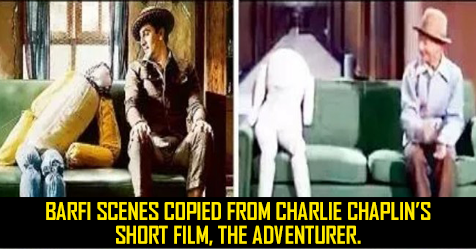
Here we compile the pictures of Bollywood Movie scenes which were copied from Bollywood and were big time fail:
In the scene where Ranbir plans to rob a bank, he plays hide-and-seek with Saurabh Shukla’s cop character using a sliding door. The sequence is similar to Charlie Chaplin’s 1917 short film, The Adventurer.
Barfi
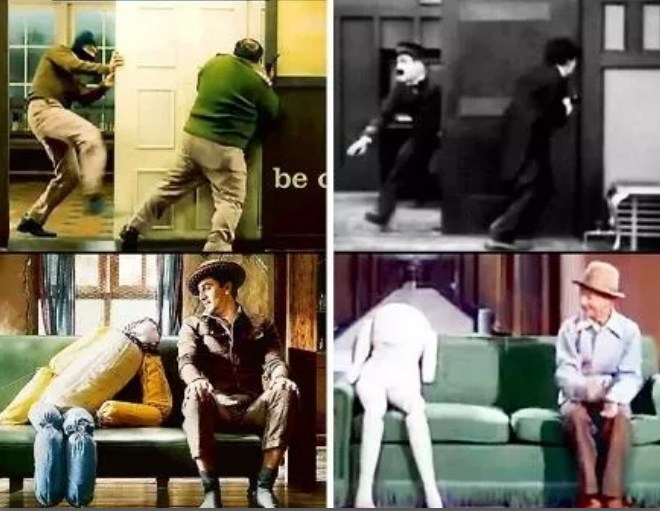
3 Idiots copied from INSTANT KIWI
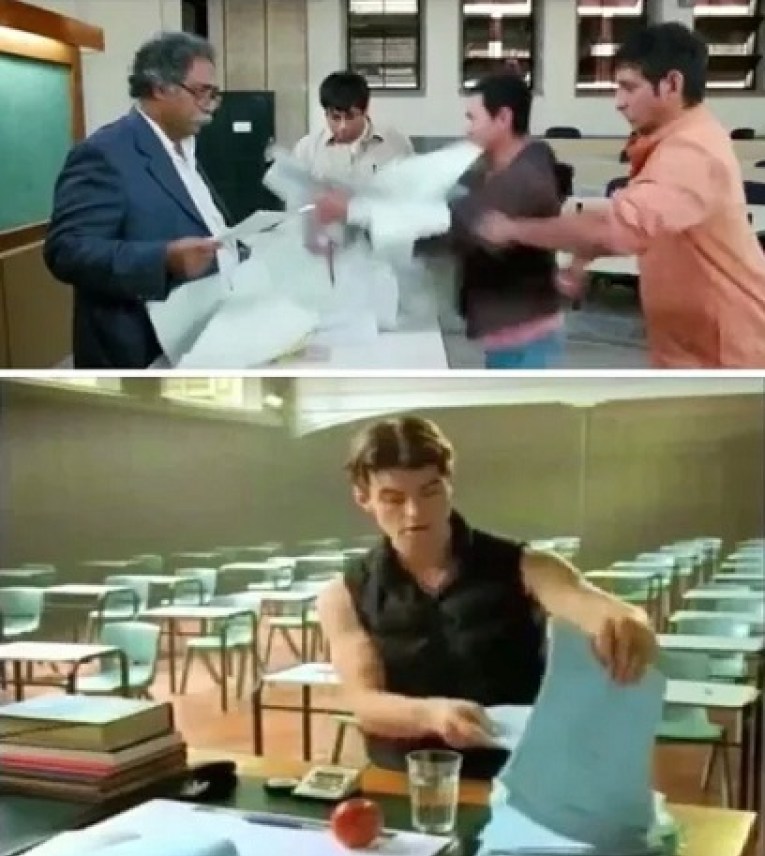
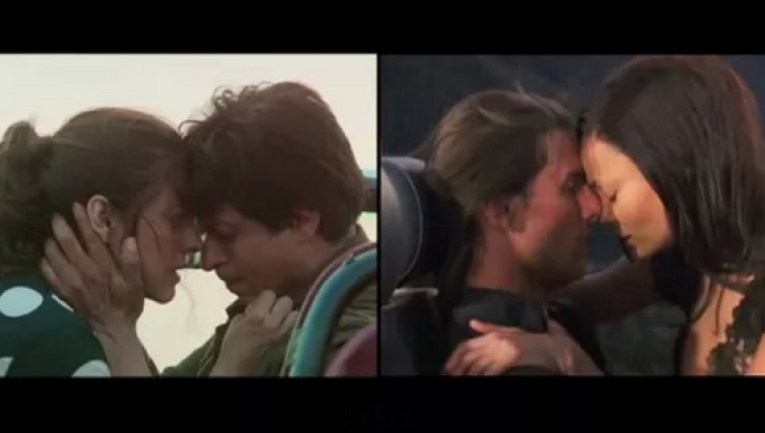
The car chase scene from MI2, copied by SRK starrer Dilwale.
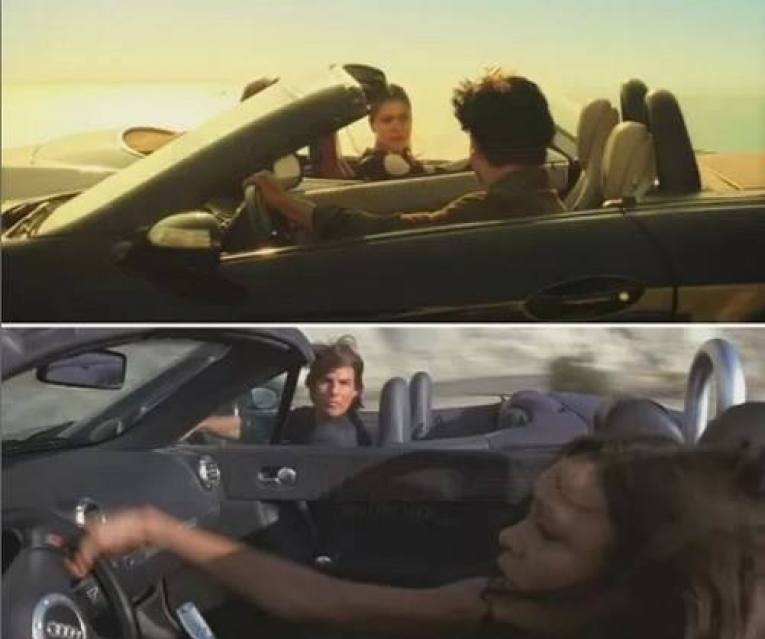
In Vidya Balan Starrer Kahaani , was much inspired from the movie Taking Lives starting Angelina Jolie
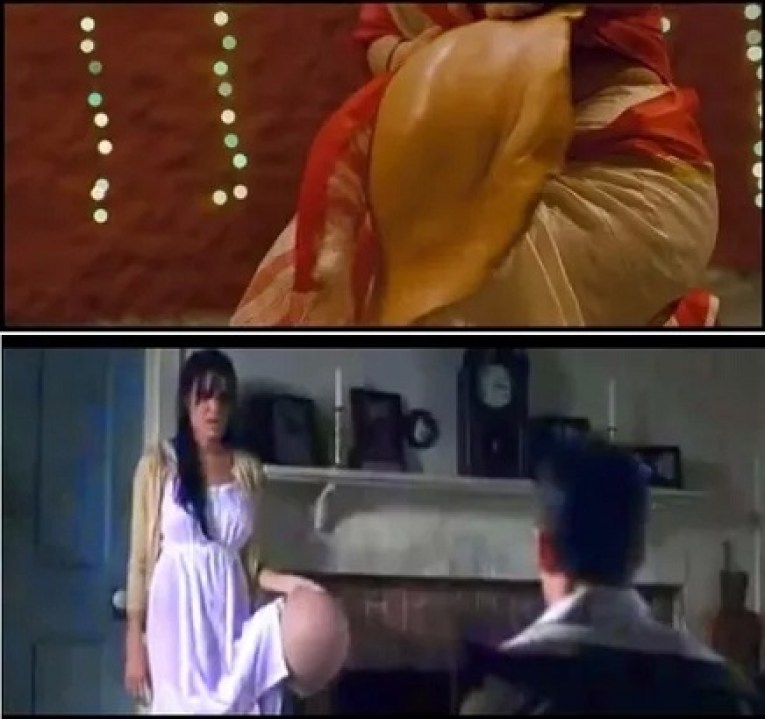
Akhsay Kumar’s insanely hilarious scene in the Award Function scene from Om Shanti OM? The entire scene was copied from a Swedish movie called Kopps.
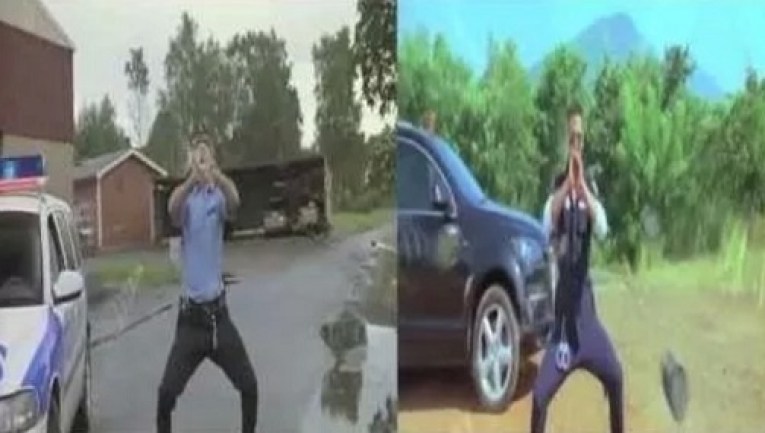
Dhamaal had few of its scene copied from year 2000’s hollywood movie Road Trip.
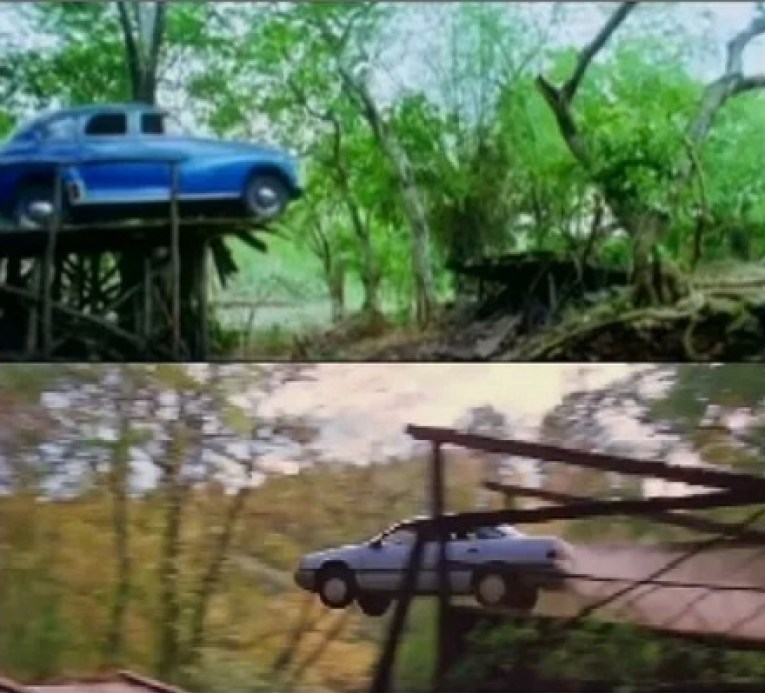
Can you spot the similarity? The modded BMW 5 Series above is from Dilwale trailer, the one below is M4 from BMW ad.

Himesh Reshammiya’s ‘The Xpose’ reminded us starkly of Leonardo DiCaprio’s ‘The Great Gatsby’
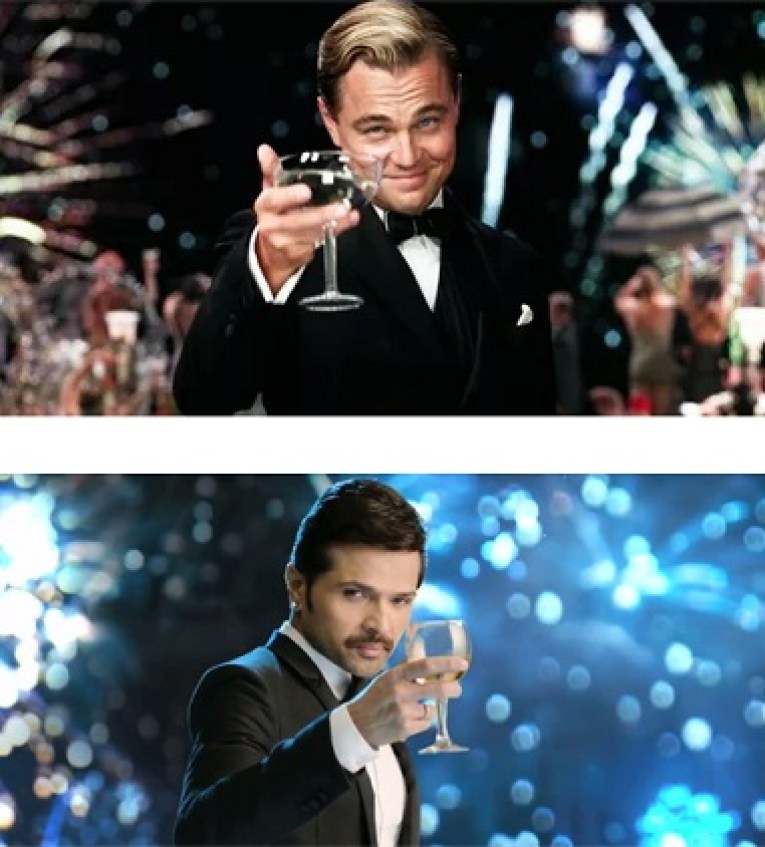
They just blatantly copied the entire sequence. DAMN!
Also Read:
The Tragedy of Translation: 9 Times Bollywood’s Remakes Missed the Hollywood Mark
Bollywood, the Hindi-language film industry, is a cinematic powerhouse known globally for its iconic song-and-dance sequences, vibrant melodrama, and blockbuster hits. However, for decades, it has also maintained a reputation—not always positive—for drawing “inspiration” from international cinema, particularly Hollywood. While some remakes are officially licensed and executed with finesse, others have fallen flat, failing to capture the magic, tension, or subtle humour of their originals.
The title “9 Pictures Shows How Poorly Bollywood Copied Hollywood!” refers to a common critique where an exact plot, stripped of its original cultural context and padded with formulaic Bollywood elements like unnecessary songs and subplots, results in a creative and commercial misfire.
Here, we delve into nine prime examples where the translation from Hollywood blockbuster to Bollywood adaptation resulted in a distinctly inferior, sometimes bewildering, product. These cases serve as cautionary tales in cinematic adaptation, demonstrating how often Bollywood’s attempts to “Indianize” a foreign concept lead to an unfortunate creative compromise.
1. God Tussi Great Ho (2008) vs. Bruce Almighty (2003)
The American comedy Bruce Almighty, starring Jim Carrey, was a global hit, using the simple yet powerful premise of a disgruntled TV reporter briefly gifted with God’s powers to explore themes of fate, free will, and humility.
The Bollywood Blunder: God Tussi Great Ho
God Tussi Great Ho transferred the premise to a Bollywood setting, casting superstars Salman Khan and Amitabh Bachchan (as God). The film was plagued by a loose script and a hurried directorial approach, which critics noted let down the charismatic cast. Unlike the original’s rapid-fire comedic pace, the Indian version suffered from a tedious second half and lacklustre music. The special effects, which were crucial to the plot’s magic, were described as a “complete waste,” reserved mostly for a “shoddy, glitzy song,” rather than serving the story. Ultimately, the movie’s attempt to replicate the original’s humour and fantasy element was deemed a “cheap facsimile” that missed the profound subtext of the Hollywood original.
2. Bichhoo (2000) vs. Léon: The Professional (1994)
Luc Besson’s French-English action-thriller Léon: The Professional is a highly acclaimed film that explores an intense, platonic, and professional relationship between a professional hitman (Léon) and a young girl (Mathilda) he takes under his wing after her family is murdered.
The Bollywood Blunder: Bichhoo
The adaptation, starring Bobby Deol and Rani Mukerji, was a “shameless thievery” of the original plot, but with crucial—and detrimental—changes. The original had no romantic angle, which was central to the profound sadness and tension of the story. However, to appeal to Indian audiences, Bichhoo shoehorned a conventional love story into the grim narrative, resulting in a completely different tone. Critics highlighted that the protagonist’s attempt to look “cool” and the inclusion of non-situational songs and dance sequences in locations like Mauritius, threw the film off balance. The main failing was turning a dark, character-driven thriller into a formulaic Bollywood revenge drama, where the lead actor’s “robotic” performance failed to capture the quiet, complex humanity of the original’s anti-hero.
3. The Killer (2006) vs. Collateral (2004)
Michael Mann’s Collateral is a neo-noir crime thriller set over a single night, focusing on the tense, philosophical dynamic between a calm, calculating hitman (Tom Cruise) and his unwilling taxi driver (Jamie Foxx). Its success lay in its taut, dark atmosphere and sharp dialogue.
The Bollywood Blunder: The Killer
The Killer replicated the plot—a taxi driver in Dubai unknowingly ferries a hitman on his list of targets—but struggled with the original’s dark intensity. While Irrfan Khan’s performance as the hitman was commended, the director duo deliberately softened the tone to “cater to the Indian tastes,” which diluted the grim realism of Collateral. The film injected an unnecessary, bubbly romantic lead for the cab driver and included elaborate song-and-dance sequences in malls and on beaches, breaking the single-night, high-tension narrative structure of the original. Despite having a commendable lead cast, critics found that the movie was a “pointless take” on the anatomy of crime and that the “taut equilibrium” was constantly threatened by the intrusions of an exuberant, non-essential romantic track. The film was ultimately a box office flop.
4. Players (2012) vs. The Italian Job (2003)
The Italian Job (2003) is a slick, fast-paced heist thriller known for its stylish action, particularly the iconic Mini Cooper chase sequences.
The Bollywood Blunder: Players
Players, an official remake, was burdened by the high expectations of replicating the original’s international flair and technical brilliance. Despite a large ensemble cast and high production values, the film was a commercial failure. Critics noted that the movie was a “disappointing” attempt that lacked the original’s excitement. The execution of the key character roles was also criticised, with one critic derogatorily remarking on the female lead’s “childish attempt to pass off as a gold-medalist hacker.” The resulting film was found to be a “one time watch only for the fans,” failing to deliver a compelling or thrilling heist experience that could justify the official remake title.
5. Action Replayy (2010) vs. Back to the Future (1985)
Back to the Future is a beloved sci-fi comedy classic about a young man who accidentally travels back in time and must ensure his teenage parents fall in love to secure his own existence. Its strength lies in its tight script, perfect comedic timing, and emotional core.
The Bollywood Blunder: Action Replayy
Action Replayy borrowed the time-travel-to-fix-parents’-marriage concept but failed spectacularly in execution. Critics pointed to a “going-nowhere humour track” and juvenile gags that prevented the film from achieving the witty humour of the original. The plot’s sci-fi elements were poorly integrated, with the entire time machine and professor storyline being “barely touched upon” and the resulting changes being illogical. The film attempted to blend sci-fi, romance, and comedy but ended up a “mish-mash of barely cohesive things” with underdeveloped characters and too many unnecessary songs, ultimately losing the emotional attachment and dramatic development of the source.
6. Kucch To Hai (2003) vs. I Know What You Did Last Summer (1997)
The American film I Know What You Did Last Summer is a quintessential 90s slasher-horror film focused on a group of friends stalked by a hook-wielding killer after they cover up a fatal car accident. It’s defined by suspense and gore.
The Bollywood Blunder: Kucch To Hai
The Bollywood version, Kucch To Hai, took the core concept but was widely criticised for diluting the thriller elements with formulaic Indian cinema tropes. Critics lamented that the film had too many songs popping up every few minutes, causing the audience to stop caring about the psycho killer subplot. The second half of the film was a major letdown, where the main narrative’s focus abruptly shifted to a love story, completely sidelining the central suspense. The result was a confused “whodunit” that left the viewer “exasperated” and had a poorly developed villain, ultimately failing to deliver the necessary chills and thrills of a suspense-horror movie.
7. Milenge Milenge (2010) vs. Serendipity (2001)
Serendipity is a charming, romantic comedy predicated on the belief in destiny, where two people who have a magical evening leave their future to fate, separated by chance encounters and a search for a sign.
The Bollywood Blunder: Milenge Milenge
The adaptation, Milenge Milenge, followed the plot of the original but faced numerous internal and external issues. The film was notoriously delayed for six years, which severely impacted its relevance and reception upon release. Furthermore, the lead pair, Shahid Kapoor and Kareena Kapoor, had ended their real-life relationship during the production, leading to their reported reluctance to promote the movie, which contributed to a chaotic production narrative. When it finally released, it received overwhelmingly negative reviews from critics and masses, highlighting how the original’s gentle charm and belief in destiny were lost in a delayed, poorly executed film that felt like “another cliché.”
8. Salaam-e-Ishq (2007) vs. Love Actually (2003)
Love Actually is a beloved British ensemble romantic comedy that weaves together nine distinct, interconnected love stories in the run-up to Christmas. Its success relies on its emotional authenticity and the brilliant juggling of multiple narratives.
The Bollywood Blunder: Salaam-e-Ishq
Salaam-e-Ishq attempted to replicate this structure by combining six interconnected love stories, but the sheer scope and length proved to be its undoing. Despite an enormous, highly paid ensemble cast, critics slammed the film for its excessive length (around 3 hours 30 minutes) and for being a “jumbled-up concoction” of stories. The six plots were “poorly huddled into one” and felt “forcefully intertwined,” failing to achieve the organic warmth and genuine emotion that made Love Actually a classic. The result was an “ode to mediocrity” that was declared a box-office failure, unable to recoup its massive budget despite the star power.
9. Deewane Huye Paagal (2005) vs. There’s Something About Mary (1998)
There’s Something About Mary is a pioneering, highly successful gross-out comedy featuring a love-struck man who hires a private investigator to find his high school crush, only for the investigator and several other eccentric men to become obsessed with her.
The Bollywood Blunder: Deewane Huye Paagal
This adaptation largely copied the plot, but its efforts to Indianize the Farrelly Brothers’ outrageous humour were met with mixed results. The film was praised by some for its fast pace and action, but critics called it a “mind-numbing mess” in the middle portion. The story was further muddled by the addition of a completely unnecessary subplot involving a murdered scientist and a stolen formula, which detracted from the core romantic comedy. Furthermore, critics felt the female lead, Rimi Sen, who was the central object of all the male characters’ obsession, was at best “tolerably pleasant,” and lacked the magnetic allure of Cameron Diaz in the original, making the obsession seem “more appalling than appealing.”
Conclusion: The Lost Art of Adaptation
These nine examples underscore a central challenge for Bollywood: the inability to trust the subtlety and narrative integrity of the original source material. Time and again, the poorly received remakes were not judged for the act of copying, but for the flawed execution—the forced insertion of songs, the unnecessary romantic subplots, the bloated running times, and the resulting loss of the original’s essence, whether it was a sci-fi comedy’s wit or a neo-noir thriller’s darkness.
As global cinema becomes more accessible, the scrutiny on uncredited and poorly executed remakes will only increase, pushing Bollywood towards official adaptations and, hopefully, more original, culturally resonant storytelling.
AISEO Friendly FAQs
Q1: Why did Bollywood copy Hollywood movies so often?
Bollywood frequently adapted Hollywood plots, especially from the 1990s through the early 2000s, for a few key reasons. Firstly, the pace of content creation was very high, and using proven Hollywood narratives provided a quick and easy blueprint for a successful film. Secondly, Indian audiences, particularly in the pre-OTT (over-the-top media service) era, had limited access to international cinema, making uncredited remakes seem like “original” content to a large section of the public. Finally, filmmakers often felt the need to “Indianize” the plot by adding necessary elements like song-and-dance sequences, family drama, and comedy tracks, believing the foreign plot alone wouldn’t appeal to the local masses.
Q2: What is the main problem with poor Bollywood remakes?
The main problem with poorly executed Bollywood remakes, as seen in examples like Bichhoo and Action Replayy, is the forced “Indianization” of the source material. Films would take a structurally sound genre piece (e.g., a dark crime thriller or a sci-fi comedy) and weaken its core by adding:
- Non-situational Songs: Disrupting the narrative flow and tension.
- Unnecessary Love Angles: Turning a complex relationship (like the platonic mentorship in Léon) into a conventional romance.
- Excessive Length: Bloating a tight Hollywood film into a three-hour epic with multiple subplots.
This process often sacrifices the original’s thematic depth, genre integrity, and subtle humour for formulaic mass appeal, leading to critical and commercial failure.
Q3: Are all Bollywood remakes of Hollywood films unofficial copies?
No. While many older Bollywood films were unofficial and uncredited “inspirations” or copies, the industry has significantly shifted towards legal and official remakes. In the 2010s and 2020s, with greater legal scrutiny and global audience awareness, major production houses frequently purchase the official rights to Hollywood films (e.g., Laal Singh Chaddha was an official remake of Forrest Gump, and Dil Bechara was an official adaptation of The Fault in Our Stars).
Q4: Which famous Hollywood movie was copied to create the film God Tussi Great Ho?
The Bollywood film God Tussi Great Ho (2008), starring Salman Khan and Amitabh Bachchan, was a widely acknowledged, though unofficially admitted, remake of the hit 2003 Jim Carrey comedy, Bruce Almighty.
The Hall of Shame: 9 Bollywood Copies That Proved the Original is Always Better
Bollywood, the vibrant heart of Indian cinema, is a global powerhouse known for its distinctive masala films—a signature blend of romance, action, drama, and musical numbers. Yet, for decades, one persistent criticism has shadowed the industry: its tendency to borrow, or outright lift, storylines from Hollywood, and sometimes, the execution is so poor it only serves to highlight the brilliance of the original.
The practice of creating uncredited remakes, euphemistically termed “inspiration,” has led to some spectacular box office successes, but it has also produced cinematic disasters that leave both critics and audiences baffled. The core issue is often a fundamental misunderstanding: attempting to graft a complex, character-driven Hollywood thriller or nuanced drama onto the formulaic Bollywood template of melodrama, songs, and over-the-top action.
Here are nine of the most glaring examples where the Bollywood adaptation fell short, demonstrating exactly how poorly the source material was often handled.
The Case of the Missing Nuance: When Subtlety is Replaced with Spectacle
A successful film is often defined by its emotional depth and structural complexity. When Bollywood picked up a brilliant script and stripped it down to a predictable sequence of events, the results were often critically panned.
1. Ghajini (2008) vs. Memento (2000)
- The Hollywood Original: Memento (2000) is a Christopher Nolan masterpiece exploring the psychological torment of a man with short-term memory loss (anterograde amnesia) trying to find his wife’s killer. Its genius lies in its non-linear narrative structure, which forces the audience to experience the protagonist’s fractured reality.
- The Bollywood Copy: Ghajini (2008), a remake of a 2005 Tamil film of the same name, borrows the core concept of the protagonist using tattoos and notes to track a killer. While it was a massive commercial hit and the first Bollywood film to cross the ₹100 crore mark domestically, critics noted that it significantly simplified the complex, non-linear narrative into a straightforward, flashback-heavy revenge thriller. It abandoned the intricate psychological puzzle of Memento in favour of a conventional Bollywood action climax and an added romantic track, thus losing the very element that made the original a cult classic.
- Why It Was a “Poor” Copy: The Indian version focused on turning the plot into an epic love story and a high-octane action film, sacrificing the original’s challenging, introspective narrative structure—the film’s entire reason for existing.
2. The Killer (2006) vs. Collateral (2004)
- The Hollywood Original: Collateral (2004), directed by Michael Mann, is a taut, stylish neo-noir thriller. It showcases the intense, philosophical dynamic between an ice-cold contract killer (Tom Cruise) and his reluctant, ordinary cab driver hostage (Jamie Foxx), all unfolding over one long night in Los Angeles.
- The Bollywood Copy: The Killer (2006) is a direct lift of the plot, placing the action in Dubai. The film follows an innocent Indian taxi driver who is forced to drive an elegant serial killer to his targets.
- Why It Was a “Poor” Copy: Despite a commendable performance by Irrfan Khan as the killer, the film’s pacing was criticised for being loose and unimpressive towards the end. Where Collateral maintained a grim, psychological atmosphere, The Killer was hampered by unconvincing supporting actors and the forced inclusion of a superfluous romance plot and item numbers, which significantly diluted the original’s high-tension atmosphere and street-smart aesthetic. Critics felt the film lacked the technical skill and writing required to wrap up the narrative effectively.
3. Ek Ajnabee (2005) vs. Man on Fire (2004)
- The Hollywood Original: Man on Fire (2004) stars Denzel Washington as a former CIA operative who takes a job as a bodyguard for a young girl in Mexico City, only to go on a brutal revenge mission when she is kidnapped. It is known for its grim, aggressive cinematography and intense, emotional core.
- The Bollywood Copy: Ek Ajnabee (2005), starring Amitabh Bachchan, is often described as an almost “carbon copy” of the plot, right down to the character arc of the estranged, alcoholic bodyguard finding a reason to live through the child he is protecting.
- Why It Was a “Poor” Copy: The film slavishly copied the visual style of the original, but the action sequences were found to be a “tad exaggerated,” and Bachchan’s movements seemed a bit slow compared to the original’s protagonist. Furthermore, the Bollywood adaptation added a completely unnecessary twist ending not present in the original, proving that the attempts to “Indianise” the plot often detracted from the original’s compelling simplicity.
The Comedy of Errors: When Humour and VFX Don’t Translate
Hollywood comedies and special-effects spectacles, when unofficially remade in Bollywood, frequently expose budget limitations and a misguided belief that a star-studded cast can compensate for a weak script.
4. God Tussi Great Ho (2008) vs. Bruce Almighty (2003)
- The Hollywood Original: Bruce Almighty (2003) is a worldwide comedy hit where a perpetually unhappy TV reporter (Jim Carrey) is granted God’s powers for a week to see if he can do a better job running the world. It successfully blends Carrey’s slapstick humour with genuine sentiment.
- The Bollywood Copy: God Tussi Great Ho (2008), featuring Salman Khan in the lead, follows the exact same premise. Despite having a stellar cast including Amitabh Bachchan as God and Priyanka Chopra, the film was a critical flop.
- Why It Was a “Poor” Copy: Critics panned the film for being “mind-numbingly dull,” lacking a coherent plot, and replacing the original’s wit with “crash humour.” The story was too busy focusing on trivial revenge against a professional rival and trying to win the love interest. The film had a dated feel overall, and its attempts at using special effects were often described as “tacky VFX” and “shoddy.”
5. Action Replayy (2010) vs. Back to the Future (1985)
- The Hollywood Original: Back to the Future (1985) is a classic sci-fi comedy about a teenager who accidentally travels back in time and must ensure his parents fall in love to secure his own existence.
- The Bollywood Copy: Action Replayy (2010), starring Akshay Kumar and Aishwarya Rai Bachchan, sees a young man travel back to 1975 to fix his parents’ crumbling marriage, which is a straight lift of the core narrative.
- Why It Was a “Poor” Copy: The film was overwhelmingly panned by critics as a “tacky film” and a “disaster.” Unlike the original, the film showed almost no interest in the science-fiction element or the complexities of time travel. Instead, the director focused heavily on recreating a garish, over-the-top 1970s aesthetic while sidetracking the plot with “lame comedy routines” and a script that felt devoid of genuine humour or conflict. The result was a box office failure with one of the worst openings for an Akshay Kumar film at the time.
The Emotional Transplant Failure: When Melodrama Suffocates Drama
Some of the most emotionally resonant Hollywood films, driven by quiet, mature performances, were turned into high-volume melodramas by Bollywood, diluting their subtle power.
6. Akele Hum Akele Tum (1995) vs. Kramer vs. Kramer (1979)
- The Hollywood Original: Kramer vs. Kramer (1979) is a revered, Oscar-winning legal drama that meticulously examines the raw, emotional fallout of a couple’s divorce and the subsequent custody battle for their young son. It is a masterpiece of restrained, character-driven storytelling.
- The Bollywood Copy: Akele Hum Akele Tum (1995), starring Aamir Khan and Manisha Koirala, is an adaptation that directly copies entire scenes and, at times, exact dialogues from the American film, right down to the father struggling to make breakfast for his son.
- Why It Was a “Poor” Copy: While considered a well-intentioned effort by some, the adaptation was heavily criticised for being “tinged with our usual ‘Indian’ melodrama.” It replaced the quiet, painful struggle of the original with loud emotional beats and, in classic Bollywood fashion, lifted much of its soundtrack. The song “Dil Mera Churaya Kyun,” for example, was notably lifted from Wham!’s “Last Christmas.” The emotional maturity and understated performance of the original were lost in the translation to a more high-stakes, dramatic Bollywood court battle.
7. Laal Singh Chaddha (2022) vs. Forrest Gump (1994)
- The Hollywood Original: Forrest Gump (1994) is a beloved, sentimental drama about a kind-hearted, simple man who inadvertently witnesses and influences pivotal moments in American history. It is praised for Tom Hanks’ empathetic and nuanced performance.
- The Bollywood Copy: Laal Singh Chaddha (2022) is an official remake that attempts to map the story onto key events in Indian history.
- Why It Was a “Poor” Copy: Despite being an official adaptation, the film drew mixed-to-negative reviews. Critics argued that Aamir Khan’s portrayal of the titular character “borders on parody” and employed “exaggerated facial expressions that feel more theatrical than empathetic,” failing to capture the original’s effortless sentimentality. While some international critics praised it as a faithful adaptation rooted in cultural influence, many felt the script failed to find an original voice, relying too heavily on replicating the source material without fully integrating the historical backdrops into Laal’s personal journey.
8. Bichhoo (2000) vs. Léon: The Professional (1994)
- The Hollywood Original: Léon: The Professional (1994) is a dark, French action-thriller focusing on the unconventional relationship between a professional hitman (Léon) and a 12-year-old girl (Mathilda) who seeks refuge and training after her family is murdered. It is known for its intense character dynamics and style.
- The Bollywood Copy: Bichhoo (2000) features a hitman (Bobby Deol) who takes in a girl (Rani Mukherji) who wishes to avenge the murder of her family by a corrupt narcotics officer. The film is an unofficial remake.
- Why It Was a “Poor” Copy: While copying the basic setup and the distinct characteristics of the corrupt cop villain, the film was criticized for a number of changes that undermined the original’s raw intensity. The age of the female protagonist was changed to an older character, and the subtle, dangerous, yet nurturing dynamic of the original was turned into a more typical, loud Bollywood thriller, losing the heart and the dark intimacy of Luc Besson’s original work. The overall execution of the thriller genre was largely found to be poor.
9. Players (2012) vs. The Italian Job (2003)
- The Hollywood Original: The Italian Job (2003) is a slick, ensemble heist action film known for its sophisticated planning, thrilling car chases (especially the Mini Coopers sequence), and fast-paced editing.
- The Bollywood Copy: Players (2012) was an official remake of the 2003 American film, featuring a large ensemble cast. The film was heavily promoted and had a huge budget, even shooting in locations like the North Pole.
- Why It Was a “Poor” Copy: Despite being official, the film opened to a poor box office response and received mixed-to-negative reviews. Critics found the plot sluggish, the action sequences lacked finesse, and the overall result felt “oddly mechanical,” making it a pale and less stylish imitation of the original. The sophisticated, adrenaline-fueled excitement of the American film failed to translate, proving that a big budget and international locations are not enough to salvage a poorly-structured screenplay.
The Lingering Legacy of Uncredited Remakes
These nine examples, spanning three decades of Bollywood history, underscore a significant challenge: the successful adaptation of foreign cinema requires more than just copying the plot points. It requires understanding the underlying philosophy, the rhythm of the narrative, and the nuances of the characters.
When an intricately plotted psychological thriller is turned into a simple revenge drama with added songs, or a subtle family drama is drowned in unnecessary melodrama, the result inevitably reinforces the reputation that the Bollywood copy is often a dramatically inferior product to its original Hollywood source. While the industry has since moved towards more official, credited remakes and a greater focus on original content, the ‘Hall of Shame’ serves as a persistent reminder of the pitfalls of uninspired imitation.
AISEO-Friendly FAQs
Q1: Why does Bollywood often copy Hollywood movies without credit?
A: The practice of creating uncredited remakes, often described as ‘inspiration,’ stemmed from a few key reasons, including a lack of stringent copyright enforcement in the past, a studio preference for a story that was already a proven commercial success, and the cultural requirement to “Indianise” the plot with music, melodrama, and comedy, which was sometimes used as justification for the uncredited borrowing.
Q2: What is the main difference between an “inspired” film and a legal remake?
A: An “inspired” film, or an unofficial remake, typically lifts the core plot, character arcs, and often specific scenes without purchasing the intellectual property rights or giving formal credit. This led to most of the critically poor copies. A legal/official remake is one where the Bollywood production house officially buys the rights from the Hollywood studio or original creator, allowing them to adapt the script and acknowledge the source material, as was the case with Laal Singh Chaddha and Players.
Q3: Which is considered the worst-executed Bollywood copy of a Hollywood film?
A: While the title for “worst” is subjective, films like God Tussi Great Ho (copied from Bruce Almighty) and Action Replayy (copied from Back to the Future) are frequently cited by critics and audiences as being the most egregious. They are often criticised for having poor special effects, being ‘mind-numbingly dull,’ and replacing the original’s sharp wit and narrative purpose with lazy comedy and unconvincing melodrama, ultimately failing to perform well at the box office.
Q4: Did Bollywood ever officially remake a Hollywood movie successfully?
A: Yes, there have been some successful official adaptations. For instance, films like Kaante (which drew inspiration from Quentin Tarantino’s Reservoir Dogs) and the later Tamil-Telugu official remakes often received better commercial and critical acceptance than the uncredited Hindi copies, showcasing that a successful remake is dependent on strong screenwriting and production value, not just the source idea.
Q5: Is the trend of copying Hollywood still common in modern Bollywood cinema?
A: The trend of direct, uncredited copying has significantly decreased. With growing global scrutiny, social media awareness, and stricter international copyright laws, Bollywood studios are now more likely to pursue official remake rights for foreign films, or concentrate on regional Indian films (South Indian cinema) for remakes, and produce more original screenplays than in the 1990s and early 2000s.
9 Cases That Show How Poorly Bollywood Copied Hollywood’s Biggest Hits
The global film industry thrives on shared stories and mutual inspiration. Hollywood remakes foreign films; foreign industries adapt American blockbusters. It is a natural part of cinematic evolution. However, for decades, the world of Bollywood has been plagued by a different kind of adaptation: the ‘unauthorised remake’—a practice critics often euphemistically term “inspiration” but which frequently amounts to blatant, frame-by-frame plagiarism.
This practice has resulted in films that take the tight, innovative narratives of Hollywood or international cinema and dilute them with misplaced melodrama, unnecessary songs, and an overall lack of the original’s artistic integrity. The question is not whether Bollywood copies, but why it often copies so poorly, turning modern classics into weak shadows.
Here are nine of the most glaring examples that highlight Bollywood’s sometimes-shameful history of uncredited adaptation, often resulting in films that pale in comparison to their Hollywood counterparts.
Case Study 1: The Masterpiece Mutilated
1. Ghajini (2008) vs. Memento (2000)
- The Original: Christopher Nolan’s Memento (2000) is a groundbreaking psychological neo-noir thriller that became a global sensation for its innovative, non-linear narrative structure. The story is told in reverse and forward-moving sequences, perfectly mirroring the protagonist Leonard Shelby’s condition: anterograde amnesia, leaving him unable to form new memories. The film’s brilliance lies in its complex structure, which forces the audience to experience his confusion in real-time.
- The Bollywood Adaptation: Ghajini (2008), starring Aamir Khan, also focuses on a man suffering from short-term memory loss (anterograde amnesia) who uses tattoos and Polaroid photos to track down his fiancée’s killer. While Ghajini was a massive commercial success and the first Hindi film to cross the ₹100 crore domestic mark, its faithfulness to the source material’s core plot was undeniable.
- The Poor Copying: The ‘poor’ aspect of the adaptation is two-fold. First, Ghajini abandoned the challenging non-linear structure that defined Memento‘s genius, opting instead for a simpler, more accessible (and conventional) narrative structure suitable for mainstream Hindi cinema. Second, the introduction of lengthy songs, elaborate action sequences, and a traditional Bollywood romance track (the entire first half) massively bloated the runtime to over three hours, undermining the original’s taut, lean, and relentlessly cerebral psychological thriller format. Filmmaker Christopher Nolan himself was reportedly “very upset” about the lack of credit or royalties for the film’s unauthorized use of his concept.
Case Study 2: From Cult Thriller to Commercial Flop
2. Zinda (2006) vs. Oldboy (2003)
- The Original: Park Chan-wook’s Oldboy (2003), part of his ‘Vengeance Trilogy,’ is a South Korean neo-noir action thriller known worldwide for its brutal, highly stylized violence, shocking twist ending, and the iconic single-take hallway fight scene. It is a masterpiece of dark cinema.
- The Bollywood Adaptation: Sanjay Gupta’s Zinda (2006) follows a nearly identical plot: a man (Sanjay Dutt) is kidnapped and imprisoned in a private cell for years without explanation, only to be suddenly released and given five days to discover the reason for his captivity and identity of his tormentor.
- The Poor Copying: Zinda was widely criticised by reviewers as a “shameless rip-off” that copied not only the plot and characters but “entire sequences” and the original film’s entire visual “treatment”. Critics highlighted how Zinda was a “pale copy” that watered down the original’s story for the Indian audience, particularly by changing the truly shocking and controversial climax of Oldboy to be more commercially palatable, thus removing the very element that made the original a profound and disturbing work of art. Despite the blatant similarities, director Sanjay Gupta claimed he had never seen the original in its entirety, finding it “boring”. The film ultimately flopped at the box office.
Case Study 3: The Heist That Didn’t Feel Cool
3. Kaante (2002) vs. Reservoir Dogs (1992)
- The Original: Quentin Tarantino’s Reservoir Dogs (1992) is a highly influential independent film, a crime drama focusing on a group of diamond thieves whose heist goes wrong and who suspect an informant is among them. It is characterized by its non-linear story, sharp dialogue, and stylish violence.
- The Bollywood Adaptation: Kaante (2002), directed by Sanjay Gupta, featured an ensemble cast of major stars (Amitabh Bachchan, Sanjay Dutt, Sunil Shetty) as a group of Indian men in Los Angeles who plot a bank heist after being unjustly detained by the police.
- The Poor Copying: While often cited as one of the more stylistically competent copies, Kaante was a derivative work that lifted the entire narrative framework and character dynamics (the use of color-coded aliases, the opening diner scene, the warehouse standoff) from the 1992 original. The critics pointed out that while it tried to mimic the edgy, noir style, the inclusion of Bollywood elements—like musical numbers—made it shift awkwardly between cinematic idioms. Ironically, Quentin Tarantino himself cited Kaante as his favorite “rip-off” of his work, specifically praising its decision to add detailed backstories for each character, which he felt he couldn’t do in his own version. However, this praise doesn’t erase the fact that the primary plot was still directly taken without credit.
Case Study 4: The Comedy of Legal Errors
4. Partner (2007) vs. Hitch (2005)
- The Original: Hitch (2005), starring Will Smith, is a charming and financially successful romantic comedy about a professional ‘date doctor,’ Alex Hitchens, who coaches men to woo women, while simultaneously falling for a cynical gossip columnist.
- The Bollywood Adaptation: David Dhawan’s Partner (2007) stars Salman Khan as Prem, a ‘Love Guru,’ who teaches his awkward client (Govinda) how to impress a rich girl (Katrina Kaif), all while Prem himself falls for a single mother (Lara Dutta) who is a journalist. The core premise is virtually identical, and reports suggested that some scenes were a “frame-by-frame” copy of the Hollywood original.
- The Poor Copying: While the film was a major commercial hit, its production was immediately embroiled in controversy. Sony Pictures, the owners of Hitch, contemplated a $30 million lawsuit against the producers for copyright infringement, making it one of the most high-profile plagiarism cases in Bollywood history at the time. The film’s “adaptation” mostly involved transplanting the American characters and scenarios into a Mumbai setting with added slapstick comedy, highlighting a lack of original creative effort in translating the central concept.
The Five More Pictures: From Courtroom to Comedy
The trend of uncredited adaptation is not restricted to action and thrillers; it permeates every genre, with varying degrees of box office and critical success. In these five cases, the concept, plot, or visual execution was transparently lifted, further cementing Bollywood’s reputation for taking easy inspiration over true originality.
-
The Divorce Drama: Akele Hum Akele Tum (1995) vs. Kramer vs. Kramer (1979)
- This Aamir Khan and Manisha Koirala starrer is essentially a Hindi-language version of the Oscar-winning American divorce drama, following a couple’s marital breakdown and the father’s struggle to raise his son alone while rebuilding his career. The emotional core and key plot points were directly mirrored.
-
The Identity Swap Comedy: Chachi 420 (1997) vs. Mrs. Doubtfire (1993)
- Kamal Haasan’s highly successful and beloved comedy, where a separated father disguises himself as an elderly female nanny (Chachi) to be near his children, is a direct lift of the Robin Williams classic Mrs. Doubtfire. While Haasan’s performance received praise, the film’s premise was entirely borrowed.
-
The Erotic Thriller: Murder (2004) vs. Unfaithful (2002)
- Emraan Hashmi and Mallika Sherawat’s neo-noir romantic thriller Murder, which focused on a woman trapped in a loveless marriage who begins an affair that leads to dire consequences, was a direct copy of the Diane Lane and Olivier Martinez-starrer Unfaithful. The plot, which was already a remake of a 1969 French film, was simply repackaged for the Indian audience with added titillation.
-
The Road Rage Thriller: Taxi No. 9211 (2006) vs. Changing Lanes (2002)
- This film, starring Nana Patekar and John Abraham, revolves around a simple road accident between a high-profile businessman and a taxi driver that escalates into a game of spiteful revenge, drastically impacting both their lives over a single day. This premise, including the key role of a misplaced file that drives the plot, is lifted directly from Ben Affleck and Samuel L. Jackson’s Changing Lanes.
-
The Classic Family Saga: Satte Pe Satta (1982) vs. Seven Brides for Seven Brothers (1954)
- Dating back to an earlier era of Bollywood, this iconic Amitabh Bachchan film about seven unkempt, single brothers who live on a farm and decide to find wives is a clear copy of the 1954 Hollywood musical Seven Brides for Seven Brothers. The core comedic and romantic plot points, and the dynamic of the seven siblings, are indistinguishable from the Hollywood original.
The Price of Plagiarism: Dilution and Disrespect
The core issue in many of these unauthorised remakes is not the act of telling a story again, but the failure to improve upon the original or even adapt it with respect for the source material’s tone and structure.
- Tonal Inconsistencies: Complex thrillers like Memento and Oldboy are meticulously crafted to explore human psychology and trauma. By inserting mandatory ‘masala’ elements—such as lengthy romantic subplots, comedic side-tracks, and extravagant song-and-dance numbers—the Bollywood versions often break the crucial tension and gravity of the original narrative.
- Lack of Credit and Compensation: The most significant ethical failure is the nearly complete absence of credit or financial compensation given to the original creators, particularly in the days before major Hollywood studios began setting up official production arms in India. This practice devalues intellectual property and artistic integrity.
- Missed Opportunity for Originality: For decades, this habit encouraged a reliance on proven formulas from the West, stifling the growth of authentic, regional Indian storytelling that could compete on a global stage without resorting to theft.
Thankfully, the landscape is shifting. With increased global exposure, social media scrutiny, and the rise of OTT platforms celebrating original content, modern Indian cinema is seeing a surge in legitimately purchased rights for remakes (e.g., Laal Singh Chaddha for Forrest Gump) and, more importantly, a powerful wave of truly original and critically acclaimed scripts. The history of the “poor copy,” however, remains a persistent and sometimes embarrassing reminder of a bygone era in Indian filmmaking.
AISEO Friendly FAQs
Q1: Why did Bollywood copy so many Hollywood films without credit?
Bollywood’s history of “unauthorised remakes” stems from a combination of factors, primarily a lack of stringent copyright law enforcement in India until the early 2000s, commercial pressure for guaranteed success, and limited global exposure. Producers often relied on successful Hollywood plots as a shortcut to box office returns, believing the original films were obscure enough not to cause legal trouble or audience awareness.
Q2: Did Hollywood ever take legal action against these unauthorized Bollywood remakes?
Yes, though not always successfully in the past. In one notable instance, Sony Pictures Entertainment contemplated a $30 million lawsuit against the producers of Partner (2007) for copying the plot of Hitch (2005). However, legal battles were historically difficult to pursue across international borders. The trend has shifted, with most modern remakes now securing official rights.
Q3: What is the most famous example of a Bollywood copy that was commercially successful?
Ghajini (2008), an adaptation of Christopher Nolan’s Memento, is arguably the most famous example. Despite being an unauthorized copy, it was a massive commercial success, becoming the first Hindi film to cross the ₹100 crore mark at the domestic box office. Another commercially successful example is Partner (2007), which copied Hitch.
Q4: Are modern Bollywood films still copying Hollywood without permission?
No, the practice has significantly declined, particularly for major studio releases. Increased audience awareness, widespread access to international films via streaming platforms, and stricter international copyright enforcement have made unauthorized copying a high-risk strategy. Most “remakes” today are officially sanctioned and purchased adaptations, such as The Girl on the Train (adapted from the 2016 Hollywood film) or Laal Singh Chaddha (adapted from Forrest Gump).

This Post Has 0 Comments