छोटे परदे पर ‘बालिका वधु’ में आनंदी के नाम से मशहूर हुईं प्रत्यूषा बनर्जी…
9 Bollywood Posters Are Proof That Indian Censor Board Is Not So-Sanskaari!
The Masti franchise is not really known for its tasteful depiction of women or elegant jokes. But, We never heard any Censor issues over this movie (Sorry, Udta Punjab). Guess that’s the problem with the concept of censorship – it’s got to be absolute, but that’s another story for another day.
Bollywood has a legacy of cringe-worthy posters.
Great Grand Masti

Single X



Kya Kool Hai Hum 3
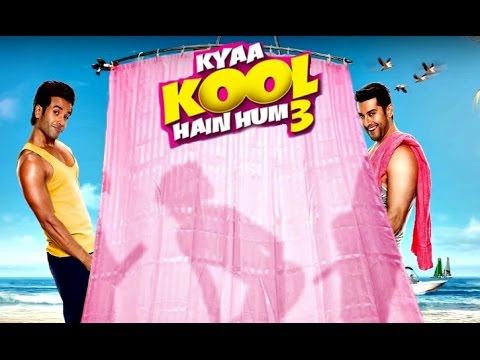

Grand Masti

Mastizaade

Also Read: 13 Banned Movies, We Bet You Can’t Watch At Night Alone!
Aastha
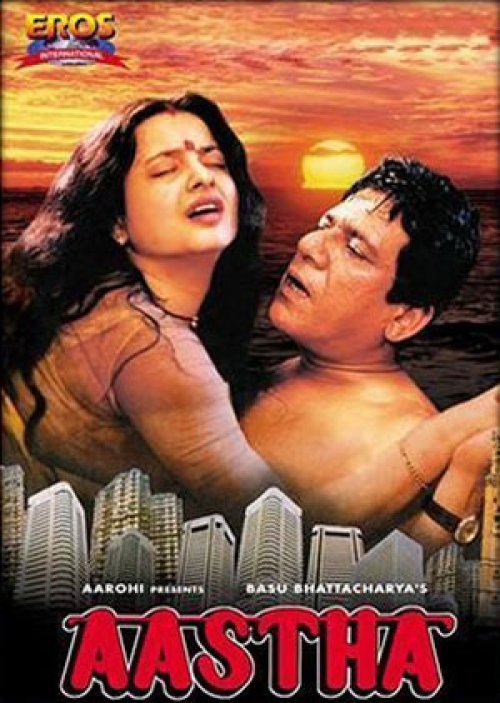
Wafaa

Also Read: 35 WORST Bollywood Movies That Scarred The Viewers For Life. Check It Out.
[ads1]
Girlfriend

Ishq Junoon
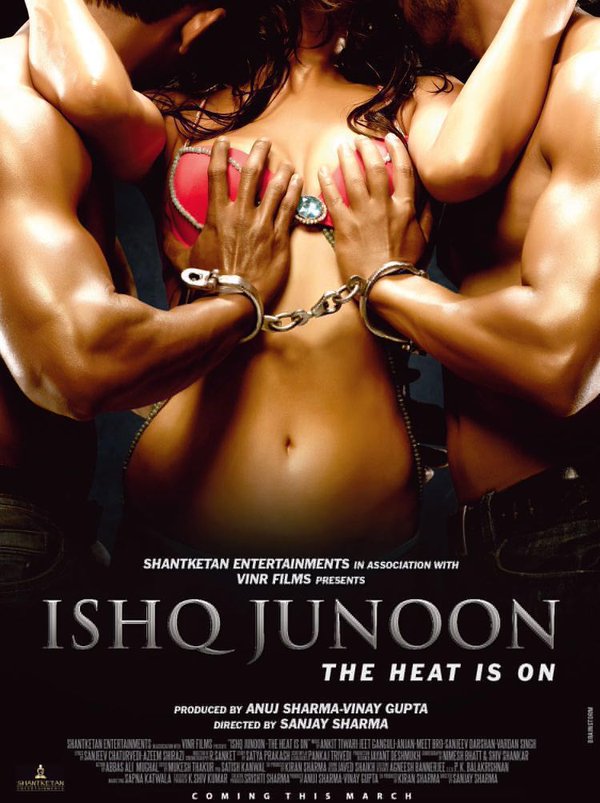
9 Bollywood Posters Are Proof That the Indian Censor Board Is Not So-Sanskaari!
The Central Board of Film Certification (CBFC) in India—popularly, and often controversially, known as the Censor Board—holds immense power over Indian cinema. Its official mandate is to certify films for public exhibition based on the Cinematograph Act of 1952, ensuring content does not offend sensibilities related to morality, decency, or national security. Yet, the body has frequently been derided with the moniker “Sanskaari Censor Board,” particularly during periods where its decisions were seen as overly conservative, prescriptive, or even puritanical.
The irony, however, lies in the promotional material—the first public face of a film: the posters. A closer look at some of the most scandalous Bollywood posters approved or, in some cases, partially approved by the very same board, reveals a fascinating paradox. While the CBFC has historically demanded cuts in kissing scenes, objected to cuss words, and even targeted themes of female sexuality, a number of high-profile posters featuring nudity, overt sexual innuendo, and controversial political statements have slipped through, or only faced minor, often arbitrary, modifications. This collection of nine posters serves as compelling evidence that the “Sanskaari Censor Board” often operates with wildly fluctuating standards, proving it is, perhaps, not so sanskaari after all.
The Censor’s Eye: CBFC and Promotional Material
The Central Board of Film Certification’s role extends beyond the final cut of the film; it is also a regulatory body for all public advertisements, including movie posters, trailers, and hoardings. Rule 35/38 of the Cinematograph Act explicitly mandates that all film advertisements must carry the appropriate certificate category (U, UA, A, or S), and the CBFC has the authority to object to promotional material that it deems offensive.
The controversies surrounding film posters often become more explosive than the films themselves because the poster is a public, unavoidable image, unlike a film which a viewer actively chooses to watch. This puts the CBFC in a difficult position: should it censor a poster for public display even if the image is a truthful representation of a scene that has been certified for “Adults Only” (A) viewing? The ensuing debates have laid bare the internal inconsistencies of the CBFC’s moral compass, leading to a host of absurd, arbitrary, and highly debated rulings.
Nine Posters That Challenged Indian ‘Sanskaar’
The following nine posters, and the controversies they ignited, illustrate the unpredictable and often contradictory application of “sanskaar” by the Indian Censor Board and other regulatory bodies.
1. PK (2014): The Nude Truth and the Transistor
The poster for Aamir Khan’s sci-fi satire PK remains one of the most iconic and debated pieces of Bollywood marketing in the 21st century. The poster features Aamir Khan standing completely nude on a railway track, strategically covering his modesty only with a vintage transistor radio.
The Controversy: The image immediately provoked outrage from conservative groups, leading to numerous complaints, petitions, and even a court case in Uttar Pradesh filed against the actor and the director for obscenity.
The CBFC’s Paradox: Despite the clear depiction of male nudity and the storm of protests, the poster was not officially banned by the Central Board of Film Certification. Its clearance suggested an unexpected tolerance for artistic liberty and nudity in a satirical context, challenging the widely held notion that the CBFC would instantly censor any form of on-screen or promotional nudity. The ensuing court battles highlighted that while the CBFC may have shown restraint, public and judicial scrutiny quickly stepped in to enforce a ‘sanskaari’ code.
2. The Dirty Picture (2011): A Challenge to Public Decency
Vidya Balan’s celebrated portrayal of a controversial 1980s actress in The Dirty Picture was accompanied by promotional posters that were deliberately provocative, featuring Balan in sensual, bold poses.
The Controversy: A city court in Nampally, Andhra Pradesh, ordered the police to book Vidya Balan for posing “indecently” on the film’s posters and publicity material. The petitioner argued that the hoardings were “corrupting the minds of people” and causing harm to society.
The CBFC’s Paradox: The film itself received an ‘A’ (Adults Only) certificate, which is standard for adult-themed biopics. However, the legal action against the poster indicated that even an ‘A’ certificate was not enough to shield the promotional material from morality policing. The court intervention forced a debate on where artistic representation ends and ‘indecency’ begins, effectively overriding the CBFC’s implicit approval of the advertisements that preceded the film’s release.
3. Jism 2 (2012): Obscenity and the Mayor’s Order
The poster for Jism 2, starring Sunny Leone, featured a figure with a white sheet draped suggestively over a nude female body, creating a silhouette that was highly sensual and borderline explicit.
The Controversy: The poster was reportedly pulled down from public display by the Mayor of Mumbai, who deemed it “obscene”. Additionally, the controversy was fueled by accusations that the poster was copied from a foreign fashion campaign.
The CBFC’s Paradox: This is a classic case of the Censor Board’s initial certification (or tacit approval) being superseded by the authority of a local government official acting on public morality complaints. While the CBFC is the central certification body, its lack of an enforcement agency means local political pressure can easily dictate what is acceptable for public display, bypassing the Censor Board’s ruling entirely.
4. Hate Story (2012): The Blue Ink ‘Censorship’
The erotic thriller Hate Story had several controversial posters, most notably one featuring actress Paoli Dam’s bare back with vengeful text inscribed on it.
The Controversy: The poster was considered so provocative that the West Bengal Censor Board (a regional body) took the bizarre and explicit step of ordering that the actress’s bare back and cleavage on the posters must be blotted out with blue ink. The Calcutta High Court later upheld this highly visual and peculiar form of censorship.
The CBFC’s Paradox: This decision is perhaps the most illustrative of the arbitrary nature of ‘sanskaari’ policing. Instead of an outright ban or a request for a changed image, the directive to use bright blue ink on the actress’s skin created a public spectacle out of the censorship process itself, drawing more attention to the very elements they sought to conceal and questioning the rationale behind such a visual mutilation.
5. Kurbaan (2009): The Saree Protest
The promotional poster for Kurbaan featured lead actors Kareena Kapoor and Saif Ali Khan in an intimate embrace, with Kapoor’s back mostly bare.
The Controversy: The poster immediately attracted the ire of the political party Shiv Sena. Party workers staged a protest and publicly sent a saree to the actress, urging her to “cover up” and preserve Indian culture and “sanskaar”.
The CBFC’s Paradox: The CBFC had deemed the poster acceptable for a film dealing with complex political themes. However, the subsequent protest shows that the CBFC’s approval often carries little weight when faced with determined external moral policing. The poster became a cultural battleground, proving that ‘sanskaar’ is often defined and enforced by politically motivated vigilantes rather than the statutory body itself.
6. Guzaarish (2010): The Public Health Debate
Sanjay Leela Bhansali’s Guzaarish poster featured Aishwarya Rai Bachchan holding a cigarette, a seemingly innocuous detail compared to the previous examples.
The Controversy: The poster was heavily criticised by the medical community and various public health groups for promoting smoking, especially featuring a high-profile female celebrity. The critics argued that it violated anti-smoking laws and sent an unhealthy message to the youth.
The CBFC’s Paradox: This shifts the focus from sexual morality to public health morality. While the CBFC is supposed to object to material that incites the commission of an offense, its failure to intervene in the promotion of a serious public health hazard (smoking) while rigorously censoring mild profanity in films highlights an inconsistent ethical priority. The CBFC later, particularly during Pahlaj Nihalani’s tenure, became stricter on smoking, indicating a belated response to this kind of public pressure.
7. Ek Chotti Si Love Story (2002): An Early Glimmer of Shock Value
The poster for the film Ek Chotti Si Love Story, starring Manisha Koirala, made headlines for its explicit and inappropriate representation of a woman’s body, focusing on an overly suggestive pose.
The Controversy: The promotional material was criticized for its indecent and inappropriate portrayal of the lead actress.
The CBFC’s Paradox: This film and its poster date back to an earlier era of Bollywood, but the controversy serves as a historical precedent for the board’s inconsistent application of standards. The poster’s approval indicated that using overt sexual imagery to generate curiosity was already a tested, and sometimes permissible, tactic, flying in the face of conservative cinematic tradition.
8. Hunterr (2015): Banned for ‘Vulgar’ Innuendo
The poster for the ‘sleeper hit’ Hunterr (2015), a story about a sex addict, was a collage featuring the lead hero emerging from a banana, with three women symbolically positioned around the fruit.
The Controversy: The poster was reportedly banned for being overtly ‘vulgar’ and for using a clear sexual innuendo (the banana imagery) to market the film.
The CBFC’s Paradox: In this case, the Censor Board did take a firm stance against the visual pun, successfully banning the poster for its vulgarity. However, the controversy itself is a perfect example of the narrow and often arbitrary line the board attempts to walk: why is a suggestive banana objectionable, while the nearly nude body in PK or the intimate embrace of Kurbaan was permitted? The answer often lies in the fine print of official guidelines versus the mood of the ‘sanskaari’ moral gatekeepers at a given time.
9. Phantom (2015): ‘Sanskaar’ and the National Flag
The poster for the espionage thriller Phantom (2015) was a different kind of ‘sanskaar’ violation. It featured the lead actors, Katrina Kaif and Saif Ali Khan, blindfolded with a strip of cloth that resembled the Indian National Flag (Tricolour).
The Controversy: The Censor Board explicitly rejected the original poster, objecting to the use of the National Flag—complete with the Ashok Chakra—to blindfold the actors, arguing it violated the Code of Conduct for the display of national symbols.
The CBFC’s Paradox: This highlights a crucial distinction in the CBFC’s priorities: the board’s moral alarm is often louder when it comes to national honour and patriotism than when dealing with issues of sexual morality or nudity. They were quick to order a change to protect the integrity of a national symbol, suggesting that ‘sanskaar’ is as much a political and patriotic concept as it is a moral one.
The Evolving ‘Sanskaar’ of Indian Cinema
The nine posters listed above, covering a span of over a decade, collectively demonstrate a powerful internal contradiction within the Indian film certification system. The “Sanskaari Censor Board” label, which gained particular traction during the tenure of former chairman Pahlaj Nihalani for his stringent moral policing on film content, fails to account for the surprising leniency shown towards shocking, sexually suggestive, or controversial promotional material.
The Politics of Inconsistency
The inconsistency can be attributed to several factors:
- Political and Social Pressure: Controversies are often not initiated by the CBFC itself but by political groups (like the Shiv Sena in the case of Kurbaan) or legal entities (as with The Dirty Picture), forcing the board’s hand or overriding its initial decision.
- A-Certificate Loophole: For many of the overtly sexual posters (Jism 2, The Dirty Picture), the filmmakers can argue that the marketing aligns with the film’s ‘Adults Only’ certificate, implying the controversial content is aimed at a mature audience. This is a partial defense against universal public decency complaints.
- The Non-Censorship Mandate: Following the removal of Pahlaj Nihalani, there was a stated shift toward a philosophy of ‘certification, not censorship’. This intended liberalism was an effort to counter the ‘sanskaari’ image, leading to a new era of flexibility that further muddied the waters of what is permissible.
In the end, these nine posters are less a failure of censorship and more a snapshot of the ongoing cultural tug-of-war in India. They prove that the Indian Censor Board, whether by design or by being constantly pressured by public and political outrage, is a highly porous institution. It can be fiercely ‘sanskaari’ one day—banning cuss words and trimming kisses—and surprisingly liberal the next, giving a pass to a nude poster or an overtly vulgar advertisement, thus revealing its truly complicated, and definitely not so-sanskaari, character.

This Post Has 0 Comments