छोटे परदे पर ‘बालिका वधु’ में आनंदी के नाम से मशहूर हुईं प्रत्यूषा बनर्जी…
Even After 20 Years Of Release, We Bet You Didn’t Notice This silly mistake in ‘Border’
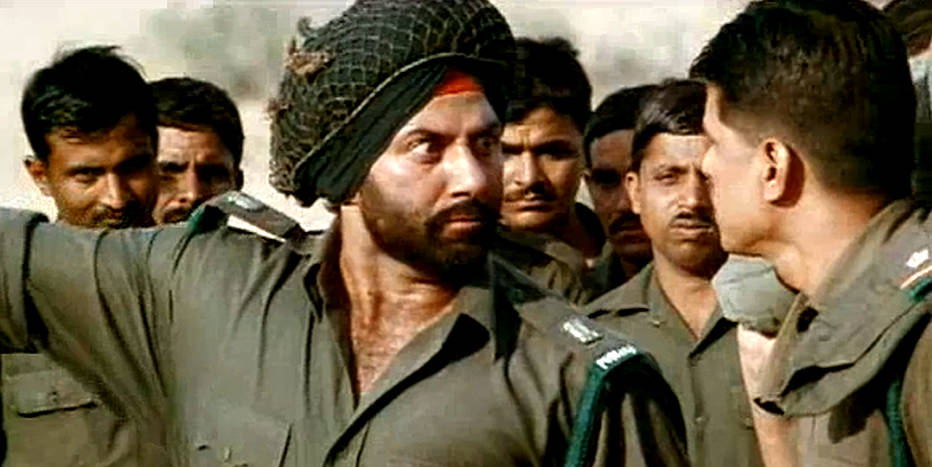
90s popular film ‘Border’ complete it’s 20 years today. The film which based on the Battle of Longewala during the Indo-Pakistani War of 1971, produced and directed by J. P. Dutta.
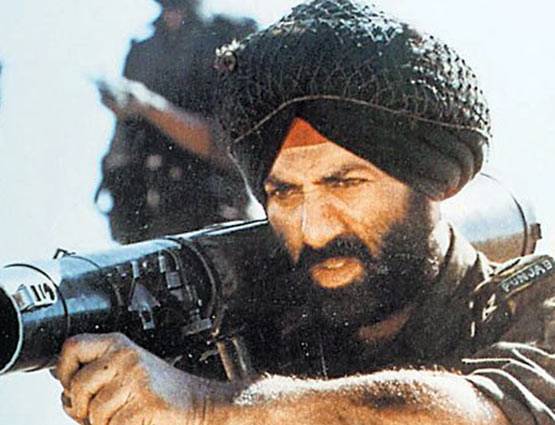
It was the highest grossing Bollywood film of the year 1997. The film stars Sunny Deol, Suniel Shetty, Akshay Khanna and Jackie Shroff in important roles.
On the occasion of January 26 and August 15, you have often seen this movie but, we bet you didn’t notice this silly mistake in the movie.
In the climax of the movie, when Jackie Shroff bombard the enemy tankers from the fighter jet, at that time Sunny Deol fights with enemies on ground.

During this, Jackie Shroff raises his thumb to congratulate Sunny. In response, Sunny Deol also raises his thumb. Now how can anyone congratulate the person who stands on land from the height of 4 thousand feet?
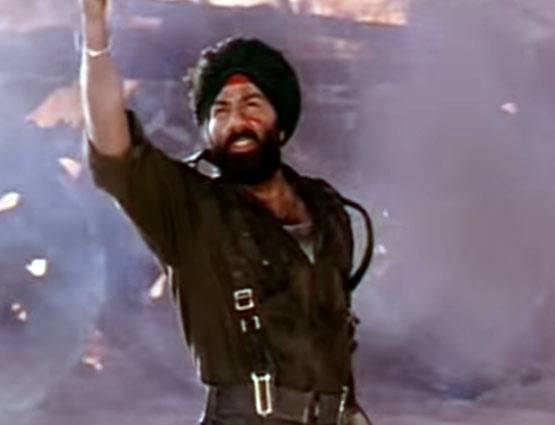
Not only that, this mistake of the film was mentioned by Anu Kapoor on his show, Suhaana Safar with Annu Kapoor. The mistake was send to Annu by a fan.
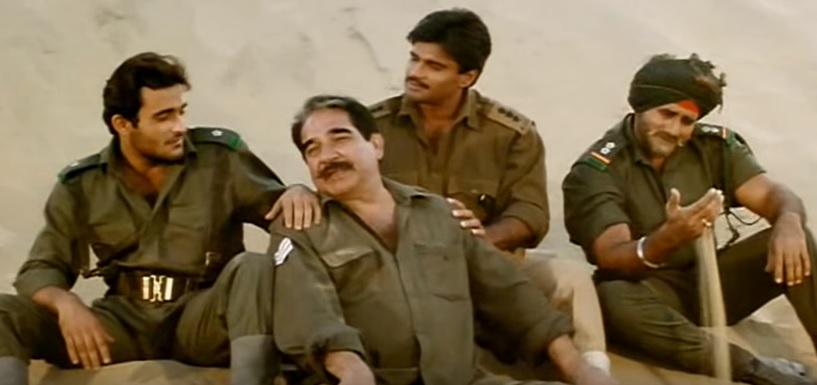
In this film, Sunny Deol played the role of Major Kuldeep Singh Chandpuri. Apart from this, Suniel Shetty played the role of Assistant Commandant Bhairon Singh. Akshaye Khanna as 2nd Lt. Dharamvir Singh and Jackie Shroff as Wing Commander Andy Bajwa.
[ads2]
In the female characters, Pooja Bhatt, Sharbani Mukherjee and Tabu were in the lead role. JP Dutta also won the best director award for the film. On the other hand, Javed Aktar won National Award for Best Lyrics and Akshaye Khanna won Best Male Debut Award.
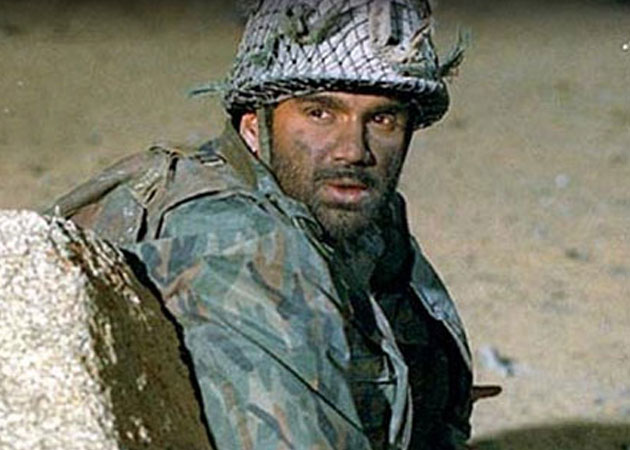
As the film completes its 20 years, director JP Dutta organised a reunion bash for the film’s cast and crew, at a Mumbai hotel on Sunday (12th June).
The event was marked by the film’s leading stars like Suniel Shetty who came with wife Mana and daughter Athiya, Jackie Shroff, Pooja Bhatt and Puneet Issar. The actors looked super excited recalling their old days and got nostalgic meeting their colleagues.
The film’s other leading man Sunny Deol, who played a key role in the film, had to give the event a miss. That’s because he was shooting for a crucial scene for his son Karan’s upcoming film.
[ads1]
Even After 27 Years Of Release, We Bet You Didn’t Notice This Silly Mistake in ‘Border’
It is a film that has cemented its place in the history of Indian cinema, a cinematic epic whose music alone can stir the soul of a nation. J.P. Dutta’s ‘Border’ (1997), a film based on the heroic Battle of Longewala during the Indo-Pakistani War of 1971, is a monumental work of patriotism and grit. Starring an ensemble cast that included Sunny Deol, Jackie Shroff, Suniel Shetty, and Akshaye Khanna, the movie is universally lauded for its intense emotional quotient and raw portrayal of battlefield brotherhood.
It is often held up as one of the most realistic war dramas Bollywood has ever produced, largely due to its filming on actual locations in the deserts of Rajasthan and the cooperation of the Indian Army and Air Force, which loaned real vehicles and weaponry.
Yet, even in a movie so meticulously crafted, one scene stands out—a moment of cinematic hyperbole so jarringly silly that it has become an inside joke among military enthusiasts and eagle-eyed fans decades after its release. It’s the climactic, yet deeply flawed, act of martyrdom by Captain Bhairon Singh (Suniel Shetty).
The Ultimate ‘Silly’ Blunder: A Man vs. Tank with an Anti-Tank Mine
The mistake isn’t a misplaced cell phone or a visible crew member; it’s a moment of action that completely defies military logic, making it one of the most unbelievable “hero” moments in the film.
The scene in question is Captain Bhairon Singh’s final, dramatic sacrifice. Having sustained heavy injuries, he sees a Pakistani tank relentlessly advancing. In a burst of superhuman effort, he grabs an anti-tank mine—a large, heavy, dish-shaped explosive—and charges towards the massive steel behemoth.
The Three Absurdities That Make it ‘Silly’
The flaw in this iconic scene is multi-layered, moving beyond mere continuity error into the realm of tactical impossibility, which is why it qualifies as the film’s silliest mistake when viewed with an understanding of military hardware:
1. The Impossible Retreat of the Tank Crew
As Bhairon Singh runs, the enemy tank is shown to suddenly start reversing wildly and frantically. The implication is that the tank crew is terrified of the solitary, running soldier and his hand-carried explosive.
- The Reality Check: An anti-tank mine is designed to be buried and detonated by the massive pressure and weight of a tank rolling over it. It is not a hand grenade or a magnetic limpet mine. The mine carried by Bhairon Singh would have no mechanism to explode simply by being thrown or placed next to a stationary tank. A tank crew, protected by thick armor and operating a machine designed to withstand such a mine, would not panic and retreat from a single, injured soldier carrying unprimed ordnance. This desperate, cartoonish retreat by a trained tank crew is what makes the scene so unbelievable and, frankly, silly.
2. The Nature of the Anti-Tank Mine
Anti-tank mines are passive weapons. They require a certain amount of sustained pressure to arm and then detonate, preventing accidental explosions from light vehicles or footsteps. The idea that a soldier could manually arm it and then somehow throw or place it in a way that generates the necessary force to breach the tank’s armor is highly inaccurate. It reduces a serious piece of military hardware into a handheld, all-purpose bomb for dramatic effect.
3. The Unrealistic Immunity to Bullet Fire
Before the final charge, Bhairon Singh is shown being repeatedly shot by the Pakistani soldiers but continues his run, seemingly unfazed, until he reaches the tank. While a certain level of heroic resilience is expected in a war film, the scene pushes the boundary of suspension of disbelief, culminating in a physically impossible act of cinematic suicide bombing against a vehicle that could have simply run him over or engaged him with its coaxial machine gun. The entire sequence is a dramatic liberty that sacrifices realism for an emotional climax.
Beyond the Mine: Other Flaws That Missed the Mark
While Bhairon Singh’s ultimate scene takes the title of the ‘silliest’ due to its sheer tactical impossibility, there are other historical and technical inaccuracies in Border that demonstrate the difficult balance between cinematic drama and factual reporting.
Historical and Factual Inaccuracies
The movie, while based on the valorous actions of Major Kuldip Singh Chandpuri and his men, made several significant changes to the true events of the Battle of Longewala.
- The BSF Constable vs. Army Captain: In the film, Suniel Shetty plays Captain Bhairon Singh, an officer in the Border Security Force (BSF). However, the real hero was Bhairon Singh Rathore, a BSF constable who played a crucial role in the battle. Upgrading his rank and unit was a creative choice that simplified the command structure for the film.
- Akshaye Khanna’s Fate: The character of 2nd Lieutenant Dharamvir Singh (Akshaye Khanna) meets a tragic, emotional end in the film. In reality, none of the Indian soldiers at Longewala were killed during the night-long engagement, a testament to the real Major Chandpuri’s superb defensive planning. India lost only two soldiers—one on the spot and another later in the hospital—contrasting sharply with the continuous falling of bodies shown in the movie.
- The Myth of Night-Time Tank Combat: The massive night attack by the Pakistani tank regiment is the film’s primary source of tension. However, in 1971, tanks were not generally equipped with advanced night vision systems. Modern-style tank warfare at night, as depicted in the movie with full visibility, was a significant departure from the capabilities of the period, which is why the Pakistani advance slowed down in the real battle, giving the Indian forces time to prepare.
The Verdict: Why We Still Love the Flawed Masterpiece
Despite these dramatic liberties, Border remains a cinematic classic. Director J.P. Dutta’s choice to dramatise the Battle of Longewala with emotionally charged, albeit technically flawed, action sequences was a conscious effort to connect with a mass audience.
The exaggerated sacrifice of Bhairon Singh, even with its ‘silly’ technical mistake, achieved its primary goal: to deliver a moment of heart-wrenching heroism and inspire generations of viewers. The factual errors fade into the background when weighed against the film’s powerful depiction of human courage, friendship, and sacrifice. The enduring popularity of songs like “Sandese Aate Hain” and the raw performances by the cast prove that in the world of cinema, sometimes a good, emotional story trumps a textbook accurate military manual.
It is this very blend of near-flawless production, historical commitment, and occasional cinematic overreach that continues to make Border a fascinating watch. The next time you see Bhairon Singh charge that tank, you will have noticed the “silly mistake,” but you will also appreciate the sheer, glorious drama of it all.
AISEO Friendly FAQs About the Movie ‘Border’
Q1: What was the main ‘silly mistake’ in the movie ‘Border’ that viewers often miss?
A: The main ‘silly mistake’ is the climactic scene where Suniel Shetty’s character, Bhairon Singh, charges an enemy tank with an anti-tank mine. From a military standpoint, this is a major inaccuracy because anti-tank mines are designed to be detonated by the weight and pressure of a tank rolling over them, not by being hand-carried and placed. The tank crew’s panicked retreat in the film is considered unrealistic and tactically absurd, as their armor would have protected them from an unprimed mine.
Q2: Is the movie ‘Border’ factually accurate about the Battle of Longewala?
A: While the movie is based on the real Battle of Longewala (1971), it takes significant creative liberties for dramatic effect. Key factual inaccuracies include exaggerating the number of Indian casualties (in reality, only two Indian soldiers were lost), portraying Suniel Shetty’s character as an officer instead of a BSF constable, and showing Akshaye Khanna’s character dying, when in fact, the real officer survived.
Q3: What military error is highlighted in the night fighting scenes of ‘Border’?
A: The film depicts an intense tank battle at night. The major military error here is that in 1971, tanks were equipped with primitive night vision systems. Large-scale, full-speed armored combat at night, as shown in the movie, was highly unlikely and technically challenging with the equipment available during that era, which is why the real Pakistani advance was significantly hampered after dark.
Q4: Who played the real-life hero Major Kuldip Singh Chandpuri in ‘Border’?
A: The role of Major Kuldip Singh Chandpuri, the Indian Army officer who commanded the company at Longewala and was awarded the Maha Vir Chakra, was played by actor Sunny Deol. The film brought his bravery and leadership to national attention.

This Post Has 0 Comments