छोटे परदे पर ‘बालिका वधु’ में आनंदी के नाम से मशहूर हुईं प्रत्यूषा बनर्जी…
From Kareena To Katrina, These 10 Bollywood Actresses Were Publicly Molested.. Saddening!
Kareena Kapoor Khan

During an event in 2013, Kareena Kapoor Khan had to face tampering. Actually, Kareena Kapoor Khan was coming out after the event was over. Then some people in the crowd tampered with them. During this, Kareena became very nervous. Later the bouncers had taken them out safely.
Tapsee Pannu

In the promotional event of ‘Pink’, released in 2016, its lead actress Tapassey Pannu had revealed that she had to be a victim of tampering in Delhi. According to Tapasy, people used to touch and tamper with them in the bus several times during college days. Many times they used to go to crowded places, often people used to keep hitting here.
Katrina Kaif
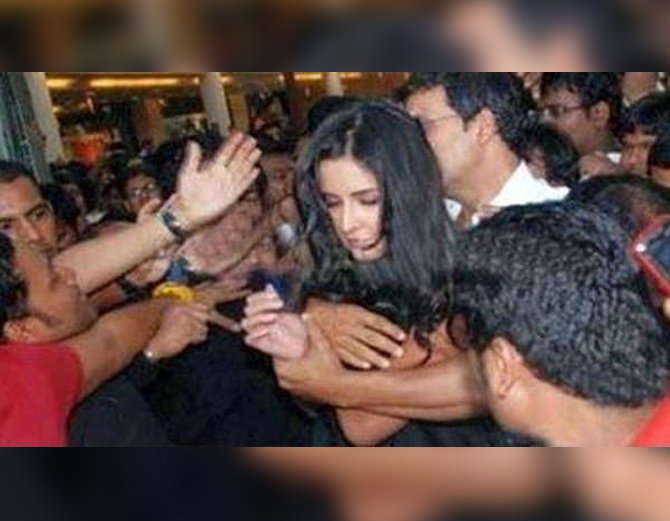
The point is 2005. Katrina Kaif went to join the function of Durga Puja Committee of South Kolkata. After the event is complete, some people of the crowd have reached almost by removing their personal security and flirting with them.
Also Read: Bollywood Actresses Revealed Their Horrible Experiences While Shooting For Rape Scenes
Sonakshi Sinha

During an event in 2010, the group of some people present in the crowd did not only pass bad comments on Sonakshi, but also tried to touch her forcefully. This incident happened in the Gandhi Maidan, situated near the Ministry in South Mumbai. However, later Bouncers took Sonakshi from there. Sonakshi was crying after this incident.
Sonam Kapoor

During the promotion of the movie ‘Ranjhaanaa’, when Sonam reached a theater, she had to be a victim of some krazi fan flirting. However, later his co-star Dhanush helped and he was taken out of there.
Gauhar khan
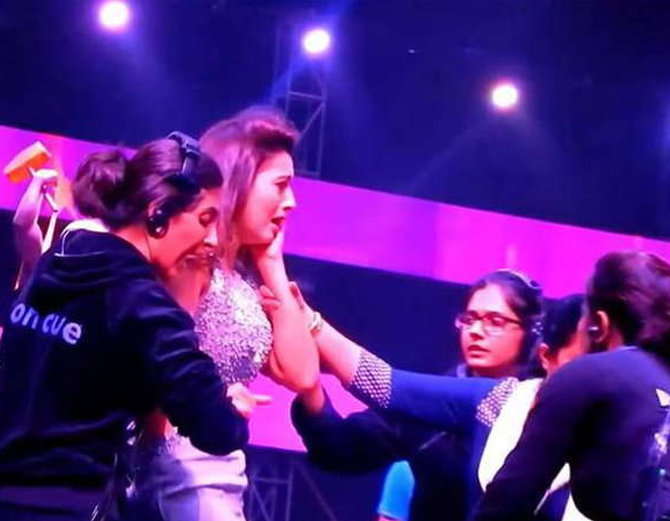
In December 2014, the incident of tampering and slapping with TV host and actress Gauhar Khan was revealed. In fact, Gauhar TV was shooting the Grand Finale of reality show ‘India’s Rockstar’. Then a man named Mohammad Akeel got up from the middle of the audience and came to the stage. He first seduced Gauhar and when Gaohar resisted, he slapped him.
Amisha Patel
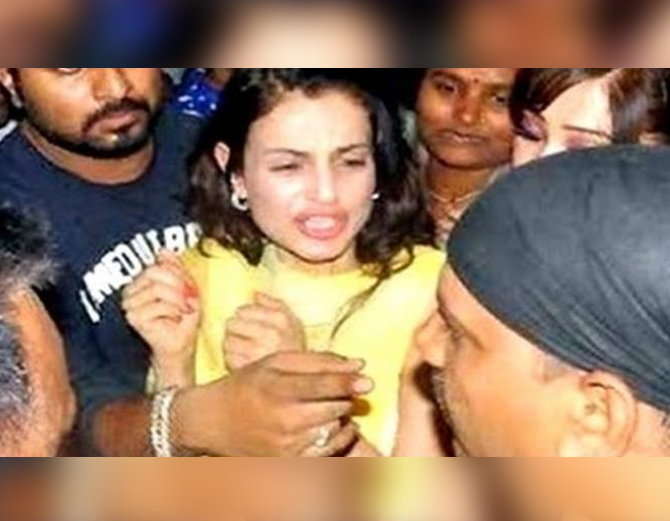
The event is from April 2014. Amisha went to Gorakhpur (UP) in connection with the launch of a jewelery showroom. A lot of crowd gathered outside the showroom to see them. When he started going inside the showroom through the crowd, a young man touched him. After this, Amisha, who came in anger, received a slap receipt for him.
Sushmita Sen
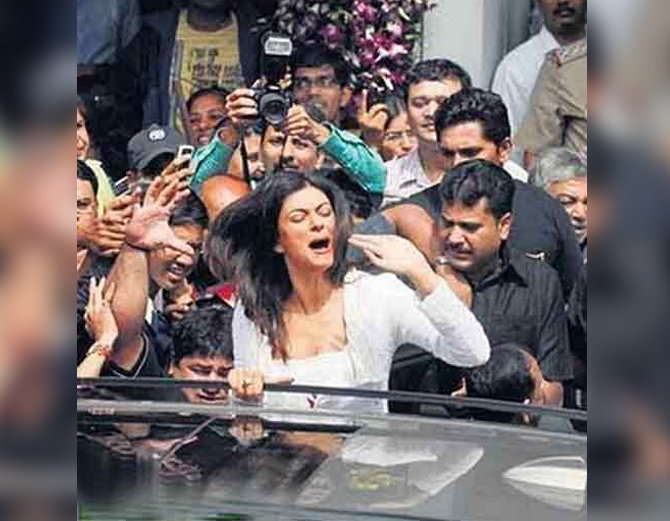
A case of flirting came out with Sushmita Sen when she went to the Inaugural of a jewelery store in Pune. When they returned and were trying to sit in their car, only then some people present in the crowd tampered with them.
Bipasha Basu

Bipasha Basu went to Ahmedabad to promote the film ‘Raj 3’. During this time a man tried to pull his skirt. Not only that, he has once been a victim of tampering in Durga Puja in Mumbai. Apart from this, he had to be a victim of tampering in New Jersey.
Nagma
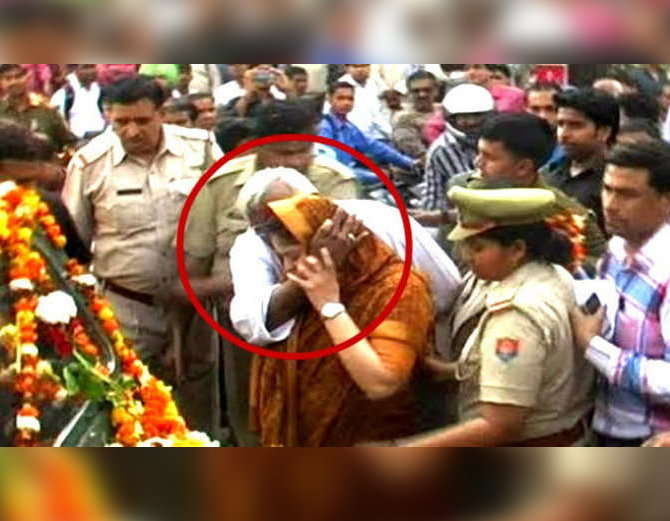
In April 2014, Congress leader Gajraj Singh was abusive with Actress Nagma. During the road show in Hapur, Gajraj Singh extended his hand towards Nagma and tried to grab his head and drag it towards him. He jerked the hand of Gajraj with resentment After this incident, Nagma had returned only without show. Similarly, during the campaigning, a young man tampered with him. Then the angry Nagma had slapped him.
[ads1]
Navigating the Spotlight: The Hidden Price of Fame and the Systemic Challenges of Harassment Faced by Women in the Entertainment Industry
The lives of Bollywood actresses are often portrayed as a fairytale—a world of glamour, success, and adoration. The spotlight promises power and influence, but for the women who stand in its glare, it comes with a high, often hidden price: the constant, aggressive threat to their personal safety, privacy, and mental well-being.
The pervasive culture of entitlement, whether from aggressive fans, intrusive paparazzi, or industry colleagues, means that public harassment, privacy invasion, and exploitation are systemic issues rather than isolated incidents. The very concept of “publicly molested,” though often used sensationally in clickbait headlines, speaks to a grave reality: the boundaries of respect and consent are frequently violated in public spaces, in the workplace, and in the digital sphere.
The Aggressive Onslaught of Privacy Invasion
For women in the film industry, the line between public figure and private individual is almost non-existent. The expectation of perpetual availability and the aggressive pursuit of personal moments have created a culture where personal space is simply a luxury they cannot afford. This dynamic manifests in several distressing ways:
1. The Pushing and Shoving of the Paparazzi Culture
While the media plays a crucial role in the entertainment ecosystem, the ethics surrounding celebrity coverage are often compromised in the pursuit of a viral moment. Public encounters with actresses frequently involve chaotic crowds, security breaches, and a level of physical proximity that borders on physical harassment.
- Breach of Physical Boundaries: Incidents of aggressive crowd surges, where actresses are physically pushed, grabbed, or cornered while entering or exiting public venues like airports or restaurants, are disturbingly common. These moments expose them to unsolicited and uncomfortable physical contact.
- Intrusion into Private Life: The focus extends beyond professional events to their private, daily routines, turning routine trips to the gym, doctor, or school into high-stress encounters, forcing them to live under constant surveillance.
2. The Emotional Toll of the Public Gaze
The relentless scrutiny and judgment take a significant toll on mental health. Athletes and actors who live under constant public observation often grapple with intense pressure, fear of failure, self-doubt, anxiety, and isolation, struggles that mirror those faced by common individuals but are magnified by their fame. Public figures, regardless of their success, talent, or achievements, can be affected by mental health challenges, underscoring the universal need for better psychological support in high-pressure industries.
The Digital Dangers: Cyber Harassment and Gendered Abuse
The rise of social media has democratised access but has also created a virtual space for rampant harassment, bullying, and judgment. For female celebrities, this often takes on a particularly gendered and vicious form.
Morphing, Defamation, and Deepfakes
The digital age has introduced new threats, such as the circulation of morphed or doctored images and the creation of deepfake pornography. This criminal act of image manipulation is used to defame and harass women, causing immense personal and professional distress.
- Legal Action Against Online Abuse: Several actresses have had to take stringent legal steps against individuals who circulate malicious, false, and inappropriate content, including morphed pictures and baseless allegations. This targeted harassment is deeply distressing, yet it highlights the necessity of holding online abusers accountable.
- Sexist Trolling and Misogyny: Actresses who use their platform to voice opinions on social issues, or critique problematic content, often become targets of severe, gendered trolling and vicious online abuse. This demonstrates that for many, the online backlash is less about the opinion and more about punishing women for speaking out.
Workplace Harassment: The Culture of Silence
Beyond the public sphere, the film industry’s internal environment has historically been fraught with issues of power imbalance, leading to sexual harassment—often referred to as the “casting couch”—and professional exploitation.
The Me Too Reckoning in India
The Indian Me Too movement, which gained momentum in 2018, exposed the prevalence of sexual harassment in the entertainment industry. Triggered by actress Tanushree Dutta’s public accusation against a senior actor, it led to numerous other women, including journalists and those in films, coming forward with allegations against high-profile figures.
- The Findings of Official Reports: Government-appointed panels, such as the Justice Hema Committee, which studied issues faced by women in the Malayalam film industry, have corroborated the systemic nature of the problem. The report detailed shocking accounts of sexual harassment, including demands for sexual favours (the “casting couch”), and reported instances where women who refused to “compromise” were pushed out of the field.
- Fear as a Barrier to Justice: A critical finding was that many women who suffered sexual harassment were reluctant to complain to the police due to overwhelming fear of retribution and professional blacklisting.
Moving Towards a Culture of Respect
The recurring issues of public, private, and workplace harassment faced by women in the entertainment sector underscore a broader societal problem: the failure to respect the basic dignity and boundaries of a public figure, particularly a woman.
While the responsibility for a star’s safety falls heavily on their security teams and the law enforcement agencies, a fundamental change must occur in the public psyche. Owning a smartphone or having access to social media does not give anyone the right to harass, defame, or spread hatred against others, and accountability will follow.
The conversation must move past sensational headlines to focus on policy-driven change:
- Stricter Laws against Cyberbullying: Implementing and enforcing stringent laws against deepfakes, morphing, and online defamation.
- Professional Conduct: Mandating and enforcing clear anti-harassment policies and internal complaint committees (as per the Vishaka Guidelines/POSH Act) on all film sets and production houses.
- Media Ethics: Encouraging stricter self-regulation among paparazzi and media outlets to prioritise human dignity over click-driven sensationalism.
Ultimately, the goal is to normalise the conversation around mental health, harassment, and boundaries, ensuring that every professional, regardless of their fame, can pursue their career free from the fear of exploitation or violation.
AISEO Friendly FAQs
Q1: What are the primary forms of harassment faced by Bollywood actresses?
A: The primary forms of harassment faced by actresses include physical intrusion and breaches of security in public from aggressive paparazzi and fans, systemic workplace sexual harassment (the “casting couch”), and severe digital abuse such as cyberbullying, doxing, and the circulation of morphed or deepfake images.
Q2: What is the “casting couch” and how has the Me Too movement addressed it in India?
A: The “casting couch” refers to the demand for sexual favours in exchange for an acting role or other work in the film industry. The Me Too movement, which gained momentum in 2018, was a catalyst for numerous women to publicly share their allegations, bringing the systemic nature of sexual harassment in the industry into the open and leading to legal and professional consequences for several high-profile individuals.
Q3: How does constant public scrutiny affect the mental health of female celebrities?
A: Constant public scrutiny, especially when coupled with harsh judgment and online bullying, can lead to serious mental health issues for female celebrities. They often experience immense pressure to perform, anxiety, self-doubt, and feelings of isolation, highlighting that mental health challenges can affect anyone, regardless of their success or fame.
Q4: Are there legal remedies for celebrities facing online harassment in India?
A: Yes, female celebrities are increasingly pursuing legal remedies against online harassment. Instances such as the circulation of morphed pictures or defamatory content can be reported to the Cyber Crime Police, emphasising that owning a smartphone or having social media access does not give anyone the right to harass, defame, or spread hatred, and accountability for online actions is being enforced.
Q5: What needs to change to improve the safety of women in the entertainment industry?
A: Improving safety requires a multi-pronged approach: enforcing stricter legal frameworks against cybercrimes like deepfakes, mandating and adhering to professional anti-harassment policies (like the POSH Act) within production houses, and a fundamental shift in public and media culture to prioritise human dignity and respect for personal boundaries over sensationalism and aggressive scrutiny.

This Post Has 0 Comments