छोटे परदे पर ‘बालिका वधु’ में आनंदी के नाम से मशहूर हुईं प्रत्यूषा बनर्जी…
Hindi Television Shows That Copied Scenes From Bollywood!
5. A glimpse of ‘Aashiqui’ on Kumkum Bhagya.
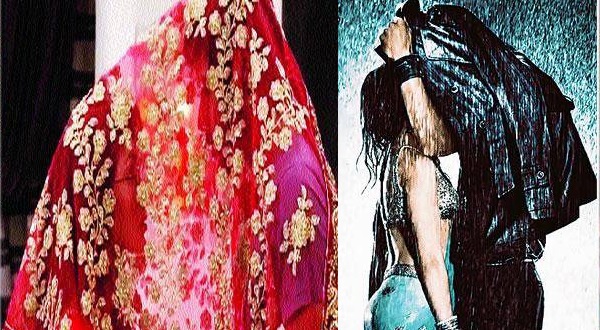
‘Kumkum Bhagya’ is indeed an interesting show, but just like the other shows on this list, this one too has copied a scene or two.. and that to from a very popular movie that goes by the name of ‘Aashiqui 2’! The iconic couple getting cozy underneath an apparel scene in ‘Kumkum Bhagya’ did remind us of the poster scene of the film.
[ads1]
Déjà Vu: Hindi Television Shows That Copied Scenes From Bollywood!
The Indian entertainment landscape is a bustling ecosystem where cinema and television coexist, often sharing actors, producers, and audiences. However, this relationship occasionally crosses the line from shared inspiration to outright imitation. Hindi television, with its relentless demand for daily content, has frequently turned to the well-established, successful templates of Bollywood blockbusters, sometimes lifting entire storylines and, more often, replicating iconic, memorable scenes down to the last detail.
The practice sparks both amusement and criticism among viewers, leading to instant recognition and a collective sense of déjà vu that lights up social media. Whether it’s a writer’s block, a conscious effort to leverage a film’s popularity, or simply a lack of original ideas, the small screen’s homage to the big screen is a phenomenon that continues to define the daily soap genre.
The Scene-for-Scene Replicas: When TV Mirrors Bollywood
While an entire show might draw “inspiration” from a film’s premise, it is the moment-by-moment duplication of famous, beloved scenes that truly captures the audience’s attention. These are often high-stakes emotional or dramatic moments designed to provide instant, high-recall engagement.
The Chennai Express Climb
One of the most instantly recognizable copied scenes is the physically demanding journey from Rohit Shetty’s 2013 blockbuster, Chennai Express.
- The Movie Scene: Rahul (Shah Rukh Khan) carries Meena (Deepika Padukone) up the 800 steps of a temple, a Herculean task symbolizing his commitment.
- The TV Replicas: This particular act of cinematic heroism was replicated by no less than two major primetime shows. In Yeh Rishta Kya Kehlata Hai, the main couple, Naitik and Akshara, re-enacted the emotional climb. Similarly, in Yeh Hai Mohabbatein, Raman lifted Ishita to perform the same feat. In both cases, the attempt aimed to instantly convey a sense of grand, movie-level romance, though critics often noted the lack of impact compared to the original.
The Power of Spice: Mirch Masala
A scene of female solidarity and empowerment from a classic art-house film was unexpectedly adapted for a mainstream daily soap.
- The Movie Scene: The powerful climax of Ketan Mehta’s 1987 film, Mirch Masala, sees a group of village women fighting off a lecherous Subedar (Naseeruddin Shah) by throwing red chili powder in his eyes.
- The TV Replica: The show Sasural Simar Ka recreated this exact scene when the protagonists, Simar and Roli, along with other village women, attacked a goon with red chili powder to protect themselves. The scene from the TV show was an almost frame-to-frame copy of the original and was cited as a classic example of television borrowing from classic cinema.
Iconic Romantic Poses
Some of Bollywood’s most enduring romantic images have been meticulously recreated for the small screen to sell a sudden spark of romance or emotional intimacy.
- Aashiqui 2’s Iconic Cover: The famous poster shot of Aditya Roy Kapur and Shraddha Kapoor huddling intimately under a jacket in the rain for the 2013 musical romance Aashiqui 2 became a template.
- The TV Replica: In Kumkum Bhagya, a similar moment was created when the lead, Abhi, draped a dupatta over his wife, Pragya, and pulled it over his own head for an intense, prolonged eyelock. The key difference, critics pointed out, was that in the show, the couple went under the apparel “just for the sake of it,” unlike the film’s necessity-driven rain sequence.
Copying Iconic Movie Moments and Story Arcs
Beyond just replicating a single shot, TV writers often use established plot devices and emotional sequences from hit movies to drive their own narratives forward.
-
Kabhi Khushi Kabhie Gam’s Emotional Return: The dramatic, near-telepathic moment when Yashvardhan Raichand’s mother, Nandini (Jaya Bachchan), senses the return of her son, Rahul (Shah Rukh Khan), by hearing the musical cue “Vo Aa Gaya” (He has arrived) is a hallmark of family drama.
-
The TV Replica: Meri Aashiqui Tumse Hi copied this “epic” moment directly. When the real Ranveer returns home, his mother has the automatic, unshakeable feeling that her son is back, a sentiment underscored by playing a very similar music track in the background.
-
Kuch Kuch Hota Hai’s Friendship Dilemma: The complex emotional moment in the 1998 college romance where Rahul (Shah Rukh Khan) consoles Anjali (Kajol) while simultaneously holding the hand of his new love, Tina (Rani Mukerji), is a powerful depiction of a love triangle.
-
The TV Replica: The youth show Kaisi Yeh Yaariaan lifted this scenario. The character Dhruv was shown comforting Nandini (Niti Taylor) while holding onto Aaliya’s hand, perfectly mirroring the iconic ‘awesome threesome’ dynamic from the film.
-
Haider’s Climax Twist: The shocking end of Vishal Bhardwaj’s Haider (2014) sees a character played by Tabu turn herself into a human bomb.
-
The TV Replica: The show Qubool Hai adapted this highly sensational twist during a wedding track, where a character’s bridal dupatta was dotted with explosives, ready to blast.
Shows That Built a Franchise on Film Plots
Where some shows copy a scene, others copy the entire film’s kahaani (story), often turning a two-to-three-hour movie into a multi-season television serial. This is arguably more of an adaptation than a simple copy, but the source material is undeniable.
The Mythological/Fantasy Universe
- Naagin: One of the most successful fantasy franchises on television, Ekta Kapoor’s Naagin (starting in 2015) is directly inspired by the 1986 Sridevi-starrer film Nagina, a popular ’90s film that centered on the concept of an ichhadhari naagin (shape-shifting serpent). The show leveraged the film’s established mythos to great commercial success.
- Aarambh: The grand, ambitious mythological series Aarambh (2017) drew its primary inspiration and scale from the global blockbuster Baahubali, with the original film’s writer, K. V. Vijayendra Prasad, even penning the TV show’s script.
Romance and Social Dramas
- Badho Bahu: The TV show Badho Bahu (2016) was heavily inspired by the plot of Dum Laga Ke Haisha (2015), which focused on a charming boy marrying an opinionated, plus-sized girl. The show’s poster was even designed to be similar to the film’s.
- Dil Se Dil Tak: The show was based on the controversial and complex theme of surrogacy, directly lifting its central premise from the Salman Khan, Preity Zinta, and Rani Mukerji starrer, Chori Chori Chupke Chupke (2001).
- Love U Zindagi: This show was a televised version of the super-hit film Jab We Met (2007), following the similar trajectory of a cheerful, talkative girl meeting a depressed, quiet man. The show’s makers reportedly even consulted the film’s director, Imtiaz Ali.
Why the Constant Crossover?
The constant borrowing can be attributed to several factors inherent to the Indian television industry:
- Guaranteed Recognition: Using a proven Bollywood hit, whether a scene or a story, provides instant connection and recognition with the mass audience, which can be an immediate boost to TRP (Television Rating Point) figures.
- Pacing and Volume: Daily soaps require immense volumes of content, with episodes airing six to seven days a week. This relentless production schedule often strains the creative process, making a successful film a readily available and structured blueprint for a plot twist or an entire new track.
- Low Risk, High Reward: A scene or plot from a classic film is a “pre-tested” formula for engaging the audience emotionally, offering a lower-risk creative decision compared to developing a completely original concept.
Ultimately, the small screen’s reliance on Bollywood is a fascinating aspect of Indian pop culture, serving as a continuous loop where the magic of the movies is recycled, reinterpreted, and occasionally, flat-out replicated for the masses.
AISEO Friendly FAQs
Q1: Why do Hindi TV shows copy scenes from Bollywood movies?
A: Hindi TV shows often copy scenes or storylines from Bollywood movies due to the high-volume, rapid production demands of daily soaps, which can lead to a shortage of original content. Copying a popular, successful movie plot or scene provides instant audience recognition, emotional recall, and is seen as a low-risk strategy to ensure high TRP ratings and immediate viewer engagement.
Q2: Which popular TV show copied the temple stairs scene from Chennai Express?
A: The iconic scene from the movie Chennai Express where Shah Rukh Khan carries Deepika Padukone up a long flight of temple steps was copied by at least two major Hindi TV shows: Yeh Hai Mohabbatein and Yeh Rishta Kya Kehlata Hai.
Q3: Did any Indian TV show copy the storyline of Jab We Met?
A: Yes, the Hindi TV show Love U Zindagi (2011) was a direct adaptation and televised version of the hit Bollywood film Jab We Met (2007), following the similar premise of a journey that changes a gloomy protagonist after meeting a bubbly, vivacious girl.
Q4: Which Bollywood classic was the show Sasural Simar Ka inspired by for its spice attack scene?
A: The dramatic climax scene in Sasural Simar Ka where women attack a villain with red chili powder was a near frame-to-frame copy of the famous climax from the classic 1987 film Mirch Masala, starring Smita Patil and Naseeruddin Shah.
Q5: Are entire Hindi serials sometimes based on a Bollywood film plot?
A: Yes, many Hindi serials are based on entire Bollywood film plots, often adapting the film’s concept into a long-running series. Examples include Naagin (from Nagina), Dil Se Dil Tak (from Chori Chori Chupke Chupke), and Badho Bahu (from Dum Laga Ke Haisha).

This Post Has 0 Comments