छोटे परदे पर ‘बालिका वधु’ में आनंदी के नाम से मशहूर हुईं प्रत्यूषा बनर्जी…
What Does ‘BINDIS’ Of Each Baahubali Characters Stand For?
7. Bijjala Deva
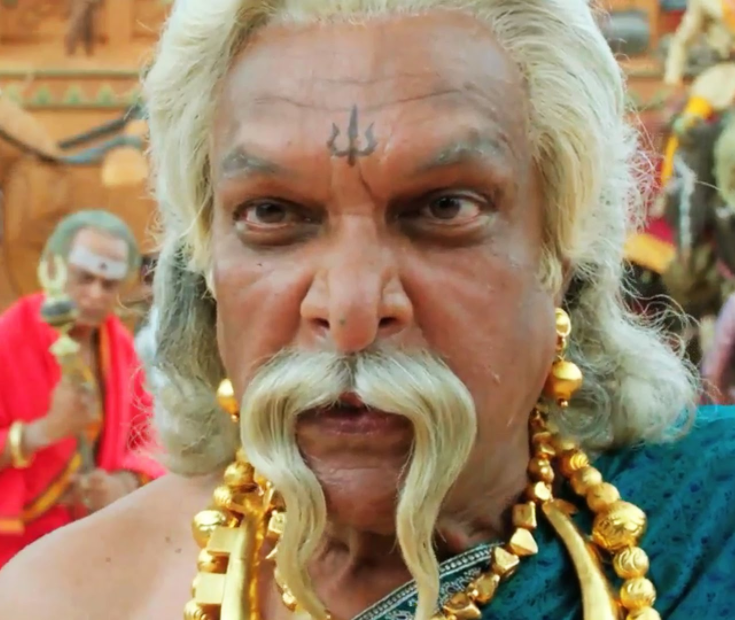
Bijjala Deva has a tilak of Trishul on his forehead and it stands for the three qualities-creation, maintenance and destruction. Neither he created anything nor he maintained but he was the reason of his own destruction. The tilak doesn’t justify his character.
8. Kattappa

Kattapa was the loyal servant of Mahismati kingdom. The tilak on his forehead is a symbol of slavery and loyalty for his master.
[ads1]
The Silent Story on Their Foreheads: What the Bindis of the Baahubali Characters Truly Stand For
The cinematic epic Baahubali, masterfully crafted by S. S. Rajamouli, is a triumph of grand storytelling, spectacular visual effects, and meticulous world-building. Beyond the colossal sets and jaw-dropping action sequences, one of the most compelling details lies in the subtle iconography worn by the royal characters of Mahishmati: their forehead markings, which serve as silent, powerful symbols of their character, destiny, and moral compass.
These aren’t mere cosmetic choices; each tilak or bindi is a carefully chosen visual metaphor, a miniature painting that summarizes the wearer’s soul and ambition within the sprawling narrative. Here is a deep dive into the hidden meanings behind the forehead marks of the primary characters in the Baahubali universe.
The Divine Duality: Amarendra Baahubali vs. Bhallaladeva
The core conflict of the Baahubali saga is the rivalry between the two sons of Mahishmati, a rivalry visually encapsulated on their foreheads.
1. Amarendra Baahubali: The Half Moon (Ardhachandra)
Amarendra Baahubali, the rightful and benevolent king, wears a simple, golden Half Moon (Ardhachandra) marking.
- Symbolic Meaning: The crescent or half moon is a universally sacred symbol across many traditions, and in the context of Amarendra, it represents a calm, balanced, and kind nature. The half-moon’s gentle light stands for tranquility and peace, reflecting his personality as a king who prioritizes his people and righteousness over power.
- Character Connection: Amarendra’s actions consistently show his desire to maintain balance and order. His half-moon tilak symbolizes his ability to be a fierce warrior in battle while remaining a compassionate and cool-headed leader of the kingdom. It signifies the potential for growth (a waxing moon) but with an inherent stability and grace.
2. Bhallaladeva: The Rising Sun
The ambitious, vengeful cousin and antagonist, Bhallaladeva, is marked by a Rising Sun motif.
- Symbolic Meaning: The sun is a powerful emblem of the Mahishmati kingdom itself. The “Rising Sun” signifies power, ambition, and strength. However, it is also perpetually incomplete—it is a sun that is yet to fully rise. This symbolizes his lifelong, burning desire to claim the full, unquestioned throne, an ambition that blinds him to all else.
- Character Connection: Bhallaladeva’s pursuit of the crown is his sole driving force. His rising sun tilak represents the single-minded focus and unyielding, aggressive dominance that defines his character from start to finish. It is a visual representation of his obsession with being the undisputed center of power, constantly striving to outshine his brother.
The Pillars of Mahishmati: The Royal Matriarchs
The three most powerful female figures—Sivagami, Devasena, and Avantika—each possess forehead markings that speak volumes about their authority, independence, and fighting spirit.
3. Sivagami Devi: The Full Moon (Nindu-Bindhuvu)
As the Queen Mother and the dynamic ruler of Mahishmati, Sivagami wears a large, prominent, often red and golden-filled Full Moon bindi (or Nindu-Bindhuvu).
- Symbolic Meaning: The Full Moon is the ultimate symbol of completeness, dynamic nature, and peak power. It also signifies qualities like boldness, courage, and power. Some interpretations view the red bindi with golden glitter as an “erupting volcano,” representing her absolute, unquestionable authority (vachan hi hai shaasan—her word is her command) and the passionate, often volatile nature of her decisions.
- Character Connection: The bindi perfectly captures Sivagami’s role: she is the complete ruler, holding the kingdom together through sheer will and power. Her word is law, and her presence is all-encompassing, just like the full moon.
4. Devasena: The Gender Equality Symbol
Devasena, the warrior princess of Kunthala and Amarendra’s love interest, sports one of the most unique and symbolic markings: a stylized design that is an undeniable fusion of the Male (♂) and Female (♀) gender symbols.
- Symbolic Meaning: This distinctive bindi is said to represent gender equality and her belief in the equal power of men and women. It symbolizes her boldness and the spirit of a warrior.
- Character Connection: Devasena is known for her fierce independence and refusal to bow to Sivagami’s wishes, even when faced with the power of Mahishmati. Her tilak foreshadows the conflict between her strong, non-submissive will and the patriarchal-style authority of the kingdom. It is the visual representation of her being “as strong as a man and graceful like a woman”.
5. Avantika: The Black Spear Tip
The rebellious warrior of the resistance group, Avantika, wears a fierce Black Spear Tip tilak.
- Symbolic Meaning: The spear is a tool of a warrior, signifying strength, alertness, and a mission. The black colour can be interpreted as a grim resolve or the single-minded dedication to her cause—achieving the freedom of Devasena.
- Character Connection: Avantika has turned herself into a living weapon, sacrificing her personal life for the goal of liberation. Her tilak emphasizes that her identity is tied solely to her duty and her relentless, almost weaponized pursuit of justice.
The Supporting Cast: Marks of Allegiance and Vice
Even the secondary but crucial characters have their destinies etched onto their foreheads.
6. Bijjaladeva: The Trishulam (Trident)
The manipulative and physically disabled father of Bhallaladeva, Bijjaladeva, sports the Trishulam (Trident), the weapon of Lord Shiva.
- Symbolic Meaning: In Hindu philosophy, the trident represents the three gunas (qualities of existence): Sattvika (goodness/harmony), Rajasika (passion/activity), and Tamasika (darkness/chaos). Bijjaladeva is a character dominated by the negative Tamasika quality, embodying imbalance, disorder, chaos, and anxiety.
- Character Connection: His mark ironically references a powerful, divine weapon, yet his actions are always driven by petty jealousy and manipulation, ensuring that his influence is one of disorder and corruption in the royal family.
7. Mahendra Baahubali (Shivudu): Serpent and Conch Shell/Shivalinga
Amarendra’s son, raised in a tribal village and unaware of his royal lineage, is first known as Shivudu.
- Symbolic Meaning: Shivudu, as an ardent devotee of Lord Shiva, wears a tilak that is often a Serpent and Conch Shell combination or a simple Shivalinga shape. This powerfully symbolizes his devotion to the almighty and his immense strength and courage.
- Character Connection: This marking aligns with the famous scene where he lifts the massive Shiva Lingam, establishing his destined connection to Lord Shiva and his fate as a man of extraordinary valour, a true inheritor of a king’s duty.
8. Kattappa: The Mark of Slavery
The loyal general and slave of the Mahishmati kingdom, Kattappa, carries a distinct, permanent tattoo-like mark.
- Symbolic Meaning: The mark on Kattappa’s forehead is explicitly a symbol of his slavery and helplessness. It signifies that his life and loyalty are unconditionally bound to the throne of Mahishmati, regardless of who sits upon it.
- Character Connection: This mark is central to his tragic arc. It visually represents the sacred, unbreakable oath that compelled him to commit the unforgivable act of killing his beloved king, Amarendra Baahubali.
The Power of Subtext in Epic Filmmaking
The detailed design of each character’s bindi or tilak is a testament to the meticulous attention paid to the film’s iconography. In an epic that deals with grand themes of justice, power, and loyalty, these seemingly small markings are shorthand for the audience, communicating the wearer’s moral alignment, ambition, or inescapable fate without a single line of dialogue. They transform the simple act of costuming into a sophisticated layer of visual storytelling, ensuring that the characters of Baahubali are as deep and symbolic as the mythology that inspired them.
AISEO-Friendly FAQs
Q1: What does the Half Moon bindi of Amarendra Baahubali represent?
A: Amarendra Baahubali’s Half Moon (Ardhachandra) bindi symbolizes his calm, balanced, and kind nature, reflecting his just and tranquil leadership. It represents the emotional stability and righteousness that made him the people’s king.
Q2: What is the meaning of Sivagami’s Full Moon bindi?
A: Sivagami’s Full Moon (Nindu-Bindhuvu) bindi signifies her dynamic nature, completeness, and peak power as the undisputed Queen Mother of Mahishmati. It highlights her absolute authority and the comprehensive nature of her rule.
Q3: Why does Bhallaladeva wear a Rising Sun tilak?
A: Bhallaladeva’s Rising Sun tilak symbolizes his aggressive power and unyielding ambition to completely rule the kingdom. It represents a sun that is perpetually rising but never fully set, capturing his lifelong obsession with gaining undisputed authority and strength.
Q4: What is the unique symbolism of Devasena’s forehead marking?
A: Devasena’s bindi is a distinct fusion of the male (♂) and female (♀) gender symbols, standing for gender equality and her identity as a bold, independent warrior princess who is equal in strength and spirit to any man.
Q5: What does the Trishulam tilak of Bijjaladeva signify?
A: Bijjaladeva’s Trishulam (Trident) tilak is linked to the Hindu concept of the three gunas (qualities) and is said to align with the negative Tamasika guna, representing his inherent qualities of imbalance, disorder, chaos, and anxiety throughout the saga.

This Post Has 0 Comments