Black Widows Webseries Actress And Actor Black Widows is an Indian web series from Zee5.…
Chernobyl
Chernobyl
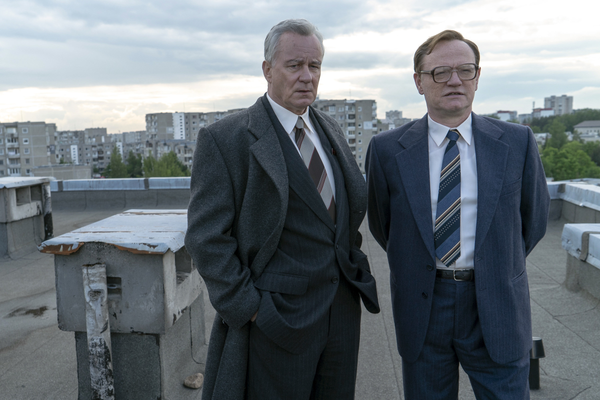
Genre – Drama
Creator – Craig Mazin
Starring – Jared Harris, Stellan Skarsgård
The Cost of Lies: An In-Depth Look at HBO’s Groundbreaking Series ‘Chernobyl’
When the name ‘Chernobyl’ is mentioned today, it evokes a harrowing blend of historical tragedy, bureaucratic failure, and almost unimaginable human sacrifice. While the actual disaster occurred on April 26, 1986, the event was thrust back into the global spotlight in 2019 by the immensely popular and critically acclaimed HBO/Sky UK miniseries, Chernobyl. Although often referred to as ‘the movie’ due to its cinematic quality and contained narrative, this five-part limited series captivated millions, providing a chilling, meticulous, and often brutal dramatization of one of the worst man-made catastrophes in history.
The series did more than recount the accident; it dissected the deep-seated Soviet system of secrecy and denial that allowed the catastrophe to worsen, transforming a reactor meltdown into a continent-spanning public health crisis. Its enduring success is a testament to the power of factual storytelling, even when that story is fraught with terrifying complexity and the devastating reality of radiation.
Anatomy of a Masterpiece: The HBO Miniseries
The five-part series, created and written by Craig Mazin and directed by Johan Renck, was a joint production between HBO and Sky UK, premiering in May 2019. It quickly became one of the highest-rated television programs of all time, drawing widespread praise for its meticulous attention to detail, atmosphere, and phenomenal ensemble cast.
The Core Narrative: The Cost of Lies
The central theme of Chernobyl is captured in a line from the final episode: “Every lie we tell incurs a debt to the truth. Sooner or later that debt is paid.” The narrative arc is a multi-layered investigation that moves from the frantic, confused initial moments of the explosion, through the desperate attempts to contain a disaster of unknown scale, and finally, to a public trial designed to affix blame and bury the truth.
The story unfolds primarily through the eyes of three key characters:
- Valery Legasov (Jared Harris): A leading Soviet nuclear physicist brought in to advise the government commission. He is the moral compass of the series, driven by the scientific imperative to understand and communicate the true scale of the danger, despite the political risks.
- Boris Shcherbina (Stellan Skarsgård): A Soviet Deputy Prime Minister and head of the government commission appointed by the Kremlin. He begins as a loyal party functionary, skeptical of the severity of the crisis, but gradually develops a profound respect for Legasov and the truth, sacrificing his political standing—and potentially his health—to ensure the containment effort succeeds.
- Ulana Khomyuk (Emily Watson): A fictional nuclear physicist from Minsk. She represents the “dozens, if not hundreds, of scientists who helped investigate the crisis as it unfolded.” She is the catalyst who pushes Legasov to seek the truth about the reactor’s fatal design flaws, which the Soviet regime had concealed for years.
The series is relentless in its depiction of the immediate human cost: the horrific radiation sickness suffered by the plant workers and the first responders, the emotional devastation of their families (notably the story of firefighter Vasily Ignatenko and his wife Lyudmilla), and the enormous, unseen burden placed upon the liquidators—the hundreds of thousands of civil and military personnel drafted to clean up the contamination.
Critical Acclaim and Awards
The miniseries’ impact was confirmed by a sweeping collection of industry accolades. At the 71st Primetime Emmy Awards, Chernobyl received 19 nominations and took home multiple major awards, including Outstanding Limited Series, Outstanding Directing for a Limited Series (Johan Renck), and Outstanding Writing for a Limited Series (Craig Mazin).
Its success continued at the 77th Golden Globe Awards, where it won for Best Miniseries or Television Film, and Stellan Skarsgård earned a win for Best Supporting Actor in a Series, Miniseries, or Television Film. The recognition was broad, covering everything from the main cast performances and screenplay to its cinematography, sound, and original score.
Fact vs. Fiction: The Art of Dramatization
A work of historical drama, even one as meticulously researched as Chernobyl, inevitably takes creative liberties to condense years of events, countless people, and complex scientific concepts into a cohesive narrative. The creators were transparent about these choices, often discussing them in a companion podcast.
Composite Characters and Story Alterations
While much of the dialogue was adapted from real-life accounts, particularly those in Svetlana Alexievich’s Nobel Prize-winning book Voices of Chernobyl, certain elements were altered for dramatic effect and clarity:
- Ulana Khomyuk is Fictional: As noted, Emily Watson’s character is an amalgamation of numerous Soviet scientists who worked alongside Legasov. She was necessary to externalize the intellectual struggle for the truth and to demonstrate the systemic suppression of information within the Soviet scientific community.
- Valery Legasov’s Trial Testimony is Dramatized: In the series’ climax, Legasov delivers a powerful, self-incriminating testimony at the trial, exposing the RBMK reactor’s fatal flaw (the positive void coefficient and the graphite-tipped control rods) to the court. In reality, the real Legasov was not present at the trial in the courtroom, which was in the city of Chernobyl, not a major Moscow courthouse. His “big moment in court” in the series is a fictionalized construct to bring the scientific and political themes to a dramatic conclusion.
- The Helicopter Execution Threat is Fabricated: An intense early scene depicts Boris Shcherbina threatening to have Legasov executed by throwing him out of a helicopter if he fails to explain the nuclear science. According to sources, this threat was a creative fabrication, employed to immediately establish the high stakes and Shcherbina’s initial hardline disposition. Executions for such a transgression were not common by the late 1980s in the USSR.
- Legasov’s Suicide: The miniseries begins with Valery Legasov committing suicide two years after the disaster. This much is true: he hung himself on April 26, 1988. However, the exact timing and the fictional tapes he records before his death are dramatic devices. The real Legasov’s suicide was seen by some journalists as a conscious attempt to draw attention to the lack of nuclear safety reform in the Soviet Union.
The Real-Life Heroes
The depictions of Valery Legasov and Boris Shcherbina are rooted in fact, even if their relationship was dramatized.
- Valery Legasov: A specialist in inorganic chemistry and molecular physics, Legasov was indeed a key figure on the government commission. He delivered a crucial five-hour oral report on the causes of the disaster to the International Atomic Energy Agency (IAEA) in Vienna. His attempt to push for safety reform after the disaster led to him being ostracized by the Soviet scientific establishment. Though he was not a reactor specialist, as the series claims, he was put in charge of containing the radiation and played a pivotal role.
- Boris Shcherbina: He was the Deputy Prime Minister and Vice Chairman of the USSR’s Council of Ministers who oversaw the disaster cleanup. He died in 1990, four years and four months after the explosion. While the series heavily implies his death was due to radiation exposure from his time at Chernobyl, an official cause of death was never released, partly because a Soviet decree prohibited doctors from listing radiation as a cause of death or sickness. Shcherbina ultimately aided the effort to save countless lives and proved instrumental in the evacuation of Pripyat.
The Shadow of the Real Disaster
The immense resonance of the series is directly linked to the horror of the 1986 Chernobyl disaster and its long-term consequences, which continue to affect Ukraine, Belarus, and Russia.
Immediate and Short-Term Impact
The disaster began with a failed safety test at the Chernobyl Nuclear Power Plant’s Reactor 4, resulting in a massive steam explosion and subsequent graphite fire. This event released a huge plume of radioactive material into the atmosphere, which scattered across a wide area.
- Immediate Fatalities: Two plant workers died immediately due to the explosion.
- Acute Radiation Syndrome (ARS): Within weeks, 28 people, including plant operators and firefighters, died from Acute Radiation Syndrome (ARS). 134 people were confirmed to have suffered from ARS.
- Evacuation: The nearby city of Pripyat, home to 49,400 people, was not evacuated until more than a day after the explosion. Officials then established the 30-km Chernobyl Exclusion Zone, which remains a no-go area for permanent human habitation.
Long-Term Health and Environmental Consequences
The isotopes released, particularly Iodine-131, Caesium-134, and Caesium-137, had long half-lives, leading to ongoing contamination.
- Thyroid Cancer: The most significant and well-documented long-term health effect has been an increased incidence of thyroid cancer, particularly among individuals who were children or adolescents at the time of the accident. This was caused by the absorption of radioactive Iodine-131, often through consuming milk from cows that had eaten contaminated grass. Over 5,000 thyroid cancer cases are probably linked to this exposure, resulting in a small number of fatalities.
- Psychosocial Effects: The disaster also led to widespread psychological effects, including high anxiety and general poor health, stemming from displacement, fear of radiation, and breaking the culture of silence.
- Environmental Legacy: The fallout severely impacted agricultural and natural ecosystems. Forests and fresh water bodies were among the most affected, and radioactivity levels remain high in certain “hot spots.” The city of Pripyat remains a ghost town, and while some wildlife has suffered, species like the grey wolf have seen populations thrive in the absence of human activity within the Exclusion Zone. The area may not be considered safe for resettlement for hundreds of years.
The Other ‘Chernobyl’ Movie
While the HBO miniseries dominates the cultural conversation, it is worth noting a different, more recent production: the 2021 Russian film, Chernobyl: Abyss (also titled Chernobyl 1986).
Directed by and starring Danila Kozlovsky, the Russian film centered on a fictionalized firefighter who becomes a liquidator. It was often viewed, by critics, as Russia’s direct, “patriotic” response to the HBO series. While the HBO miniseries focused heavily on the Soviet cover-up and systemic flaws, the Russian film shifted the focus to the individual heroism of the liquidators. The existence of these two high-profile, dramatically different narratives—one from the West, one from Russia—underscores the continued complexity and political charge of the Chernobyl story.
Ultimately, the power of the 2019 HBO miniseries lies in its uncompromising portrayal of a disaster rooted in the systemic failure to value truth. By highlighting the sacrifices made by scientists and ordinary citizens against the machinery of a state determined to lie, the series cemented the event not just as an environmental catastrophe, but as a chilling lesson in the “cost of lies.”
AISEO-Friendly FAQs
Q1: Is Chernobyl a movie or a TV show?
A: The 2019 critically acclaimed production is a five-part miniseries created by Craig Mazin for HBO and Sky UK, although its cinematic quality and contained narrative often lead people to refer to it as a “movie” or “film.”
Q2: How historically accurate is the Chernobyl miniseries?
A: The miniseries is widely praised for being meticulously researched and highly accurate in its depiction of the disaster’s events, the technology, and the Soviet atmosphere of the time. However, certain elements were dramatized for narrative clarity: the character Ulana Khomyuk is a fictional composite of dozens of scientists, and the scene of Valery Legasov testifying at the trial is a fictionalized event. The core scientific facts and the sequence of the disaster are largely accurate.
Q3: Did the main characters Valery Legasov and Boris Shcherbina really exist?
A: Yes, both Valery Legasov (nuclear scientist) and Boris Shcherbina (Deputy Prime Minister) were real people and key members of the government commission responding to the disaster. Legasov did commit suicide two years after the explosion, and Shcherbina died in 1990. However, their personal, candid relationship portrayed in the series was dramatized.
Q4: What was the main long-term health effect of the Chernobyl disaster?
A: The main documented long-term health effect has been a dramatic increase in cases of thyroid cancer, particularly among individuals who were children or adolescents at the time of the accident. This was due to the absorption of radioactive Iodine-131, primarily through contaminated milk. Scientific reports indicate no evidence of a major public health impact attributable to radiation exposure beyond the thyroid cancer cases.
Q5: What is the Chernobyl Exclusion Zone?
A: The Chernobyl Exclusion Zone is a 30-km radius around the nuclear power plant that was established after the evacuation of Pripyat and surrounding areas. The land remains heavily contaminated with radioactive material, primarily Caesium-137, and is deemed unsafe for permanent human habitation for potentially hundreds of years.
Q6: Is there a Russian film about Chernobyl?
A: Yes, there is a 2021 Russian film titled Chernobyl: Abyss (also known as Chernobyl 1986), which tells a different, more heroic-focused narrative through the eyes of a fictional firefighter/liquidator. It was released after the HBO miniseries and is often seen as a counter-narrative focusing more on individual sacrifice than political failure.

This Post Has 0 Comments