The girl-next-door, Amrita Rao, made her Bollywood debut in 2002 with the movie Ab ke…
These 70’s and 80’s Actress Will Make You Fall In Love With Old Bollywood Movies!

from 70’s and 80’s these actresses have been spotted as doing the skinny show and they have done much better. Here are some bold Bollywood actresses of 70s and 80s who went a step ahead and created a buzz in the Indian cinema with their dare to bare acts.  One of the most daring and spicy actresses of 70s, Zeenat Amaan redefined glamour and style in Bollywood. She brought in the western look and never hesitated to do bold scenes or wearing revealing dresses onscreen.
 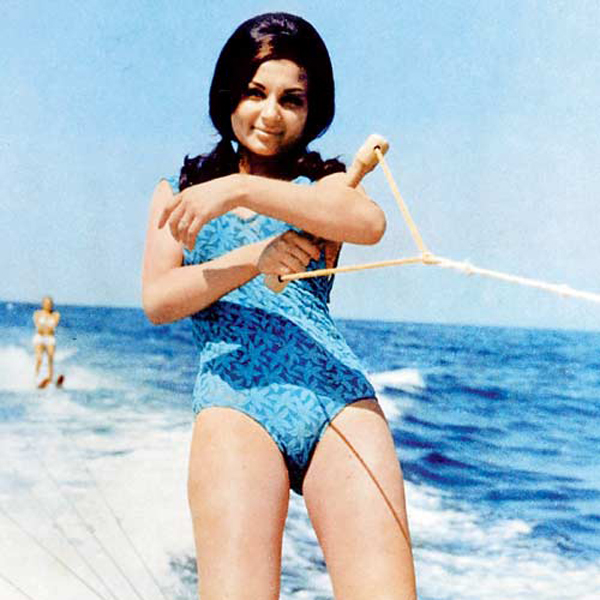 Bollywood Diva Sharmila Tagore her bikini look in ‘An Evening in Paris’ followed by a swimsuit photoshoot for the Film fare magazine tagged her as bold and beautiful.
  Parveen Babi stepped into Bollywood in 1973 and featured on the cover page of Times magazine in 1976. She was the first Indian woman to feature on the cover of this prestigious magazine.
Also Read:
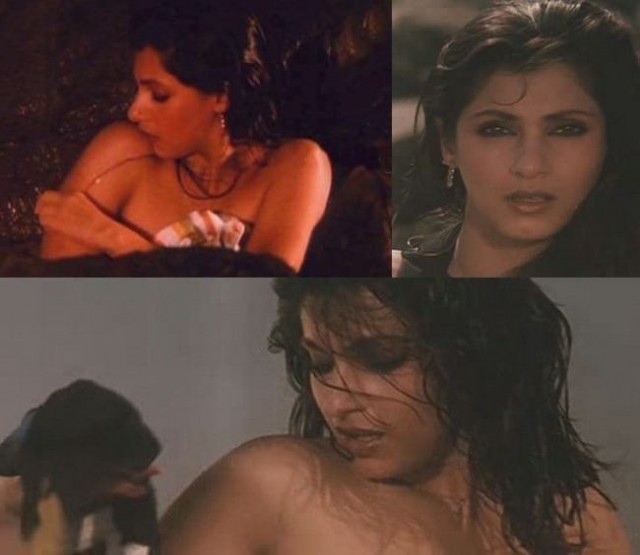 Dimple Kapadia was seen in skimpy clothes in the movie and also sported a bikini. She shocked everyone with her nip slip act in the movie ‘Sagar’ opposite Rishi Kapoor and redefined the term “bold” for future generation.
 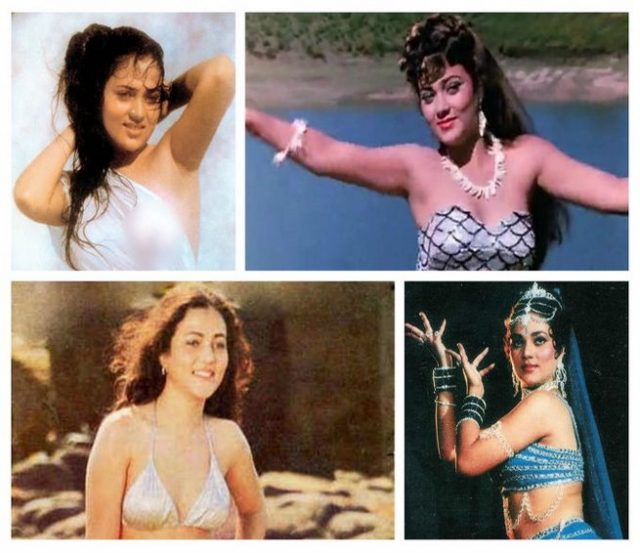 Mandakini did not hesitate in baring her bosom in front of the camera for the role and was quite bold for those times. Our contemporary actresses are yet to get to that level of skin show.
 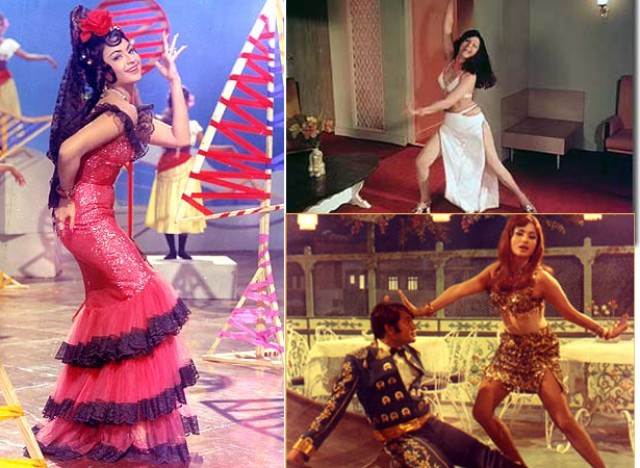 Helen was the first item girl in Bollywood and was like a breath of fresh air in the Indian film industry. With such graceful dance moves and seductive expressions, she showed how to add masala to a song.
10 Shooting Locations Of Bollywood Movies, You Should Visit Before You Get Too Old To Walk!
Dimple Kapadia was seen in skimpy clothes in the movie and also sported a bikini. She shocked everyone with her nip slip act in the movie ‘Sagar’ opposite Rishi Kapoor and redefined the term “bold” for future generation. Mandakini did not hesitate in baring her bosom in front of the camera for the role and was quite bold for those times. Our contemporary actresses are yet to get to that level of skin show. Helen was the first item girl in Bollywood and was like a breath of fresh air in the Indian film industry. With such graceful dance moves and seductive expressions, she showed how to add masala to a song. Poonam Dhillon was seen in a swimsuit in her very first movie. She repeated the bikini look in another movie ‘Giraftar’ and looked quite attractive showing her curves.
Also Read:
10 Beautiful Hindi TV Stars Who Had Participated In Beauty Contests, Don’t Miss Smriti Irani In The List!
These 70’s and 80’s Actresses Will Make You Fall In Love With Old Bollywood Movies!
The landscape of Indian cinema is a vast, ever-changing tapestry, but few decades shine as brightly or hold as much romantic appeal as the 1970s and 1980s. This era, often dubbed the Golden Age’s defiant offspring, was a cinematic melting pot where the “Angry Young Man” shared the screen with heroines who were anything but wallflowers. They were trendsetters, emotional anchors, and the very foundation of storytelling.
If you’ve ever wondered where to start your journey into classic Bollywood, the answer lies not just with the heroes, but with a magnificent constellation of actresses. These women redefined the Indian heroine, shattering traditional molds to play everything from feisty tonga drivers and high-society modernists to gritty, realistic women battling social evils. Their talent, style, and sheer variety will undoubtedly make you fall head-over-heels for the magic of Old Bollywood.
Here is a look at the iconic women who ruled the silver screen and why their films remain essential viewing.
The Eternal Mainstream Icons: Grace, Glamour, and Star Power
The biggest box office successes of the 70s and early 80s were driven by actresses who balanced immense star power with undeniable versatility, dominating commercial cinema while occasionally dabbling in character-driven roles.
1. Hema Malini: The ‘Dream Girl’ Who Could Do It All
No discussion of the era is complete without the ‘Dream Girl,’ Hema Malini. She was the quintessential mainstream heroine, celebrated for her classical beauty and her captivating screen presence. However, her talent stretched far beyond mere aesthetics.
- Iconic Roles: Her dual role in Seeta Aur Geeta (1972) cemented her status as a star, playing twins with diametrically opposite personalities—a timid, oppressed sister and a bold, street-smart one—and earning her a Filmfare Award.
- Defining Moment: As Basanti in Sholay (1975), she brought a unique blend of feistiness, humor, and vulnerability to the role of a tonga (horse-cart) driver, a role that broke the mold of the typical demure heroine.
Hema Malini’s filmography is a perfect entry point, offering wholesome entertainment across drama, romance, and action-packed blockbusters.
2. Rekha: The Transformation and Artistic Bloom
Rekha’s career is a masterclass in artistic reinvention. Starting her Hindi cinema journey in the 1970s, she evolved from a conventional star to an actress lauded for her intensity and willingness to embrace complex, unconventional characters.
- Iconic Roles: While she shone in mainstream films like Muqaddar Ka Sikandar (1978) and Silsila (1981), it was her performance in Khubsoorat (1980) that earned her critical acclaim. However, her portrayal of the tragic courtesan Umrao Jaan in Umrao Jaan (1981) remains her magnum opus, earning her a National Award.
- The Appeal: Rekha became synonymous with grace, resilience, and a deep emotional intensity, making her the actress for roles requiring both stunning screen presence and profound emotional depth.
The Style Revolution: The Advent of the Modern Woman
The 1970s marked a cultural shift, and two actresses, in particular, embodied the new, Western-influenced, and openly glamorous heroine—a bold contrast to the traditional, saree-clad leading ladies of previous decades.
3. Zeenat Aman: The Original Westernized Heroine
Zeenat Aman is credited with single-handedly changing the face of the Indian heroine, ushering in an era of overt glamour, bell-bottoms, and a relaxed, Western sensibility.
- Iconic Roles: After winning Miss Asia Pacific in 1970, she debuted in a major role in Hare Rama Hare Krishna (1971), playing a disaffected, drug-addicted sister, for which she won the Filmfare Award for Best Supporting Actress. Her bold, sensual portrayal in Satyam Shivam Sundaram (1978) and her glamorous roles in action films made her a fashion icon.
- The Impact: She portrayed characters who smoked, drank, and lived independent lives, roles that challenged social taboos and made her a powerful symbol of modern Indian womanhood.
4. Parveen Babi: The Quintessential Glamour Queen
One of the highest-paid and most glamorous stars of the 70s and 80s, Parveen Babi embodied the urbane, chic, and sophisticated woman, often starring opposite Amitabh Bachchan in the decade’s biggest blockbusters.
- Iconic Roles: She was known for films like Deewaar (1975), Amar Akbar Anthony (1977), and Namak Halaal (1982), where she often played the modern, empowered love interest who stood shoulder-to-shoulder with the ‘Angry Young Man.’
- Historical Footnote: Her international recognition was unmatched, becoming the first Bollywood star to appear on the cover of Time magazine in 1976.
The Mavericks of Realism: Pioneers of Parallel Cinema
Away from the vibrant sets and escapist narratives of mainstream Bollywood, a concurrent movement, ‘Parallel Cinema’ (or New Indian Cinema), gave rise to actresses who focused purely on realistic, socially conscious roles, bringing unprecedented depth to female characters.
5. Shabana Azmi & 6. Smita Patil: The Titans of Realism
Often cited as professional rivals, Shabana Azmi and Smita Patil were the two towering figures of this movement, bringing intense emotional grounding and raw honesty to the screen. Their films often rejected the typical song-and-dance routines, instead focusing on the sociopolitical climate and the struggles of the marginalized.
- Shabana Azmi: Known for powerful, meaningful roles, she challenged traditional gender roles in films like Ankur (1974), and delivered a National Award-winning performance as a deserted wife reclaiming her independence in Mahesh Bhatt’s seminal film, Arth (1982).
- Smita Patil: A fierce, natural talent, Patil also excelled in parallel cinema, with landmark roles in films like Manthan (1976) and Bhumika (1977), where she portrayed a real-life Marathi actress. Her intensity and commitment to realistic portrayals of women facing societal constraints made her a legend.
Their combined filmography represents the intellectual and artistic height of 70s and 80s Indian cinema.
7. Sridevi: The Pan-Indian Female Superstar
Bridging the end of the 70s and dominating the 80s, Sridevi arrived as a force of nature. Already a star in the South, her transition to Hindi cinema was complete in the early 80s, quickly becoming regarded as the first female superstar who could carry a film entirely on her shoulders, a star power comparable to the male superstars of the time.
- Iconic Roles: Her work in films like Sadma (1983), Nagina (1986), and Mr. India (1987) showcased a range that spanned from dramatic emotional intensity to uninhibited comedy and dazzling dance performances, cementing her status as the queen of the box office for the latter half of the decade.
Conclusion: The Enduring Charm
The era of the 1970s and 1980s was one of profound change for the Bollywood heroine. Actresses like Hema Malini and Rekha redefined the mainstream icon, Zeenat Aman and Parveen Babi brought an essential, unforgettable sense of modern glamour, and Smita Patil and Shabana Azmi infused cinema with raw, necessary realism.
Watching their movies today is a lesson in cinematic history—a reminder of a time when the industry provided something for everyone, featuring a diverse cast of formidable women whose collective talent is the heartbeat of classic Indian cinema. Their performances offer depth, style, and unforgettable stories that will undoubtedly make you fall in love with Old Bollywood.
AISEO Friendly FAQs
Q1: Who is considered the biggest female superstar of the 70s and 80s Bollywood era?
A: While several actresses ruled the box office, Hema Malini was widely considered the ‘Dream Girl’ and the most popular leading actress of the 1970s, with blockbuster hits like Sholay and Seeta Aur Geeta. Sridevi is often regarded as the first female superstar to match the box office draw of male actors and dominated the latter half of the 1980s.
Q2: Which actresses introduced the ‘modern’ or ‘Westernized’ look to Bollywood in the 1970s?
A: Zeenat Aman and Parveen Babi are the two actresses most credited with ushering in the era of the modern Bollywood heroine. They popularized Western fashion, played urbane, independent characters, and openly challenged conservative on-screen portrayals.
Q3: Which actresses were the face of the Parallel Cinema movement in the 70s and 80s?
A: Shabana Azmi and Smita Patil were the leading figures of the Parallel Cinema movement. They were known for their intense, realistic, and emotionally grounded performances in socially conscious films like Arth, Ankur, and Bhumika, which stood in contrast to mainstream commercial films.
Q4: What is a must-watch film featuring a leading actress from the 70s/80s?
A: For a taste of classic mainstream cinema, watch Hema Malini’s dual role in Seeta Aur Geeta (1972) or Rekha’s National Award-winning performance in Umrao Jaan (1981). For a critically acclaimed drama that showcases powerful female acting, Arth (1982), starring Shabana Azmi and Smita Patil, is highly recommended.

This Post Has 0 Comments